 Librería Samer Atenea
 Kálamo Books
 Librería Elías (Asturias)
 Librería Kolima (Madrid)
 Librería Proteo (Málaga)
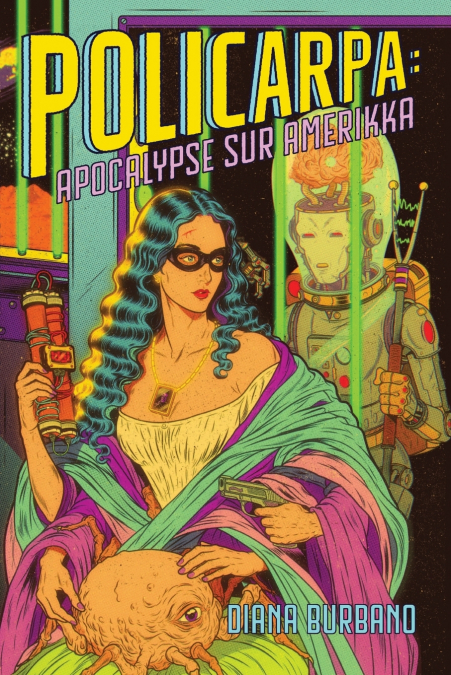
Policarpa: Apocalypse: Sur Amerikka is a fever dream, near-future fairy tale set in a collapsing La Gran Colombia, where an inexplicable golden plague carried by the bodies of young women has become a weapon in a war between a deranged king and the revolution rising up against him. Told in fractured, mist-edged memory from a jail cell where its heroine awaits a firing squad, the play follows Policarpa, an indigenous girl of nineteen with magical gifts and a paralyzed twin brother she refuses to abandon. Plucked from the tunnels beneath Bogotá by Ingrid Bolivar, the dark, messianic 'queen of the slums' who runs a sewing shop as a front for her apocalyptic designs, Policarpa is groomed to become the prophesied Salvadora: the virgin sacrifice whose plague will end the world. She can command magic cloth and is set to work on sewing a gown for General Valentía, the country’s ruthless war hero-turned presidential candidate. But Policarpa falls in love with Valentía, and that love fractures the prophecy. Caught between Ingrid’s gospel of merciful annihilation and her own stubborn insistence that a brutal world is still worth its arepas, its music, and its love, Policarpa moves from instrument of destruction into its strange, glittering savior.The play braids myth, telenovela, and political horror: Muisca cosmology (Bachué, Chía, the snake swallowing the moon), Catholic martyrdom, fairy-tale logic, and contemporary atrocity all collapsing into one another. Its ensemble of women: the mother (Paciencia), the seductress-assassin (Realidad), the warrior (Valentía), the false prophet (Ingrid), orbits Policarpa as facets of a single argument about women as the blood, the victims, and the avengers of history. Darkly funny, and unsentimental it ends in salt and butterflies: three women turned to weeping statues, and a heroine who refuses both princesshood and martyrdom to claim only herself 'ni pura, ni inocente. Solo La Pola.'