 Librería Samer Atenea
 Librería Aciertas (Toledo)
 Kálamo Books
 Librería Perelló (Valencia)
 Librería Elías (Asturias)
 Donde los libros
 Librería Kolima (Madrid)
 Librería Proteo (Málaga)
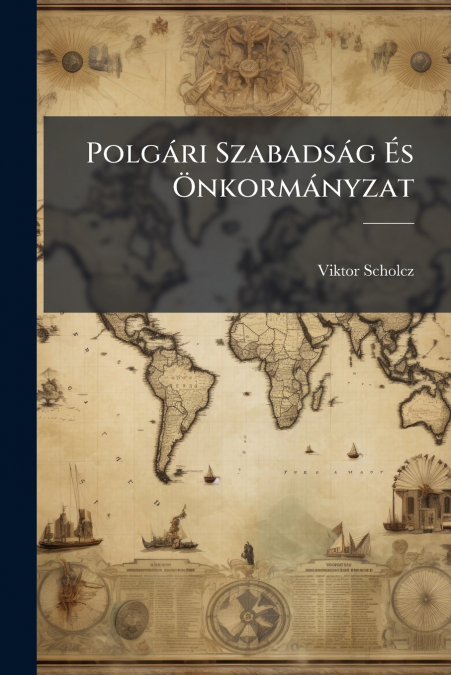
Polgári Szabadság És Önkormányzat (Civil Liberty and Self-Government) delves into the intricate relationship between individual freedoms and local governance within a historical context. Authored by Viktor Scholcz, this work, originally published in 1869, explores the theoretical underpinnings and practical applications of civil liberties, examining how they intersect with the structures of self-government. The book provides insights into the socio-political dynamics of the period, shedding light on the debates and discussions surrounding the balance between central authority and local autonomy. This historical analysis offers valuable perspectives on the evolution of political thought and the ongoing quest for a just and equitable society. It is a valuable resource for those interested in Hungarian history, political science, and the development of constitutional law.This work has been selected by scholars as being culturally important, and is part of the knowledge base of civilization as we know it. This work was reproduced from the original artifact, and remains as true to the original work as possible. Therefore, you will see the original copyright references, library stamps (as most of these works have been housed in our most important libraries around the world), and other notations in the work.This work is in the public domain in the United States of America, and possibly other nations. Within the United States, you may freely copy and distribute this work, as no entity (individual or corporate) has a copyright on the body of the work.As a reproduction of a historical artifact, this work may contain missing or blurred pages, poor pictures, errant marks, etc. Scholars believe, and we concur, that this work is important enough to be preserved, reproduced, and made generally available to the public. We appreciate your support of the preservation process, and thank you for being an important part of keeping this knowledge alive and relevant.