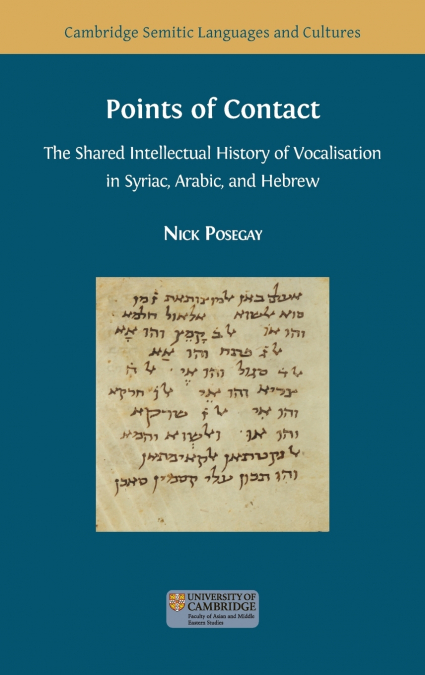
Points of Contact

Points of Contact

Nick Posegay

33,42 €
IVA incluido
Disponible
Editorial:
Open Book Publishers
Año de edición:
2021
Materia
Lingüística histórica y comparada
ISBN:
9781800642966
33,42 €
IVA incluido
Disponible

Selecciona una librería:

  • Librería Samer Atenea
  • Librería Aciertas (Toledo)
  • Kálamo Books
  • Librería Perelló (Valencia)
  • Librería Elías (Asturias)
  • Donde los libros
  • Librería Kolima (Madrid)
  • Librería Proteo (Málaga)

In the first few centuries of Islam, Middle Eastern Christians, Muslims, and Jews alike all faced the challenges of preserving their holy texts in the midst of a changing religious landscape. This situation led Syriac, Arabic, and Hebrew scholars to develop new fields of linguistic science in order to better analyse the languages of the Bible and the Qurʾān. Part of this work dealt with the issue of vocalisation in Semitic scripts, which lacked the letters required to precisely record all the vowels in their languages. Semitic scribes thus developed systems of written vocalisation points to better record vowel sounds, first in Syriac, then soon after in Arabic and Hebrew. These new points opened a new field of linguistic analysis, enabling medieval grammarians to more easily examine vowel phonology and explore the relationships between phonetics and orthography. Many aspects of this new field of vocalisation crossed the boundaries between religious communities, first with the spread of ’relative’ vocalisation systems prior to the eighth century, and later with the terminology created to name the discrete vowels of ’absolute’ vocalisation systems. This book investigates the theories behind Semitic vocalisation and vowel phonology in the early medieval Middle East, tracing their evolution to identify points of intellectual contact between Syriac, Arabic, and Hebrew linguists before the twelfth century.
Artículos relacionados

  • The Language of Separation - Nationalism’s Impact on Linguistic Diversity
    PS Publishing
    'The Language of Separation' delves into the intricate relationship between nationalism and linguistic diversity. Exploring the impact of nationalist ideologies on language policies and practices, this book examines how notions of nationhood influence linguistic identity and representation. Through compelling analysis , it sheds light on the complexities of language politics an...
    Disponible

    14,22 €

  • Syntactic Change in Late Modern English
    Erik Smitterberg
    ...
    Disponible

    38,10 €

  • Third Factors in Language Variation and Change
    Elly Van Gelderen
    ...
    Disponible

    35,80 €

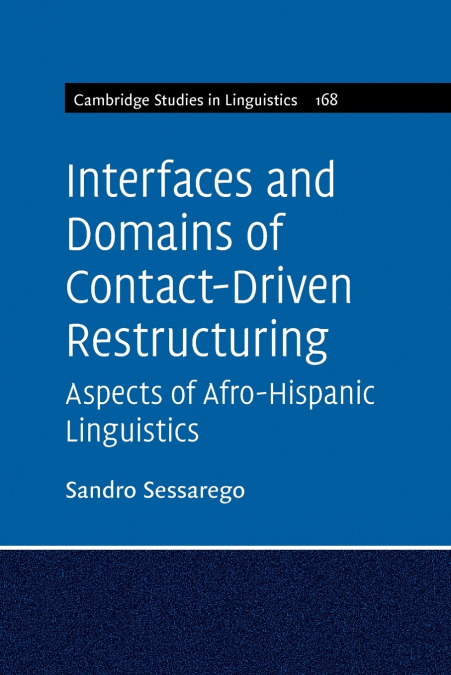
  • Interfaces and Domains of Contact-Driven Restructuring
    Sandro Sessarego
    ...
    Disponible

    36,03 €

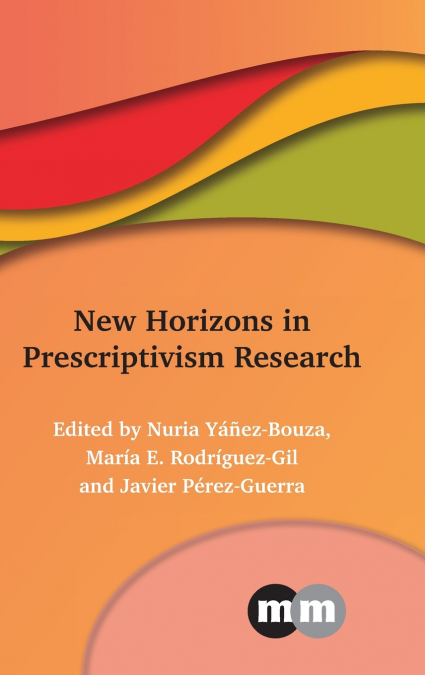
  • New Horizons in Prescriptivism Research
    This book investigates the connections between evaluative judgements on language and the larger social, cultural, and political issues that shed light on the practice of prescriptivism. The chapters cover three main areas: language, which represents the traditional roots of the study of linguistic norms in authoritative (historical) manuals and judgemental attitudes to language...
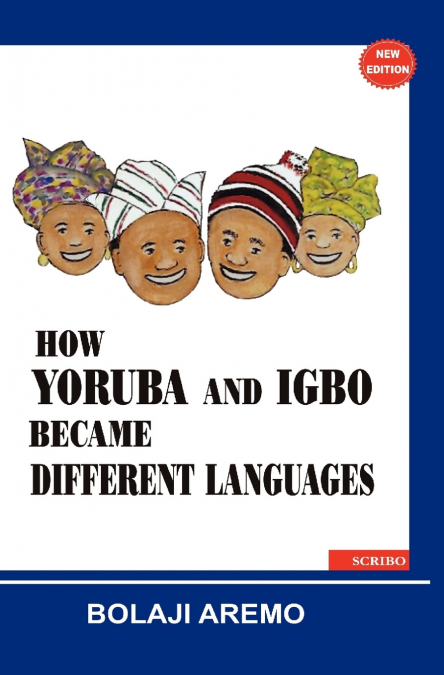
  • How Yoruba and Igbo Became Different Languages
    Bolaji Aremo
    The main objective of this study is to identify examples of genetically related Igbo and Yoruba words that might serve as further evidence in support of some linguists’ claim that the two languages developed from the same parent language. The author is a retired head of the Department of English at Obafemi Awolowo University, Nigeria. ...
    Disponible

    53,75 €

Otros libros del autor

  • Points of Contact
    Nick Posegay
    In the first few centuries of Islam, Middle Eastern Christians, Muslims, and Jews alike all faced the challenges of preserving their holy texts in the midst of a changing religious landscape. This situation led Syriac, Arabic, and Hebrew scholars to develop new fields of linguistic science in order to better analyse the languages of the Bible and the Qurʾān. Part of this work d...