
Pointers to Cancer Prognosis

Pointers to Cancer Prognosis

B.A. Stoll

65,83 €
IVA incluido
Disponible
Editorial:
Springer Nature B.V.
Año de edición:
1987
Materia
Oncología
ISBN:
9780898388763
65,83 €
IVA incluido
Disponible

Selecciona una librería:

  • Librería Samer Atenea
  • Librería Aciertas (Toledo)
  • Kálamo Books
  • Librería Perelló (Valencia)
  • Librería Elías (Asturias)
  • Donde los libros
  • Librería Kolima (Madrid)
  • Librería Proteo (Málaga)

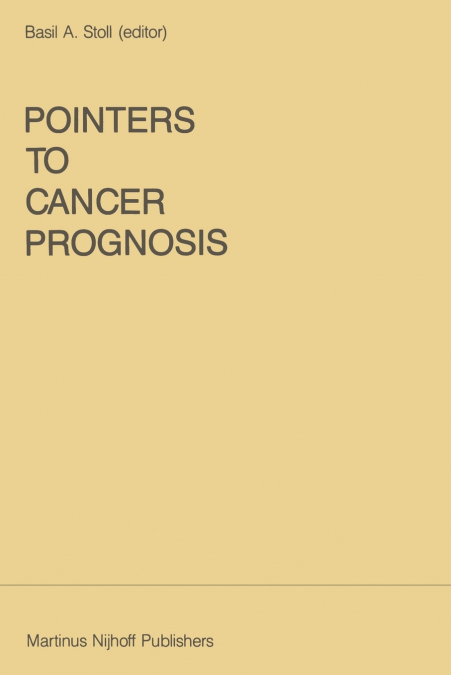
The last 30 years have seen little improvement in the age-adjusted mortality rates for most common types of cancer, and until we develop more effective and less damaging treatment modalities for these tumours, selection of each patient’s treatment must depend on prognostic pointers. These lead to a calculated trade­ off between our estimate of likely benefit to the patient, as against cost in terms of quality of life. But changes have occurred recently in our understanding of the traditional prognostic pointers used for selecting such individualised treatment. First, it is increasingly recognised that the stage at which a tumour presents is more related to the chromo logical age of the tumour (how far it has progressed before diagnosis) than to its biological characteristics. While advanced chronological age of the tumour may predict a greater likelihood of early death, only biological criteria can predict the tumour growth rate, the likelihood of prolonged survival, the likely course of the disease after the first recurrence or the likehood of response to systemic therapy. Second, there is increasing use of failure analysis in relating the clinical and biological characteristics of tumours to their response to standard treatments. In the past, the relationship was interpreted mainly in terms of survival rate, but the site and timing of first recurrence and the pattern and timing of subsequent spread provide a better assessment of the control possible from local or systemic therapy.
Artículos relacionados

  • Outcomes Assessment in Cancer
    ...
    Disponible

    144,06 €

  • IN VIVO MICROSCOPY
    GUILLERMO J TEARNEY &ANDREW M QUINN / TEARNEY GUILLERMO J
    In the vast landscape of medical literature, we now have a groundbreaking book that unveils the intricate details of our body’s inner workings. In Vivo Microscopy takes readers on a captivating journey through the microscopic realms of organs and systems, offering unprecedented insights into the new technologies that allow the visualization of tissues at a cellular level.Author...
  • Pancreatic Cancer and Surgery
    Bito Health
    This beautifully designed magazine has been created to give you all the essential information about pancreas cancer and pancreas cancer treatment and surgery in an easy-to-understand manner. We aim to empower you throughout your cancer journey, enabling you to make informed choices, anticipate treatment and lifestyle changes, and ultimately achieve the best possible outcome.Let...
    Disponible

    24,27 €

  • Protocolo de atención nutricional del paciente oncológico hospitalizado
    Milena Lima de Moraes / Olga Lucía Pinzón Espitia / Olga Lucía Pinzón Espitia
    El cáncer es una de las causas principales de muerte en Colombia y en el mundo. Ya es reconocido que una atención nutricional oportuna y adecuada contribuye a mejores desenlaces clínicos en los pacientes oncológicos. En este sentido, la propuesta de este libro es reunir un conjunto de elementos técnicos necesarios para la atención nutricional, a partir de la literatura científi...
    Disponible

    10,92 €

  • Cáncer ginecológico y de mama
    Pedro Richard Aguilar Ramos
    ’Hace más de 15 años, motivado por seguir avanzando en el campo de la Ginecología, decidí sumarme al grupo de médicos que luchan contra el cáncer ginecológico y de mama. Iniciar mi formación en el glorioso Hospital Nacional Dos de Mayo fue el impulso que luego me permitió continuar con la subespecialidad de Ginecología Oncológica en el prestigioso Instituto Nacional de Enfermed...
    Disponible

    68,64 €

  • Cáncer: Todo lo que deberías conocer
    Rogelio Martínez Macias
    ’Cáncer: Todo lo que deberías conocer. ¿Qué hay alrededor de un paciente con cáncer? del Dr. Rogelio Martínez Macias es una guía introductoria sobre esta enfermedad, dirigida a lectores no especializados. Mediante explicaciones sobre células, genes y cómo ocurre la carcinogénesis, el libro ilustra la formación del cáncer y diferencia entre tumores benignos y malignos. Enfatiza ...
    Disponible

    11,96 €

Otros libros del autor

  • Reducing Breast Cancer Risk in Women
    B.A. Stoll
    Breast cancer is not only a burning public issue, but very soon we shall see genetic testing for a woman’s predisposition to breast cancer. Many women will be demanding to know their degree of risk and will need counselling to cope with that information. This book is particularly aimed at primary health care professionals, including physicians, m...
    Disponible

    269,26 €

  • Approaches to Breast Cancer Prevention
    B.A. Stoll
    This book is a logical companion volume to Women at High Risk to Breast Cancer (Kluwer, 1989) edited by me previously. It distinguishes two aspects of current ap­ proaches to clinical breast cancer prevention. The first is the need to advise individ­ ual women on how they might reduce their personal risk, while the second is the design of measures aim...
    Disponible

    269,32 €

  • Reducing Breast Cancer Risk in Women
    B.A. Stoll
    Breast cancer is not only a burning public issue, but very soon we shall see genetic testing for a woman’s predisposition to breast cancer. Many women will be demanding to know their degree of risk and will need counselling to cope with that information. This book is particularly aimed at primary health care professionals, including physicians, m...
  • Approaches to Breast Cancer Prevention
    B.A. Stoll
    This book is a logical companion volume to Women at High Risk to Breast Cancer (Kluwer, 1989) edited by me previously. It distinguishes two aspects of current ap­ proaches to clinical breast cancer prevention. The first is the need to advise individ­ ual women on how they might reduce their personal risk, while the second is the design of measures aim...