 Librería Samer Atenea
 Kálamo Books
 Librería Elías (Asturias)
 Librería Kolima (Madrid)
 Librería Proteo (Málaga)
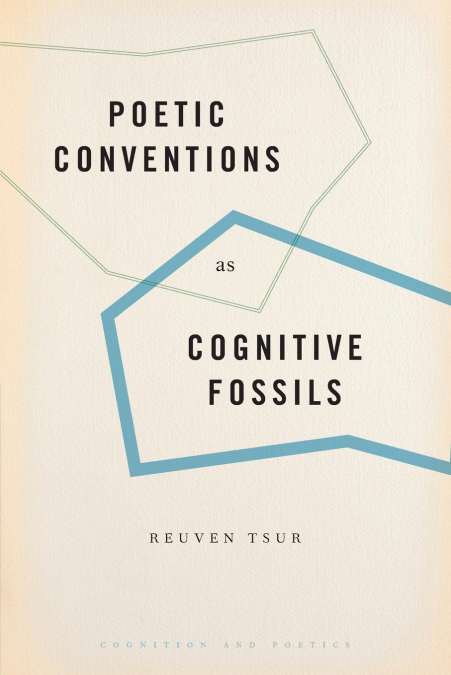
Poetic Conventions as Cognitive Fossils offers a major theoretical statement of where poetic conventions come from. The work comprises Reuven Tsur’s research in cognitive poetics to show how conventional poetic styles originate from cognitive rather than cultural principles. The book contrasts two approaches to cultural conventions in general, and poetic conventions in particular. They include what may be called the 'culture-begets-culture' or 'influence-hunting' approach, and the 'constraints-seeking' or 'cognitive-fossils' approach here expounded. The former assumes that one may account for cultural programs by pointing out their roots in earlier cultural phenomena and provide a map of their migrations. The latter assumes that cultural programs originate in cognitive solutions to adaptation problems that have acquired the status of established practice. Both conceptions assume 'repeated social transmission,' but with very different implications. The former frequently ends in infinite regress; the latter assumes that in the process of repeated social transmission, cultural programs come to take forms which have a good fit to the natural constraints and capacities of the human brain. Tsur extends the principles of this analysis of cognitive origins of poetic form to the writing systems, not only of the Western world, but also to Egyptian hieroglyphs through the evolution of alphabetic writing via old Semitic writing, and Chinese and Japanese writings; to aspects of figuration in medieval and Renaissance love poetry in English and French; to the metaphysical conceit; to theories of poetic translation; to the contemporary theory of metaphor; and to slips of the tongue and the tip-of-the-tongue phenomenon, showing the workings and disruption of psycholinguistic mechanisms. Analysis extends to such varying sources as the formulae of some Mediaeval Hebrew mystic poems, and the ballad ’Edward, ’ illustrative of extreme ’fossilization’ and the constraints of the human brain.