 Librería Samer Atenea
 Kálamo Books
 Librería Elías (Asturias)
 Librería Kolima (Madrid)
 Librería Proteo (Málaga)
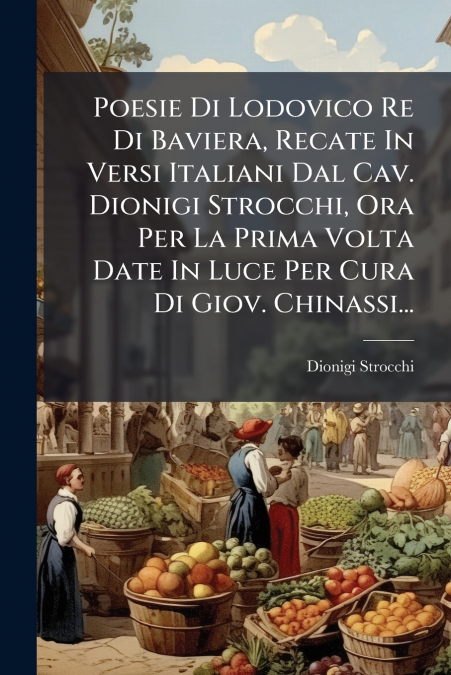
Una raccolta di poesie di Ludovico II, Re di Baviera, tradotte in versi italiani dal Cavaliere Dionigi Strocchi. Questa edizione, curata da Giov. Chinassi, presenta per la prima volta queste traduzioni al pubblico. Le poesie offrono uno sguardo intimo e personale sul mondo emotivo e intellettuale del re, esplorando temi di bellezza, malinconia e aspirazione spirituale. La traduzione di Strocchi cattura l’essenza delle liriche originali, rendendole accessibili al pubblico italiano e offrendo una nuova prospettiva sulla figura enigmatica di Ludovico II. Quest’opera rappresenta un importante contributo alla comprensione della vita interiore del re e un esempio significativo della ricezione della poesia tedesca in Italia nel XIX secolo. Questa edizione è un documento storico di valore per gli studiosi di letteratura italiana e tedesca, nonché per gli appassionati della storia europea.This work has been selected by scholars as being culturally important, and is part of the knowledge base of civilization as we know it. This work was reproduced from the original artifact, and remains as true to the original work as possible. Therefore, you will see the original copyright references, library stamps (as most of these works have been housed in our most important libraries around the world), and other notations in the work.This work is in the public domain in the United States of America, and possibly other nations. Within the United States, you may freely copy and distribute this work, as no entity (individual or corporate) has a copyright on the body of the work.As a reproduction of a historical artifact, this work may contain missing or blurred pages, poor pictures, errant marks, etc. Scholars believe, and we concur, that this work is important enough to be preserved, reproduced, and made generally available to the public. We appreciate your support of the preservation process, and thank you for being an important part of keeping this knowledge alive and relevant.