

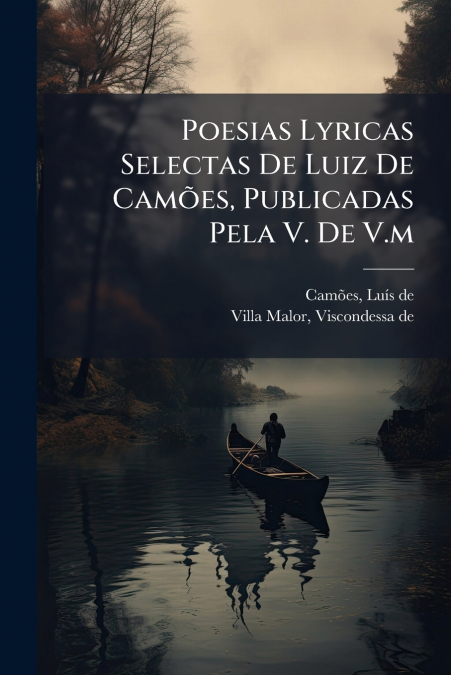
Luís de 1524?-1580 Camões / Viscondessa de Villa Malor
 Librería Samer Atenea
 Kálamo Books
 Librería Elías (Asturias)
 Librería Kolima (Madrid)
 Librería Proteo (Málaga)
Uma seleção das poesias líricas de Luís de Camões, um dos maiores poetas da língua portuguesa. Esta edição, publicada em 1876, apresenta uma coleção de poemas escolhidos pela Viscondessa de Villa Malor, oferecendo aos leitores uma amostra representativa da genialidade lírica de Camões. Luís Vaz de Camões (c. 1524 - 1580) é celebrado por sua maestria na poesia, especialmente por sua obra épica 'Os Lusíadas'. No entanto, suas poesias líricas revelam uma sensibilidade e profundidade emocional que continuam a ressoar através dos séculos. Esta coletânea destaca os temas do amor, da natureza e da condição humana, expressos com uma beleza e elegância características do Renascimento português. Ideal para estudantes de literatura, amantes da poesia e todos aqueles que desejam explorar a riqueza da língua portuguesa.This work has been selected by scholars as being culturally important, and is part of the knowledge base of civilization as we know it. This work was reproduced from the original artifact, and remains as true to the original work as possible. Therefore, you will see the original copyright references, library stamps (as most of these works have been housed in our most important libraries around the world), and other notations in the work.This work is in the public domain in the United States of America, and possibly other nations. Within the United States, you may freely copy and distribute this work, as no entity (individual or corporate) has a copyright on the body of the work.As a reproduction of a historical artifact, this work may contain missing or blurred pages, poor pictures, errant marks, etc. Scholars believe, and we concur, that this work is important enough to be preserved, reproduced, and made generally available to the public. We appreciate your support of the preservation process, and thank you for being an important part of keeping this knowledge alive and relevant.





