Platonism

Platonism

Pons Malleus

13,03 €
IVA incluido
Disponible
Editorial:
Pons Malleus
Año de edición:
2025
Materia
Filosofía
ISBN:
9798233329272
13,03 €
IVA incluido
Disponible

Selecciona una librería:

  • Librería Samer Atenea
  • Librería Aciertas (Toledo)
  • Kálamo Books
  • Librería Perelló (Valencia)
  • Librería Elías (Asturias)
  • Donde los libros
  • Librería Kolima (Madrid)
  • Librería Proteo (Málaga)

Platonism, one of the most enduring and influential philosophical traditions in Western thought, began over two millennia ago in the intellectual ferment of Classical Athens. What started as the teachings of one man-Plato-soon evolved into a rich, complex lineage of inquiry that spanned centuries, inspired generations, and left an indelible mark on metaphysics, epistemology, ethics, politics, and theology. This book is a journey through that tradition, focusing not only on Plato’s original insights but also on the dynamic evolution of Platonism through the Old, Middle, and New Academies.The story begins with Plato himself, whose dialogues remain among the most enigmatic and profound writings in the history of philosophy. Rather than presenting a system of doctrines, Plato invites his readers into a dialectical process-one that seeks truth through dialogue, introspection, and reason. At the heart of his philosophy is the Theory of Forms, an ontology that posits eternal, unchanging realities behind the shifting appearances of the sensible world. In his Academy, the first institution of higher learning in the West, Plato laid the foundation for what would become a vibrant school of thought-a community of thinkers bound by shared questions, methods, and ideals.The Old Academy, led by Plato’s immediate successors such as Speusippus and Xenocrates, preserved and extended his teachings. While remaining loyal to many of his central ideas, members of the Old Academy explored mathematical and metaphysical systems in ways that both clarified and transformed their master’s thought. These early successors sought to systematize Plato’s vision, often emphasizing the unity and intelligibility of reality, and developing proto-scholastic structures that would later influence Neoplatonism and even medieval Christian philosophy.Over time, however, the certainty that marked the Old Academy gave way to the skepticism of the Middle Academy, particularly under the leadership of Arcesilaus. Confronted by the limits of knowledge and the fallibility of sense experience, Arcesilaus reoriented the Academy toward a more critical, Socratic stance. Emphasizing the impossibility of certain knowledge, he returned to the questioning spirit of Socrates, making doubt and inquiry central virtues of philosophy. The Middle Academy, in this respect, represents a philosophical shift: not a rejection of Plato, but a deepening of his method-placing dialectic above doctrine.The New Academy, beginning with Carneades, continued this skeptical trajectory while engaging rigorously with contemporary Stoic and Epicurean thought. Carneades, a masterful dialectician, challenged prevailing dogmas by arguing both for and against propositions with equal force, exposing the epistemic limits of human cognition. Yet even in this radical skepticism, a Platonic impulse endured: the commitment to reasoned debate, ethical responsibility, and the pursuit of a higher understanding-even if that understanding remained elusive.This book does not seek to settle debates within Platonism but to illuminate its internal diversity, evolution, and enduring relevance. It follows the transformation of Platonic thought from metaphysical realism to epistemic humility, showing how each phase of the Academy responded to its historical context while maintaining a philosophical continuity rooted in the life and teachings of Plato.In tracing these developments, the reader will see not just a linear progression, but a dynamic conversation-between belief and doubt, system and critique, unity and plurality. Platonism, in all its forms, teaches us that philosophy is not merely a set of answers, but a way of asking questions that remain vital across the centuries.

Artículos relacionados

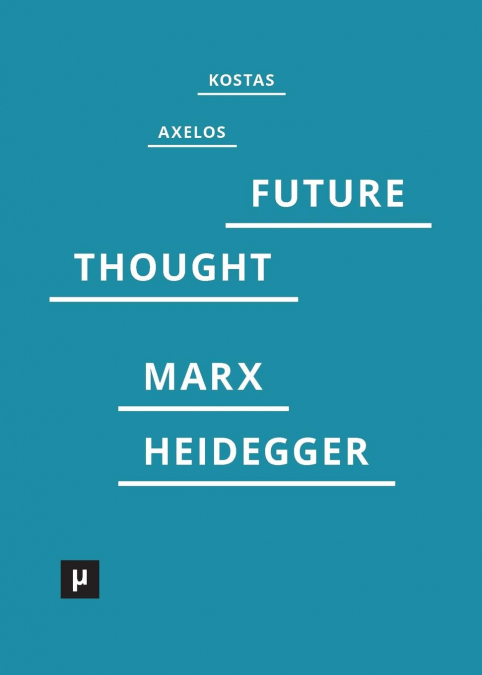
  • Introduction to a Future Way of Thought
    Kostas Axelos / Kenneth Mills
    'Technologists only change the world in various ways in generalized indifference; the point is to think the world and interpret the changes in its unfathomability, to perceive and experience the difference binding being to the nothing.'Anticipating the age of planetary technology Kostas Axelos, a Greek-French philosopher, approaches the technological question in this book, firs...
    Disponible

    18,58 €

  • Capsule
    John Kenneth Press
    Join John and Adam as they wander the mean streets of Japan on a psychedelic fueled search for identity. While fun for the average reader, this book could also serve as a philosphy textbook because of its ordered exploration of sources of identity. Ultimately this trip through nationalist attacks, sex, and drugs, will take you to a better understanding of yourself and your pl...
    Disponible

    11,51 €

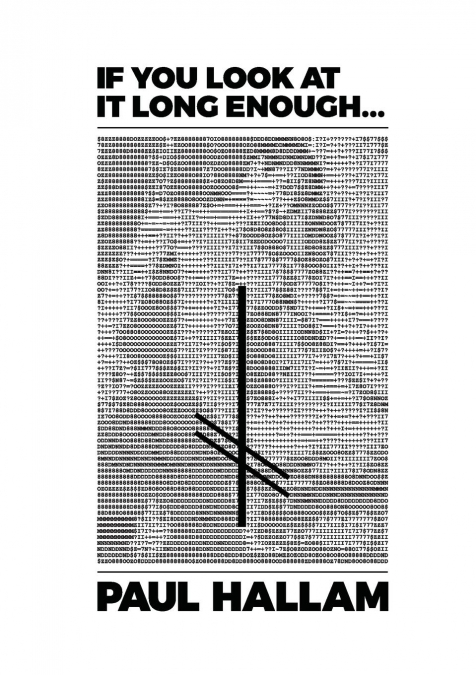
  • If you look at it long enough...
    Paul Hallam
    Originally written for an academic journal, If you look at it long enough... is primarily a personal account of Paul Hallam’s recollections of “self-abuse” through the consumption of porn over several decades. Challenging the familiar form of an “academic essay,” this autobiographical narrative raises several questions in relation to our contemporary morals related to sex in ge...
    Disponible

    11,30 €

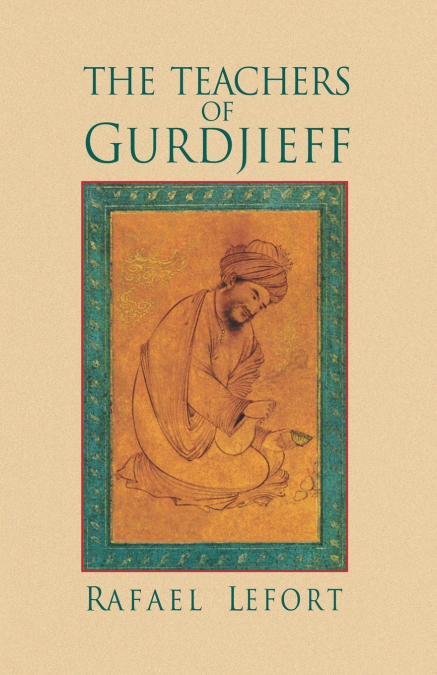
  • The Teachers of Gurdjieff
    Rafael Lafort / Rafael Lefort
    When The Teachers of Gurdjieff was first published more than 50 years ago, it made a considerable stir. George Ivanovich Gurdjieff had been one of the most famous mystics in the West in the first half of the 20th century - a teaching master who had many fashionable and influential pupils. He had a striking appearance and manner of teaching, and his teaching proved to be very in...
    Disponible

    20,45 €

  • Manifesto of the Communist Party
    Karl Marx
    The Communist Manifesto was first published on February 21, and it is one of the world’s most influential political tracts. Commissioned by the Communist League and written by communist theorists Karl Marx and Friedrich Engels, it laid out the League’s purposes and program. The Manifesto suggested a course of action for a proletarian (working class) revolution to overthrow the ...
  • The Art of Literature
    Arthur Schopenhauer
    Collected here are eight short essays, On Authorship, On Style, On the Study of Latin, On Men of Learning, On Thinking for Ones Self, On Criticism, On Reputation, On Genius, by the world renowned philosopher Arthur Achopenhauer. ...

Otros libros del autor

  • Coherentism
    Pons Malleus
    In the sphere of epistemology-the branch of philosophy concerned with the nature and scope of knowledge-few debates have been as enduring or as foundational as the one surrounding the justification of belief. Among the competing theories that attempt to explain how our beliefs are supported and validated, Coherentism stands as both a provocative and nuanced alternative to more ...
    Disponible

    13,06 €

  • Determinism
    Pons Malleus
    The question of whether our lives are governed by free will or by forces beyond our control has long been a fundamental concern of human thought. At the heart of this inquiry lies the philosophical doctrine known as Determinism-a worldview asserting that every event, including human actions and decisions, is the inevitable result of preceding causes. This book embarks on an exp...
    Disponible

    13,27 €

  • Foundationalism
    Pons Malleus
    Philosophy, at its core, is a quest for knowledge and understanding-a rigorous endeavor to explore the nature, scope, and justification of human belief. Among the myriad traditions and schools that have shaped philosophical inquiry, Foundationalism holds a particularly pivotal place. This school of thought, which seeks to ground knowledge on a secure and indubitable basis, has ...
    Disponible

    13,16 €

  • Pragmatism
    Pons Malleus
    Emerging in the late 19th century as a distinctly American philosophical movement, Pragmatism has consistently challenged traditional metaphysical and epistemological assumptions by emphasizing action, experience, and the tangible consequences of ideas. This book embarks on a comprehensive exploration of Pragmatism-not merely as a historical artifact but as a living, evolving t...
    Disponible

    13,12 €

  • Constructivism
    Pons Malleus
    In an age where the pursuit of knowledge is often framed as a quest for objective truth, the philosophical school of Constructivism offers a refreshing and transformative perspective. Constructivism challenges us to reconsider how we understand reality, knowledge, and the very processes by which we come to know. Rather than viewing knowledge as a mirror reflecting an independen...
    Disponible

    13,19 €

  • Naturalism
    Pons Malleus
    Naturalism, as a philosophical worldview, has quietly but powerfully shaped much of modern thought. It underpins the sciences, informs secular ethics, and influences debates about mind, meaning, and morality. Yet despite its widespread impact, Naturalism often operates in the background, assumed rather than articulated, accepted without being fully understood. This book aims to...
    Disponible

    13,22 €