 Librería Samer Atenea
 Kálamo Books
 Librería Elías (Asturias)
 Librería Kolima (Madrid)
 Librería Proteo (Málaga)
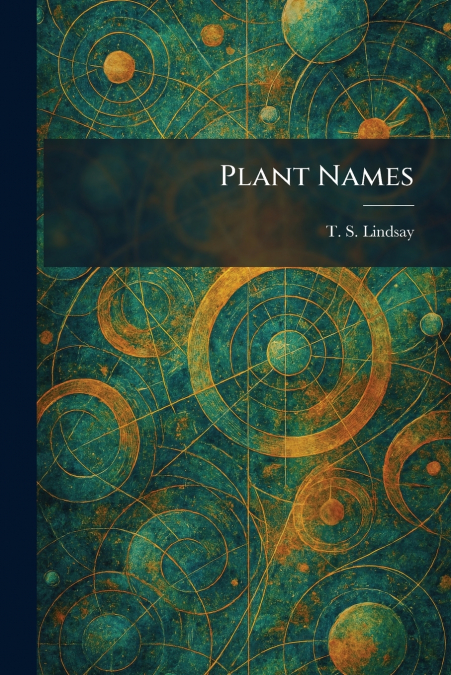
'Plant Names' by T. S. Lindsay is a comprehensive and accessible guide to the fascinating origins and meanings behind botanical nomenclature. Addressing a common hurdle for many gardening enthusiasts and students of nature, Lindsay demystifies the system of Latin and Greek naming that characterizes the scientific study of plants. The work explains why these specific names are used, how they reflect the history of botanical discovery, and what they reveal about the physical properties and medicinal uses of the flora they describe.Through a blend of linguistic analysis and horticultural history, the book explores the transition from ancient folk names to the systematic binomial classification popularized by Carolus Linnaeus. Lindsay provides readers with a practical understanding of prefixes, suffixes, and root words, allowing them to decipher the hidden stories within a plant’s name-whether it commemorates a famous explorer, identifies a native habitat, or notes a unique leaf shape. 'Plant Names' stands as a valuable resource for anyone seeking to bridge the gap between casual observation and scientific understanding, offering a deeper appreciation for the logic and beauty of the natural world’s vocabulary.This work has been selected by scholars as being culturally important, and is part of the knowledge base of civilization as we know it. This work was reproduced from the original artifact, and remains as true to the original work as possible. Therefore, you may see the original copyright references, library stamps (as most of these works have been housed in our most important libraries around the world), and other notations in the work.This work is in the public domain in the United States of America, and possibly other nations. Within the United States, you may freely copy and distribute this work, as no entity (individual or corporate) has a copyright on the body of the work.As a reproduction of a historical artifact, this work may contain missing or blurred pages, poor pictures, errant marks, etc. Scholars believe, and we concur, that this work is important enough to be preserved, reproduced, and made generally available to the public. We appreciate your support of the preservation process, and thank you for being an important part of keeping this knowledge alive and relevant.