
Inicio > Matemáticas y ciencia > Química > Plant Analysis Procedures
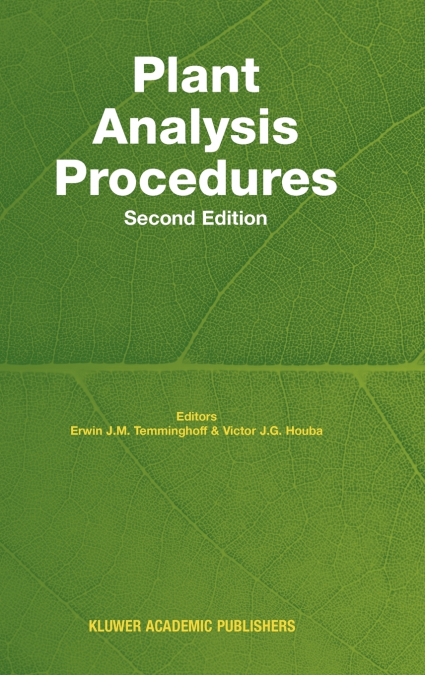
Plant Analysis Procedures

Plant Analysis Procedures


133,03 €
IVA incluido
Consulta disponibilidad
Editorial:
Springer Nature B.V.
Año de edición:
2005
Materia
Química
ISBN:
9781402027697

Selecciona una librería:

  • Librería Samer Atenea
  • Librería Aciertas (Toledo)
  • Kálamo Books
  • Librería Perelló (Valencia)
  • Librería Elías (Asturias)
  • Donde los libros
  • Librería Kolima (Madrid)
  • Librería Proteo (Málaga)

This manual is intended for the practising chemist who has to do a job in analysing plant material. Therefore, the present manual only contains ready-to-hand procedures without any comment. The procedures described are only for inorganic components, which frequently occur in the plant. Most procedures are designed to give a total content value of the element under consideration, regardless of the chemical structure in which it occurs in the plant. We have chosen for a design in which all digestion procedures are described in one chapter, all extraction procedures in one chapter and all determination procedures in one chapter. As a consequence, one has to choose a suitable digestion method in combination with the intended determination technique; this has been indicated within each individual determination procedure. For determination of the elements, mainly spectrometric techniques are used here. Depending on the kind of element and the expected concentration level, the following methods are applied: flame atomic emission spectrometry (flame AES), flame atomic absorption spectrometry (flame AAS), inductively coupled plasma optical emission spectrometry (ICP-OES), electrothermal atomisation (graphite furnace) atomic absorption spectrometry (ETA-AAS), inductively coupled plasma mass spectrometry (ICP-MS), spectrophotometry and segmented flow analysis (SFA). Besides, potentiometry (ion selective electrodes (ISE)) and coulometry will be encountered. In many cases, more than one method is described to determine a component. This provides a reference, as well as an alternative in case of instrumental or analytical problems.


Artículos relacionados

  • Suzuki-Miyaura Cross-Coupling Reaction and Potential Applications
    Suzuki–Miyaura cross-coupling remains a powerful tool in organic synthesis for C–C bond formation and has various industrial applications, for example, the synthesis of pharmaceuticals and materials. Intensive research efforts are being made into finding ways of improving and expanding the scope of this process, and the development of more efficient catalytic systems for this e...
    Disponible

    67,89 €

  • Catalysis for Low Temperature Fuel Cells
    Today, the development of active and stable catalysts still represents a challenge to overcome in the research field of low temperature fuel cells. Operation at low temperatures demands the utilization of highly active catalysts to reduce the activation energy of the electrochemical reactions involved at the electrodes, and thus obtain practical performances and high efficienci...
    Disponible

    59,74 €

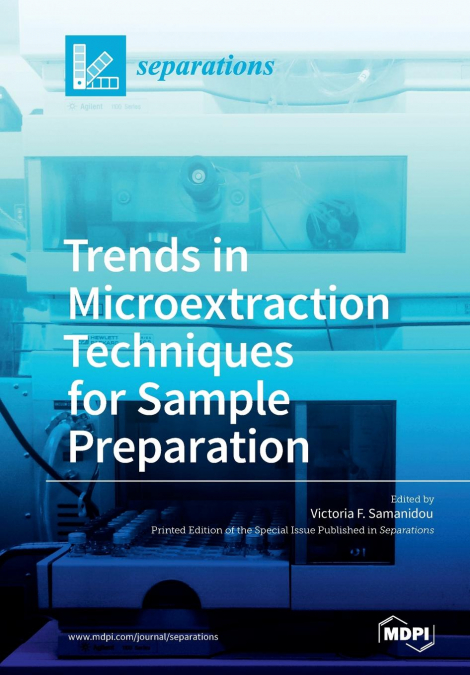
  • Trends in Microextraction Techniques for Sample Preparation
    Micro-extraction techniques in sample preparation are gaining interest among analytical chemists as they comply with green analytical chemistry demands and ensure environmental protection and public safety. Savings in cost and time are considered as valuable benefits by using novel micro-extraction approaches in sample handling. Selectivity, sensitivity and lower detection limi...
    Disponible

    59,87 €

  • Advances and Applications of Nano-antimicrobial Treatments
    Nowadays, great concerns are associated with the resistance demonstrated by many microorganisms towards the conventional antibiotic therapies. The failure of traditional antimicrobials, and the increasing healthcare costs, have encouraged scientific research and the development of novel antimicrobial agents. Particularly, there is a great deal of interest in nanotechnologies an...
    Disponible

    51,68 €

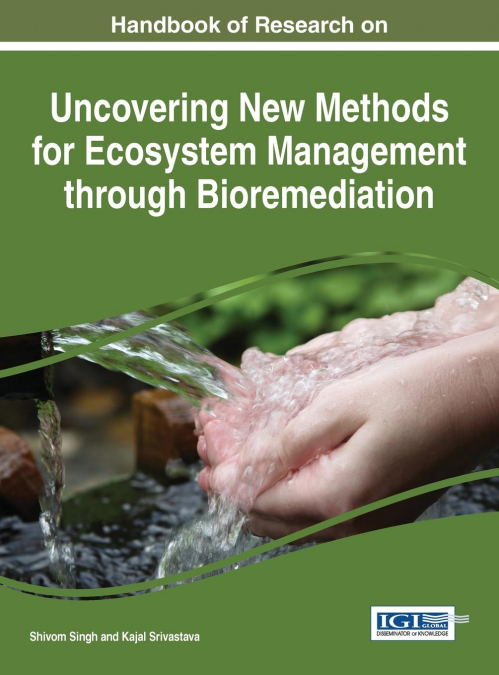
  • Handbook of Research on Uncovering New Methods for Ecosystem Management through Bioremediation
    Kajal Srivastava / Shivom Singh
    Maintaining and preserving the environment is a crucial consideration in an era where climate change and rising sea levels are common knowledge. It is important for researchers and developers alike to explore potential solutions for a steadily warming world. The Handbook of Research on Uncovering New Methods for Ecosystem Management through Bioremediation focuses on the agricul...
  • Structural Design and Properties of Coordination Polymers
    The assembly of organic ligands and metal centres yields coordination polymers, many of which find applications in conductivity, catalysis, magnetism, gas sorption, biological sensing and luminescence. The structure and topology of coordination polymers may be manipulated by changing the reaction conditions, leading to a large variety of structurally and topologically unique pr...
    Disponible

    43,77 €