 Librería Samer Atenea
 Librería Aciertas (Toledo)
 Kálamo Books
 Librería Perelló (Valencia)
 Librería Elías (Asturias)
 Donde los libros
 Librería Kolima (Madrid)
 Librería Proteo (Málaga)
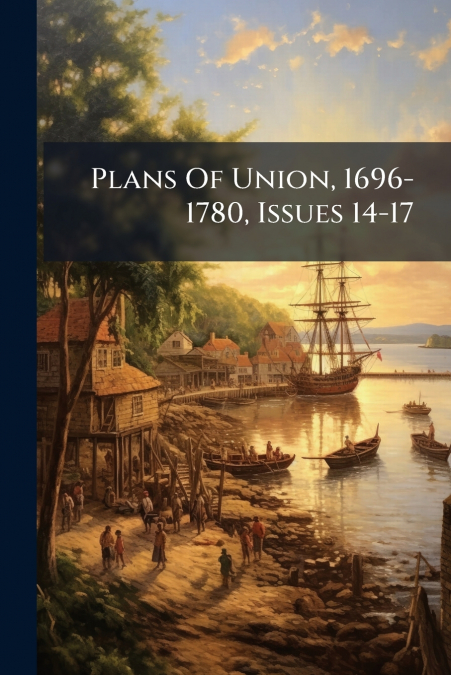
This collection, 'Plans of Union, 1696-1780, Issues 14-17,' presents a detailed exploration of various proposals for unifying the British colonies in North America. Spanning nearly a century, these documents offer invaluable insights into the political thought and practical challenges of colonial governance. From early suggestions for inter-colonial cooperation to more formalized schemes like the Albany Plan, the texts reveal the evolving strategies aimed at fostering greater unity and collective action among the disparate colonies. These plans reflect a range of motivations, including defense against common enemies, the regulation of trade, and the resolution of territorial disputes. The proposals shed light on the complex dynamics between the colonies, the British Crown, and Indigenous nations. Scholars and history enthusiasts alike will find this compilation an essential resource for understanding the intellectual and political foundations of the eventual American union. The collection illuminates the persistent efforts to balance colonial autonomy with the benefits of centralized authority, a theme that resonates throughout the period.This work has been selected by scholars as being culturally important, and is part of the knowledge base of civilization as we know it. This work was reproduced from the original artifact, and remains as true to the original work as possible. Therefore, you will see the original copyright references, library stamps (as most of these works have been housed in our most important libraries around the world), and other notations in the work.This work is in the public domain in the United States of America, and possibly other nations. Within the United States, you may freely copy and distribute this work, as no entity (individual or corporate) has a copyright on the body of the work.As a reproduction of a historical artifact, this work may contain missing or blurred pages, poor pictures, errant marks, etc. Scholars believe, and we concur, that this work is important enough to be preserved, reproduced, and made generally available to the public. We appreciate your support of the preservation process, and thank you for being an important part of keeping this knowledge alive and relevant.