

 Librería Samer Atenea
 Kálamo Books
 Librería Elías (Asturias)
 Librería Kolima (Madrid)
 Librería Proteo (Málaga)
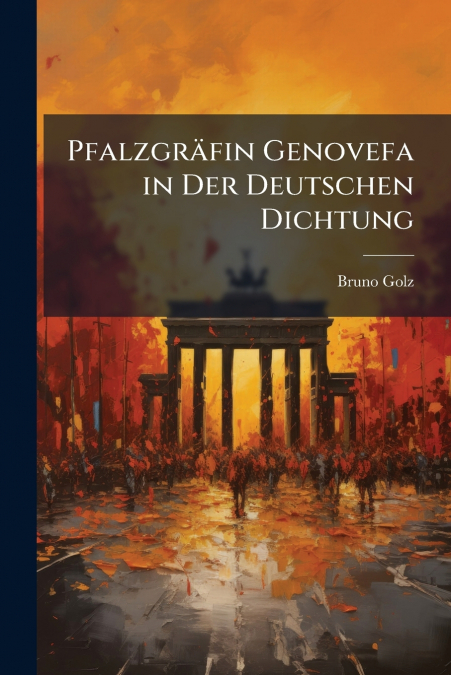
Pfalzgräfin Genovefa in Der Deutschen Dichtung, written by Bruno Golz and published in 1897, offers a detailed exploration of the Genovefa narrative within the context of German literature. This study delves into the various adaptations and interpretations of the Genovefa legend, a popular medieval tale of a virtuous woman wrongly accused and exiled. Golz analyzes the literary and cultural significance of the Genovefa figure, tracing her evolution through different periods and genres of German literary history. The book provides valuable insights into the themes, motifs, and artistic techniques employed in the retelling of this enduring story. It examines how different authors have adapted the Genovefa narrative to reflect the social, religious, and political values of their respective eras. Pfalzgräfin Genovefa in Der Deutschen Dichtung is an essential resource for scholars and enthusiasts interested in German literature, medieval studies, and the enduring appeal of folklore traditions.This work has been selected by scholars as being culturally important, and is part of the knowledge base of civilization as we know it. This work was reproduced from the original artifact, and remains as true to the original work as possible. Therefore, you will see the original copyright references, library stamps (as most of these works have been housed in our most important libraries around the world), and other notations in the work.This work is in the public domain in the United States of America, and possibly other nations. Within the United States, you may freely copy and distribute this work, as no entity (individual or corporate) has a copyright on the body of the work.As a reproduction of a historical artifact, this work may contain missing or blurred pages, poor pictures, errant marks, etc. Scholars believe, and we concur, that this work is important enough to be preserved, reproduced, and made generally available to the public. We appreciate your support of the preservation process, and thank you for being an important part of keeping this knowledge alive and relevant.





