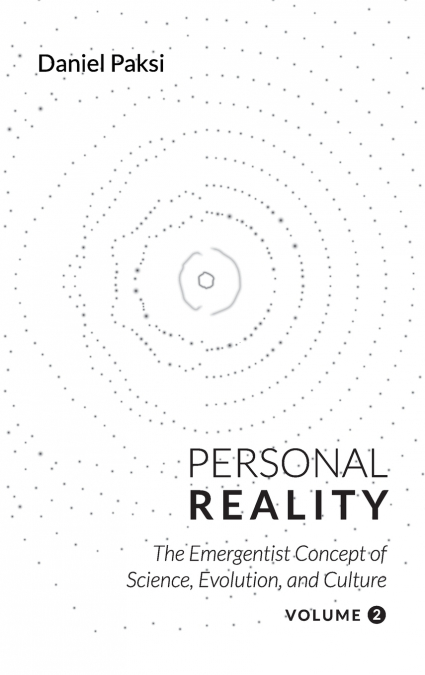

Personal Reality, Volume 2

Personal Reality, Volume 2

Daniel Paksi

35,29 €
IVA incluido
Disponible
Editorial:
Wipf and Stock Publishers
Año de edición:
2019
Materia
Ética y filosofía moral
ISBN:
9781532676697
35,29 €
IVA incluido
Disponible

Selecciona una librería:

  • Librería Samer Atenea
  • Librería Aciertas (Toledo)
  • Kálamo Books
  • Librería Perelló (Valencia)
  • Librería Elías (Asturias)
  • Donde los libros
  • Librería Kolima (Madrid)
  • Librería Proteo (Málaga)

Western civilization was built on the concept of God. Today modern science, based on the critical method and so-called objective facts, denies even the existence of our soul. There is only matter: atoms, molecules, and DNA sequences. There is no freedom; there are no well-grounded beliefs. The decline of Western civilization is not the simple consequence of decadence, hedonism, and malevolence. Modern critical science has liberated us from the old dogmas but failed to establish our freedoms, values, and beliefs.However, human knowledge is not objective but personal. We are the children of evolution. Everybody sees the world from his own personal point of view anchored into his/her body. We use our billions-of-years-old evolutionary skills and thousands-of-years-old cultural heritage to recognize and acknowledge the personal facts of our reality, freedom, and most important natural beliefs: respect and speak the truth. In reality, even science itself is based on our personal knowledge. Only our false conceptual dichotomies paralyze our thinking.God or matter?--there is a third choice: the emergence of life and human persons. This is the only way to defend our freedoms and the Christian moral dynamism of free Western societies.''Addressed to current controversy concerning the origin and explanation of biological life and human culture, Hungarian philosopher Daniel Paksi aims to establish a coherent, scientifically grounded concept of evolutionary emergence as a more viable alternative to both reductionist materialism(s) and ontological dualism(s), providing a sounder conceptual foundation for cultural meaning. Paksi’s argument draws on philosopher-scientist Michael Polanyi’s Personal Knowledge and Samuel Alexander’s Space, Time, and Deity. Developed in dialogue with previous efforts toward this goal, Paksi articulates a hopeful intellectual vision for humankind in the twenty-first century.''--Dale Cannon, Western Oregon University ''This is a thorough examination of Neo-Darwinism’s denial of the reality and significance of emergence, using and developing Michael Polanyi’s and other philosophies plus more empirical detail, followed by an account of the meaning and reality of the emergence of genuinely new orders of existence and how they can be related by the boundary conditions of a lower level being determined by the next higher. Perhaps how emergence is itself possible is more open than Paski allows.''--R. T. Allen, author, The Necessity of GodDaniel Paksi is a Postdoctoral Research Fellow of the Hungarian Academy of Sciences at the Budapest University of Technology and Economics where he received his PhD in history and philosophy of science in 2010. His primary goal with Personal Reality is to establish a coherent concept of emergence based on Michael Polanyi’s Personal Knowledge and Samuel Alexander’s Space, Time, and Deity.
Artículos relacionados

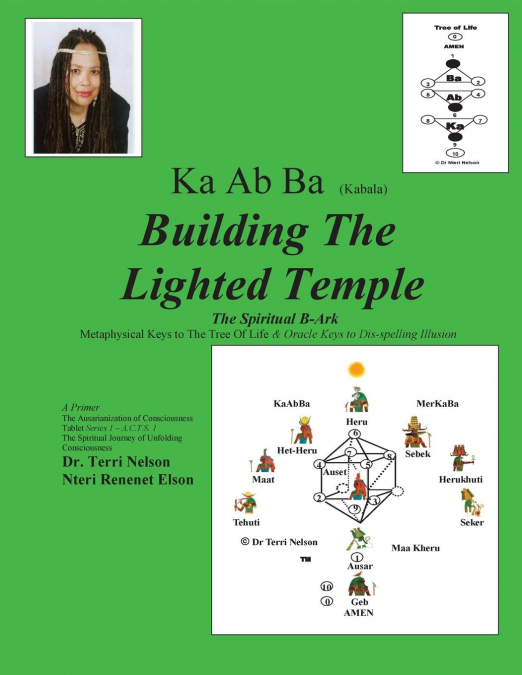
  • Ka Ab Ba Building The Lighted Temple
    Dr Terri R. Nelson / Dr Terri RNelson
    The book KaAbBa Building The Lighted Temple/Metaphysical Keys to the Tree of Life draws a circle that is inclusive of the Afrikan origin of the Ancient Kemetic/Egyptian wisdom. It reveals the undeniable root and link of Ancient Africa to all the religious systems that would develop worldwide. This book is explosive in its power to convey the meaning of KaAbBa, the Medu Neter  (...
    Disponible

    37,41 €

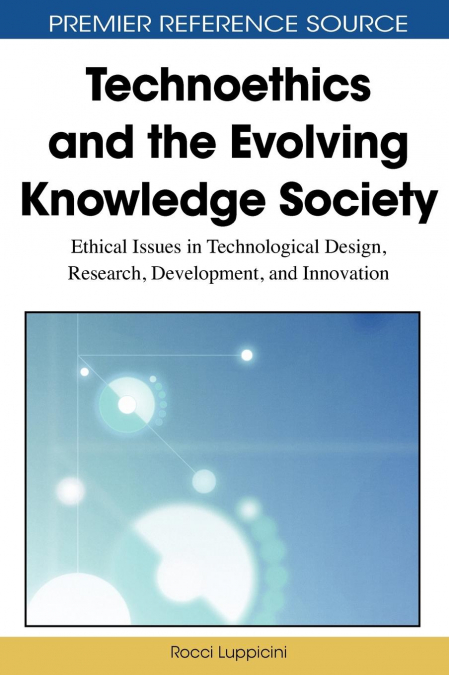
  • Technoethics and the Evolving Knowledge Society
    Rocci Luppicini
    Recently, there has been a major push to rediscover the ethical dimension of technology across the sciences, social sciences, and humanities. Technoethics and the Evolving Knowledge Society: Ethical Issues in Technological Design, Research, Development, and Innovation examines human processes and practices connected to technology embedded within social, political, and moral sph...
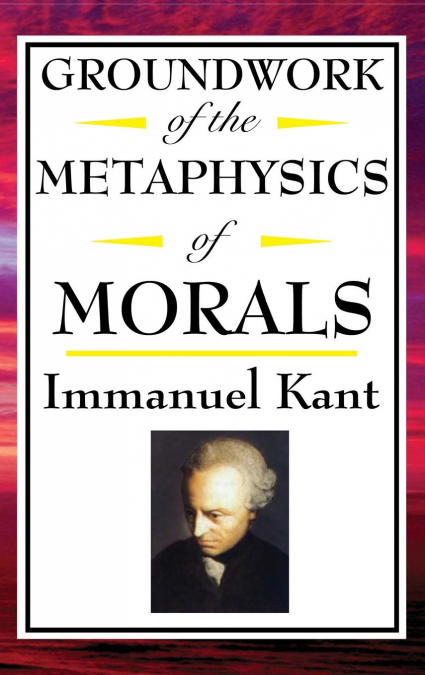
  • Kant
    Immanuel Kant
    Kant’s Groundwork of the Metaphysics of Morals is one of the most important works in modern moral philosophy. It belongs beside Plato, Aristotle, Machiavelli, and Hobbes. Here Kant sets out to articulate and defend the Categorical Imperative - the fundamental principle that underlies moral reasoning - and to lay the foundation for a comprehensive account of justice and human vi...
  • On the Duty of Civil Disobedience
    HENRY DAVID THOREAU
    Civil Disobedience argues that citizens should not permit their governments to overrule their consciences, and that they have a duty to avoid allowing their acquiescence to enable the government to make them the agents of injustice. Thoreau was motivated in part by his disgust with slavery and the Mexican-American War, but the sentiments he expresses here are just as pertinent ...
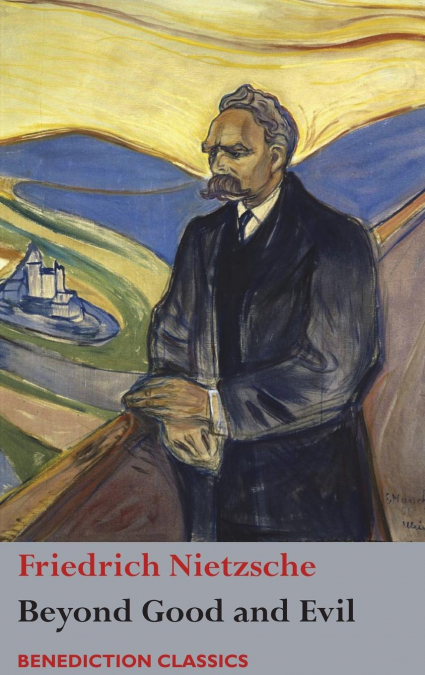
  • Beyond Good and Evil
    Friedrich Nietzsche
    Nietzsche, though primarily a philosopher, wrote widely on art, philology, history, religion, tragedy, culture, and science.  In 1886, at the height of his powers, he published Beyond Good and Evil.  Here he examines much of the best of human thought--dogmatic philosophy, Judeo-Christian morality, science and democracy – and finds it lacking.  Rejecting “slave-morality” he pres...
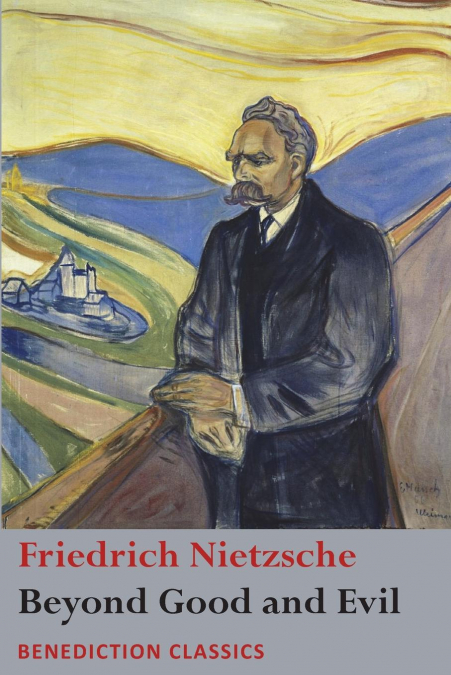
  • Beyond Good and Evil
    Friedrich Nietzsche
    Nietzsche, though primarily a philosopher, wrote widely on art, philology, history, religion, tragedy, culture, and science.  In 1886, at the height of his powers, he published Beyond Good and Evil.  Here he examines much of the best of human thought--dogmatic philosophy, Judeo-Christian morality, science and democracy – and finds it lacking.  Rejecting “slave-morality” he pres...
    Disponible

    9,99 €

Otros libros del autor

  • Personal Reality, Volume 2
    Daniel Paksi
    Western civilization was built on the concept of God. Today modern science, based on the critical method and so-called objective facts, denies even the existence of our soul. There is only matter: atoms, molecules, and DNA sequences. There is no freedom; there are no well-grounded beliefs. The decline of Western civilization is not the simple consequence of decadence, hedonism,...
  • Personal Reality, Volume 1
    Daniel Paksi
    Western civilization was built on the concept of God. Today modern science, based on the critical method and so-called objective facts, denies even the existence of our soul. There is only matter: atoms, molecules, and DNA sequences. There is no freedom; there are no well-grounded beliefs. The decline of Western civilization is not the simple consequence of decadence, hedonism,...
    Disponible

    31,99 €

  • Personal Reality, Volume 1
    Daniel Paksi
    Western civilization was built on the concept of God. Today modern science, based on the critical method and so-called objective facts, denies even the existence of our soul. There is only matter: atoms, molecules, and DNA sequences. There is no freedom; there are no well-grounded beliefs. The decline of Western civilization is not the simple consequence of decadence, hedonism,...