

 Librería Samer Atenea
 Kálamo Books
 Librería Elías (Asturias)
 Librería Kolima (Madrid)
 Librería Proteo (Málaga)
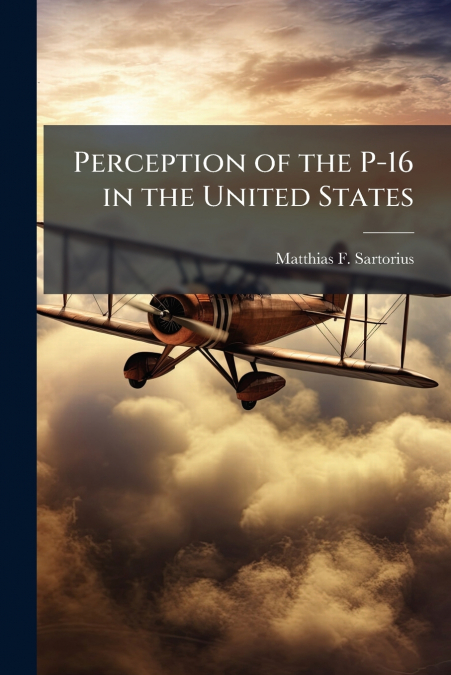
The Swiss firm Flug und Fahrzeugwerke AG (FFA) developed a combat aircraft for the Swiss Air Force. The aircraft, known as the P-16, first flew in April 1955 and achieved supersonic flight for the first time in August 1956. The Swiss government was sufficiently impressed that an order for one hundred airframes was placed in 1958. Unfortunately, the crash of two prototypes caused the order to be suspended. While the cause of the accident was a relatively minor defect in the hydraulic system that was easily corrected, the Swiss government remained convinced that the design was faulty and cancelled the order. The Swiss government used the crashes to cancel the project. In reality, the Swiss government did not mention all the other causes affecting the cancellation. The P-16 became victim of a change of the Swiss concept of aerial warfare. This cancellation of the P-16 led to the inability to develop a jet airplane by the Swiss aircraft industry. The P-16 led later to the success of the business jet called Learjet. This study analyzes changes of the Swiss concept of aerial warfare, the procurement politics of the Military Department, and the United States perception of the P-16.This work has been selected by scholars as being culturally important, and is part of the knowledge base of civilization as we know it. This work was reproduced from the original artifact, and remains as true to the original work as possible. Therefore, you will see the original copyright references, library stamps (as most of these works have been housed in our most important libraries around the world), and other notations in the work.This work is in the public domain in the United States of America, and possibly other nations. Within the United States, you may freely copy and distribute this work, as no entity (individual or corporate) has a copyright on the body of the work.As a reproduction of a historical artifact, this work may contain missing or blurred pages, poor pictures, errant marks, etc. Scholars believe, and we concur, that this work is important enough to be preserved, reproduced, and made generally available to the public. We appreciate your support of the preservation process, and thank you for being an important part of keeping this knowledge alive and relevant.





