 Librería Samer Atenea
 Kálamo Books
 Librería Elías (Asturias)
 Librería Kolima (Madrid)
 Librería Proteo (Málaga)
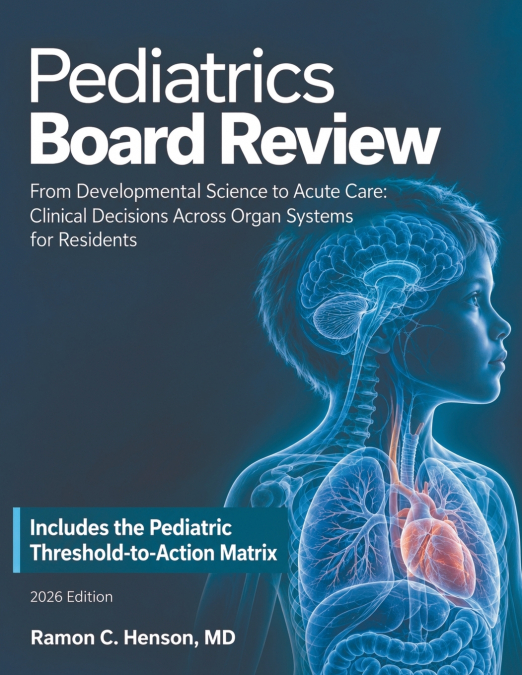
Turn Age-Specific Findings Into Safe Clinical Action Pediatrics Board Review 2026-2027 gives residents a mechanism-first framework for interpreting illness across infancy, childhood, and adolescence. It connects developmental physiology, common presentations, dangerous alternatives, focused evaluation, and management thresholds across the major organ systems while keeping family context, equity, and continuity of care inside the clinical decision. The Pediatric Threshold-to-Action Matrix links each presenting pattern to the discriminator, workup pivot, management threshold, and safety anchor that determine what happens next, including when observation should give way to testing, consultation, treatment, transfer, or closer monitoring. Build practical capability across the full general-pediatrics scope: Growth, development, preventive care, and adolescent health - calibrate findings to age, baseline function, and developmental stage Neonatal, infectious, respiratory, cardiac, gastrointestinal, renal, endocrine, and neurologic disease - organize broad differentials around mechanism and urgency Emergency stabilization, shock, respiratory failure, seizures, trauma, and toxic exposure - recognize compensation failure and escalate at a defensible threshold Hematology, oncology, immunology, rheumatology, dermatology, and musculoskeletal care - separate common patterns from consequential mimics Behavioral health, maltreatment, environmental risk, and medical complexity - integrate safeguarding, functional outcomes, and care coordination Narrative cases, native comparison tables, numbered clinical pathways, and visual prompts - translate knowledge into bedside reasoning without fragmenting the clinical arc Use this text to study systematically, reason proportionately, and carry every pediatric decision through to reliable follow-up.