 Librería Samer Atenea
 Librería Aciertas (Toledo)
 Kálamo Books
 Librería Perelló (Valencia)
 Librería Elías (Asturias)
 Donde los libros
 Librería Kolima (Madrid)
 Librería Proteo (Málaga)
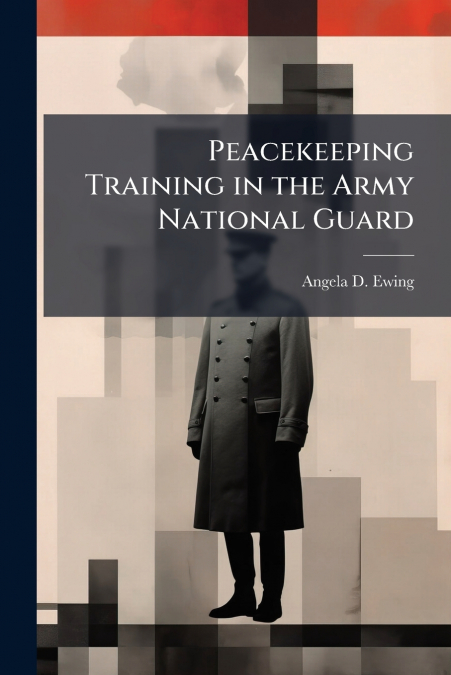
Should all of the Army National Guard ’s divisions include peacekeeping tasks in their Mission Essential Task Lists (METL)? Most ARNG units focus their training efforts on traditional combat arms tasks, and only after they receive a peacekeeping mission do they execute pre-deployment PKO proficiency training. Following the model of alert-train-deploy rather than train-alert-deploy places additional stress not only on the deploying unit, but also on external units that are assisting with the mobilization process. FM 7-0, Training the Force, dictates that Army units use the train-alert-deploy model. Arguments against the research question include issues related to lack of training time, a required change in culture to deal with a more restrictive set of rules of engagement (ROE), and little information on which theater of operations the unit should focus. Arguments supporting peacekeeping METL tasks in the Guard are many. The ARNG mission statement and posture statement address peace operations. The QDR requires all units to operate in a full-spectrum environment. Guard units that routinely train in PKO may alleviate the four to six week train-up requirement at the mobilization station. Evidence shows that the likelihood of the ARNG continuing to participate in smaller-scale contingency operations is very high. Several lessons learned documents from PKO missions state that units 19 METL should include peacekeeping tasks. The arguments do not address retention, equipment, or force structure. This study evaluates the arguments for and against the research question by using the criteria of readiness, compliance with Federal directives, and legitimacy. Divisions that regularly train on PKO tasks will sustain the unit ’s PKO support. Increased proficiency at home station improves readiness. If readiness is better, then the primary research question is supported. The Quadrennial Defense Review (QDR) dictates that the Army maintain the ability of operating in a full-spectruThis work has been selected by scholars as being culturally important, and is part of the knowledge base of civilization as we know it. This work was reproduced from the original artifact, and remains as true to the original work as possible. Therefore, you will see the original copyright references, library stamps (as most of these works have been housed in our most important libraries around the world), and other notations in the work.This work is in the public domain in the United States of America, and possibly other nations. Within the United States, you may freely copy and distribute this work, as no entity (individual or corporate) has a copyright on the body of the work.As a reproduction of a historical artifact, this work may contain missing or blurred pages, poor pictures, errant marks, etc. Scholars believe, and we concur, that this work is important enough to be preserved, reproduced, and made generally available to the public. We appreciate your support of the preservation process, and thank you for being an important part of keeping this knowledge alive and relevant.