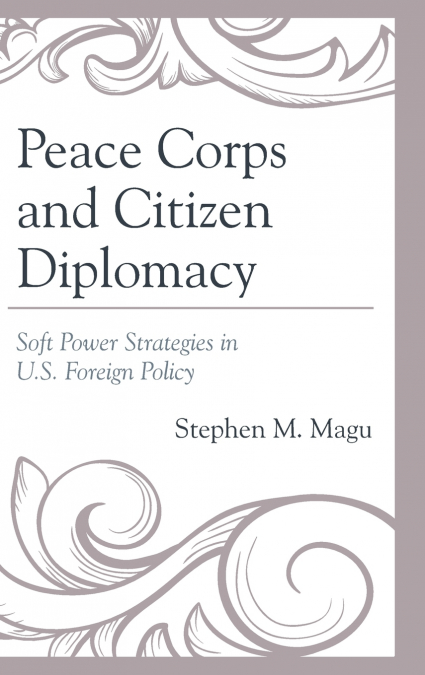
Peace Corps and Citizen Diplomacy

Peace Corps and Citizen Diplomacy

Peace Corps and Citizen Diplomacy

Stephen M Magu / Stephen M. Magu / Stephen MMagu

129,20 €
IVA incluido
Consulta disponibilidad
Editorial:
Bloomsbury Publishing plc
Año de edición:
2018
Materia
Relaciones internacionales
ISBN:
9781498502405

Selecciona una librería:

  • Librería Samer Atenea
  • Librería Aciertas (Toledo)
  • Kálamo Books
  • Librería Perelló (Valencia)
  • Librería Elías (Asturias)
  • Donde los libros
  • Librería Kolima (Madrid)
  • Librería Proteo (Málaga)

For over 50 years, more than 225,000 Peace Corps volunteers have been placed in over 140 countries around the world, with the goals of helping the recipient countries need for trained men and women, to promote a better understanding of Americans for the foreign nationals, and to promote a better understanding of other peoples on the part of Americans. The Peace Corps program, proposed during a 2 a.m. campaign stop on October 14, 1960 by America's Camelot, was part idealism, part belief that the United States could help Global South countries becoming independent. At the height of the Cold War, the US and USSR were racing each other to the moon, missiles in Turkey and in Cuba and walls in Berlin consumed the archrivals; sending American graduates to remote villages seemed ill-informed. Kennedy's Kiddie Korps was derided as ineffectual, the volunteers accused of being CIA spies, and often, their work made no sense to locals. The program would fall victim to the vagaries of global geopolitics: in Peru, Yawar Malku (Blood of the Condor), depicting American activities in the country, led to volunteers being bundled out unceremoniously; in Tanzania, they were excluded over Tanzania’s objection to the Vietnam War. Despite these challenges, the Peace Corps program shaped newly independent countries in significant ways: in Ethiopia they constituted half the secondary school teachers in 1961, in Tanzania they helped survey and build roads, in Ghana and Nigeria they were integral in the education systems, alongside other programs. Even in the Philippines, formerly a U.S. colony, Peace Corps volunteers were welcomed. Aside from these outcomes, the program had a foreign policy component, advancing U.S. interests in the recipient countries. Data shows that countries receiving volunteers demonstrated congruence in foreign policy preferences with the U.S., shown by voting behavior at the United Nations, a forum where countries’ actions and preferences and signaling is evident. Volunteer-recipient countries particularly voted with the U.S. on Key Votes. Thus, Peace Corps volunteers who function as citizen diplomats, helped countries shape their foreign policy towards the U.S., demonstrating the viability of soft power in international relations.
Artículos relacionados

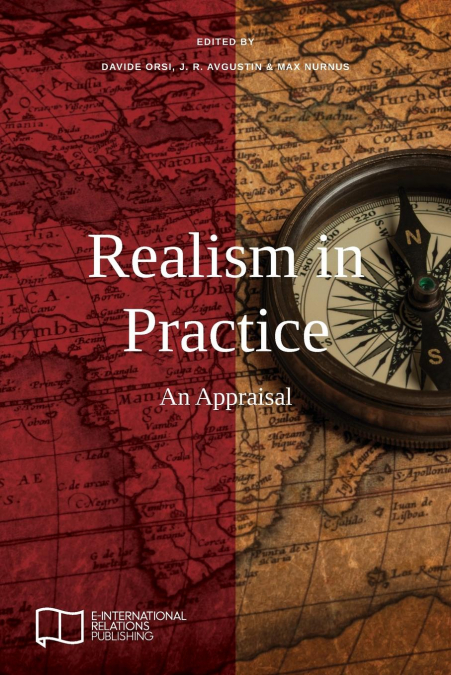
  • Realism in Practice
    The purpose of this book is to appraise the current relevance and validity of realism as an interpretative tool in contemporary International Relations. All chapters of the book are animated by a theoretical effort to define the conceptual aspects of realism and attempt to establish whether the tradition still provides the necessary conceptual tools to scholars.The chapters add...
    Disponible

    20,36 €

  • Predicting gender violence in India
    Shritha K Vasudevan
    In this provocative new book, Shritha Vasudevan argues that feminist international relations (IR) theory has inadvertently resulted in a biased worldview, the very opposite of what feminist IR set out to try to rectify. This book contests theoretical presumptions of Western feminist IR and attempts to reformulate it in contexts of non-Western cultures. Vasudevan deftly utilizes...
  • Contemporary security issues in Africa
    Isiaka Alani Badmus / Lere Amusan
    In volume, an emerging generation of African scholars examines specific states in Africa where instability is the order of the day. Considerations of African instability are highly relevant in today’s world, where one examines the types of regimes that were put in place after the Cold War and their effects on Africa. Multiparty systems introduced in Africa, rather than bringing...
  • Chronicles of the first and second chechen wars
    Ilya Milyukov
    Presented by Russian author and attorney Ilya Milyukov, Chronicles of the First and Second Chechen War presents the main events of the First (1994-1996) and Second (1999-2009) Wars in Chechnya, Russia’s deadliest conflicts since World War II. The First War began in December 1994 and lasted for one year and nine months, ending in August 1996. There were two major urban battles -...
  • Political instability in Africa
    Isiaka Alani Badmus / Lere Amusan
    This book offers broad-gauged analyses of the causes, nature, and changing patterns of armed conflict in Africa as well as the reasons for these patterns. It also situates conflicts that have been haunting the African continent since the time of decolonization within the various theoretical schools such as 'new war,' 'economic war,' 'neo-patrimonial,' and 'globalization.' It be...
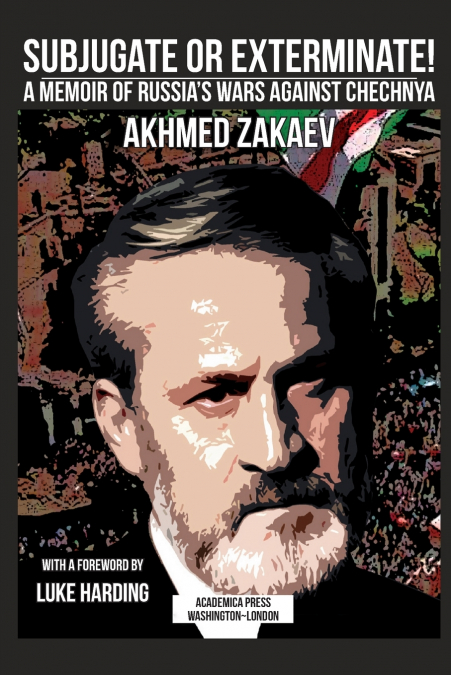
  • Subjugate or exterminate!
    Akhmed Zakaev / Arch Tait
    Foreword by Luke HardingAkhmed Zakaev is a symbol of the indomitable will of the Chechen nation. In this important memoir, he tells the story of the Chechen struggle as he experienced it, describing the conflict in human terms and providing a detailed documentary record of little known or badly understood events that will be of benefit to historians for generations to come.- Da...
    Disponible

    41,63 €