 Librería Samer Atenea
 Kálamo Books
 Librería Elías (Asturias)
 Librería Kolima (Madrid)
 Librería Proteo (Málaga)
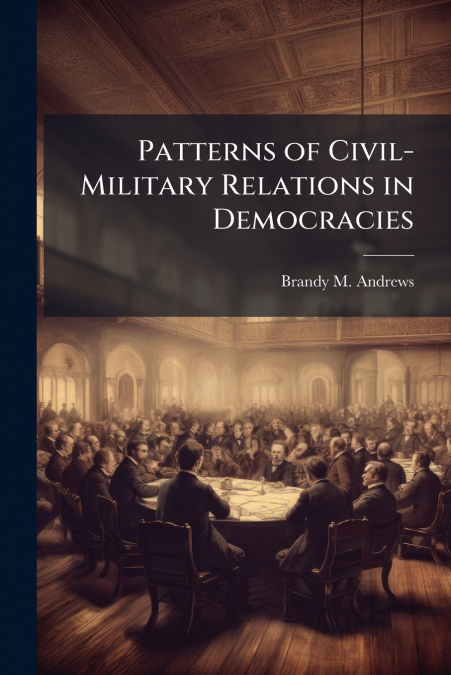
Civil-Military relations are an area of study that garners intense scrutiny. Since Samuel Huntington and Morris Janowitz first introduced their theories on civil-military relations, many scholars have debated the issue. Over the years, many alternative theories have been explored. A study of civil-military relations has been conducted on almost every nation in the world, some more than once. Of all the research available on civil-military relations, there still exists a shortfall in criteria that can be used to assist developing democracies in determining the evolution of their own civil-military relations. As nations continue to evolve, so too will their civil-military relations. This monograph attempts to bridge the shortfall in areas of civil-military relations that will help a developing nation in improving its own civil-military relations. It will also be helpful to those organizations that may find themselves in a position to assist democracies in developing their civil-military relations. In the study, four criteria are identified that apply to civil-military relations in democracies. These criteria have been applied to two case studies that show how the application of the criteria shows distinct patterns of development for civil-military relations. These criteria are the establishment of founding documents that specifically dictate civilian control over the military; the professional development of the military forces; the relationship of the civilian government and the military during times of war and peace; and the work-shirk attitude of the military. These criteria relate directly to different areas of civil-military relations where outside organizations may have the influence to provide guidance and advice to newly emerging democracies. Specifically this study may assist MNSTC-I and CSTC-A in the current fight, by helping both Iraq and Afghanistan develop a positive relationship between the government and the military.This work has been selected by scholars as being culturally important, and is part of the knowledge base of civilization as we know it. This work was reproduced from the original artifact, and remains as true to the original work as possible. Therefore, you will see the original copyright references, library stamps (as most of these works have been housed in our most important libraries around the world), and other notations in the work.This work is in the public domain in the United States of America, and possibly other nations. Within the United States, you may freely copy and distribute this work, as no entity (individual or corporate) has a copyright on the body of the work.As a reproduction of a historical artifact, this work may contain missing or blurred pages, poor pictures, errant marks, etc. Scholars believe, and we concur, that this work is important enough to be preserved, reproduced, and made generally available to the public. We appreciate your support of the preservation process, and thank you for being an important part of keeping this knowledge alive and relevant.