

 Librería Samer Atenea
 Kálamo Books
 Librería Elías (Asturias)
 Librería Kolima (Madrid)
 Librería Proteo (Málaga)
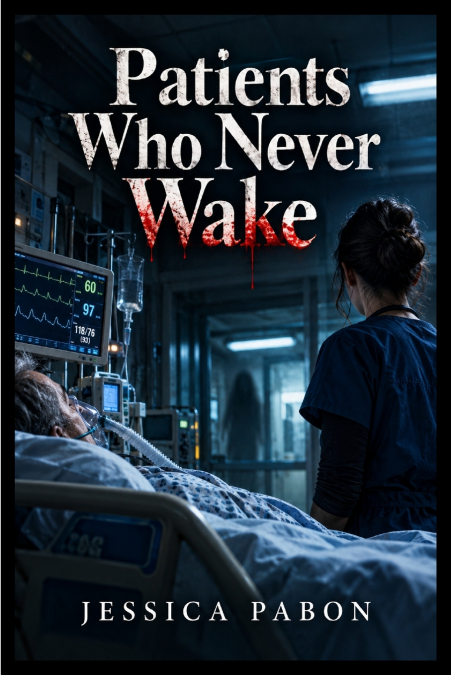
Patients Who Never Wake is a hospital-set horror mystery in which a sound that should no longer exist exposes the possibility of a hidden human catastrophe. Adeline Brooks, a careful night nurse, carries lasting anger and grief over her sister’s death after a hospital failed to respond to a critical warning. During a shift, Adeline hears an obsolete mechanical call bell coming from a sealed service shaft. The modern digital annunciator records no alert, and her supervisor dismisses the sound as exhaustion or imagination. Yet the bell is distinct enough that Adeline cannot simply ignore it.Following the sound draws her beyond the familiar routines of the ward and into forgotten areas of the hospital. There she finds signs that the official account of the building’s patients and operations is incomplete. Records, staff responses, and the hospital’s systems seem to work together to obscure what is happening below, making it difficult to know which evidence can be trusted. The title’s 'patients who never wake' becomes more than a frightening phrase: it points toward people who may have been removed from ordinary care, visibility, and accountability.The hospital setting intensifies the suspense because its familiar procedures-alarms, charts, shifts, locked doors, and clinical protocols-should make danger detectable. Instead, the systems that ought to protect patients become part of the mystery. Adeline’s professional vigilance and personal history push her to keep investigating even when colleagues undermine her judgment. Her struggle is not only against a concealed threat but also against institutional denial: the pressure to accept a reassuring explanation when the evidence says otherwise.At the end, the Relay 4 bell rings again from the sealed shaft. The sound confirms that the danger has not been resolved and that someone, or something, is still calling for attention. Rather than offering a neat explanation, the novel leaves Adeline confronting the continuing presence of patients hidden in darkness. Its horror comes from the possibility that suffering can persist in a place devoted to healing when people choose not to listen.





