 Librería Samer Atenea
 Kálamo Books
 Librería Elías (Asturias)
 Librería Kolima (Madrid)
 Librería Proteo (Málaga)
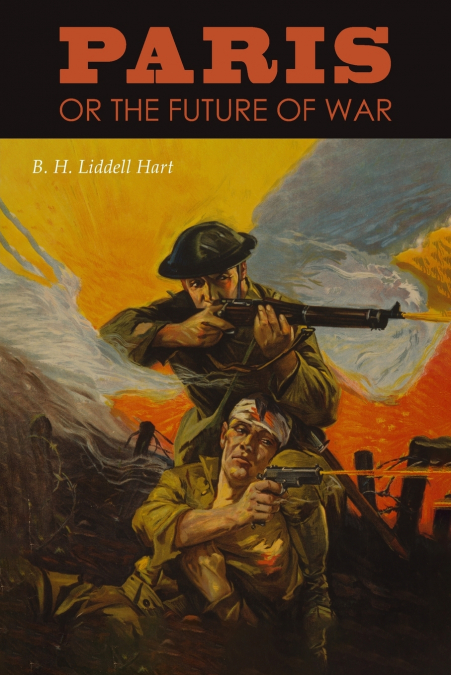
2022 Reprint of the 1925 Edition. Exact facsimile of the original edition and not reproduced with Optical Recognition Software. The foundation of Liddell Hart’s theory of limited war emerged in the 1920s from his conviction that Europe’s military leaders had lost sight of the true objective of war and consequently had mishandled the conduct of the First World War. Believing that the sole objective of war was the destruction of the main enemy army in great battles, they had pommeled each other mercilessly for four years in a massive struggle of attrition. The extraordinary cost of this effort was obvious to all, but Liddell Hart argued that it was also unnecessary and based upon an unsound principle. Using Hannibal’s victory at Cannae and Moltke’s at Sedan as examples, he asserted that 'there are . . . plenty of negative examples to prove that the conquests of the main forces of the enemy are not synonymous with victory.' Moreover, as the world war had revealed, attempts to achieve such an objective could too easily lead to wars of unlimited means, wars 'in which the conductor does not know when to stop.' 'It implies,' he continued, 'that the end is pursued regardless of what lies beyond. The conductor allows the fighting instinct to usurp control of his reason.' To restore this control, Liddell Hart asserted it was first necessary 'to produce true grand strategists to replace the color-blind exponents of mass destruction who can only see red' by redefining the objective of war. This was the central theme of his first book on military affairs, Paris; or the Future of War, in which he wrote that the purpose of war was 'To ensure a resumption of the peacetime policy with the shortest and least costly interruption of the normal life of the country'. Contents: The future of war -- The origins of the false objective -- Permanent national objects -- The national objective in war -- Historical examples of the moral objective -- The means to the moral objective -- The air weapon -- Objections to the air-attack -- Are armies and navies obsolete? -- The naval weapon -- The army weapon -- The evolution of 'new model' armies -- Epilogue.