

 Librería Samer Atenea
 Kálamo Books
 Librería Elías (Asturias)
 Librería Kolima (Madrid)
 Librería Proteo (Málaga)
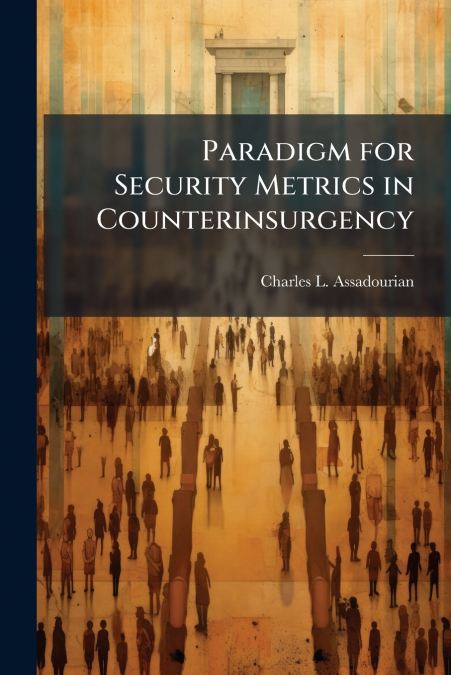
Current Army doctrine lacks a security metrics paradigm similar to the infrastructure paradigm SWEAT-MSO. Because of this, commanders, staff, subordinates, other government leaders, and the media lack a simple and common set of terms to use when communicating an assessment of security in a counterinsurgency environment. This thesis examines the history of the use of counterinsurgency metrics for security. It examines one successful counterinsurgency, United Kingdom in Malaya, 1948-1960; one unsuccessful counterinsurgency, France in Algeria, 1954-1962; and one ongoing counterinsurgency, Allied Elements in Iraq, 2003-Present. This research examines each of these regarding two lenses: systems analysis and tipping points. The successful metrics used in these counterinsurgencies are summarized in the security incident chronology acronym SLTWCT 'slitwick-tee' (Security Incidents, Local Security Force Organization, Tips and Reports, Warrants, Captures and Sensitive Site Exploitation, and Trials).This work has been selected by scholars as being culturally important, and is part of the knowledge base of civilization as we know it. This work was reproduced from the original artifact, and remains as true to the original work as possible. Therefore, you will see the original copyright references, library stamps (as most of these works have been housed in our most important libraries around the world), and other notations in the work.This work is in the public domain in the United States of America, and possibly other nations. Within the United States, you may freely copy and distribute this work, as no entity (individual or corporate) has a copyright on the body of the work.As a reproduction of a historical artifact, this work may contain missing or blurred pages, poor pictures, errant marks, etc. Scholars believe, and we concur, that this work is important enough to be preserved, reproduced, and made generally available to the public. We appreciate your support of the preservation process, and thank you for being an important part of keeping this knowledge alive and relevant.





