 Librería Samer Atenea
 Kálamo Books
 Librería Elías (Asturias)
 Librería Kolima (Madrid)
 Librería Proteo (Málaga)
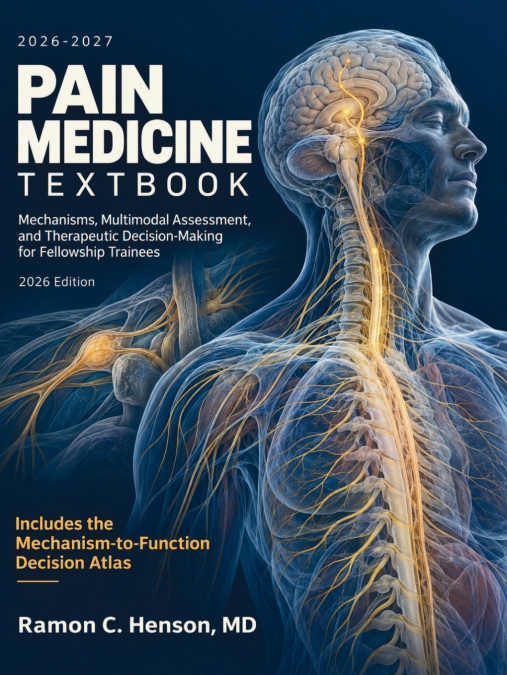
Turn Complex Presentations into Defensible Clinical Decisions Pain Medicine Textbook connects contemporary neurobiology with the daily work of assessment, risk management, rehabilitation, pharmacotherapy, procedures, and longitudinal care. Written for fellowship trainees and clinicians, it moves from nociceptive, neuropathic, and nociplastic mechanisms to regional syndromes, special populations, cancer care, perioperative practice, interventional techniques, and neuromodulation. The Mechanism-to-Function Decision Atlas gives every major topic a consistent path from presenting pattern to mechanism signal, functional burden, workup pivot, management anchor, and trap logic. Narrative cases, clinical tables, visual prompts, and cross-chapter reference entries reinforce the same reasoning sequence at the point of care. Use the book to strengthen these clinical capabilities: Mechanism-based classification — distinguish mixed phenotypes without allowing one label or imaging finding to dominate the formulation Multidimensional assessment — connect history, examination, function, context, danger signals, and selective testing Medication stewardship — plan interpretable therapeutic trials with monitoring, functional targets, and stopping rules Active restoration — integrate rehabilitation, behavioral care, sleep, and lifestyle contributors into staged recovery Regional syndrome management — navigate headache, spine, musculoskeletal, neuropathic, focal, visceral, and pelvic presentations Procedural judgment — align image-guided interventions and neuromodulation with selection, anatomy, safety, and outcomes Population adaptation — tailor care for children, older adults, pregnancy, frailty, organ dysfunction, disability, and limited resources Use this clinical reference to make pain-care decisions more coherent, measurable, and safe across settings.