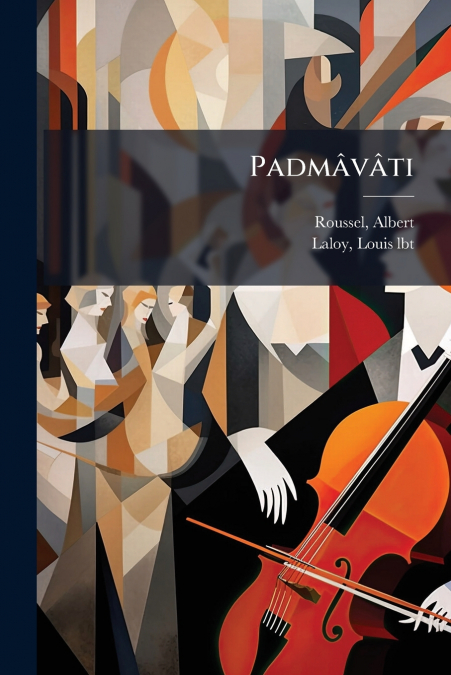
Roussel Albert 1869-1937 / Louis 1874-1944. lbt Laloy
 Librería Samer Atenea
 Kálamo Books
 Librería Elías (Asturias)
 Librería Kolima (Madrid)
 Librería Proteo (Málaga)
Padmâvatî is an opera-ballet in two acts by Albert Roussel, with a libretto by Louis Laloy. Composed in 1914-1918 and first performed in 1923, the work showcases Roussel’s distinctive musical style, blending elements of impressionism and exoticism to create a rich and dramatic soundscape. Set in 13th-century India, the opera tells the tragic story of Padmâvatî, a queen renowned for her beauty and virtue. Her kingdom faces imminent invasion, and she must make a difficult choice to protect her people. This score represents a key work in the repertoire of early 20th-century French opera, and its balletic elements add another layer of artistic richness. The collaboration between Roussel and Laloy resulted in a powerful and moving portrayal of love, sacrifice, and duty, making 'Padmâvatî' a memorable and enduring work.This work has been selected by scholars as being culturally important, and is part of the knowledge base of civilization as we know it. This work was reproduced from the original artifact, and remains as true to the original work as possible. Therefore, you will see the original copyright references, library stamps (as most of these works have been housed in our most important libraries around the world), and other notations in the work.This work is in the public domain in the United States of America, and possibly other nations. Within the United States, you may freely copy and distribute this work, as no entity (individual or corporate) has a copyright on the body of the work.As a reproduction of a historical artifact, this work may contain missing or blurred pages, poor pictures, errant marks, etc. Scholars believe, and we concur, that this work is important enough to be preserved, reproduced, and made generally available to the public. We appreciate your support of the preservation process, and thank you for being an important part of keeping this knowledge alive and relevant.