Inicio > Lenguas > Lingüistica > Oxford Reference Guide to Lexical Functional Grammar
Oxford Reference Guide to Lexical Functional Grammar

Oxford Reference Guide to Lexical Functional Grammar

John J. Lowe / Louise Mycock / Mary Dalrymple

295,12 €
IVA incluido
Disponible
Editorial:
Oxford University Press
Año de edición:
2019
Materia
Lingüistica
ISBN:
9780198733300
295,12 €
IVA incluido
Disponible

Selecciona una librería:

  • Librería Samer Atenea
  • Librería Aciertas (Toledo)
  • Kálamo Books
  • Librería Perelló (Valencia)
  • Librería Elías (Asturias)
  • Donde los libros
  • Librería Kolima (Madrid)
  • Librería Proteo (Málaga)

This volume is the most comprehensive reference work to date on Lexical Functional Grammar (LFG). The authors provide detailed and extensive coverage of the analysis of syntax, semantics, morphology, prosody, and information structure, and how these aspects of linguistic structure interact in the nontransformational framework of LFG. The book is divided into three parts. The first part examines the syntactic theory and formal architecture of LFG, with detailed explanations and comprehensive illustration, providing an unparalleled introduction to the fundamentals of the theory. Part two explores non-syntactic levels of linguistic structure, including the syntax-semantics interface and semantic representation, argument structure, information structure, prosodic structure, and morphological structure, and how these are related in the projection architecture of LFG. Chapters in the third part illustrate the theory more explicitly by presenting explorations of the syntax and semantics of a range of representative linguistic phenomena: modification, anaphora, control, coordination, and long-distance dependencies. The final chapter discusses LFG-based work not covered elsewhere in the book, as well as new developments in the theory. The volume will be an invaluable reference for graduate and advanced undergraduate students and researchers in a wide range of linguistic sub-fields, including syntax, morphology, semantics, information structure, and prosody, as well as those working in language documentation and description.
Artículos relacionados

  • User-Centered Computer Aided Language Learning
    Giorgos Zacharia / Panayiotis Zaphiris
    ...
    Disponible

    112,14 €

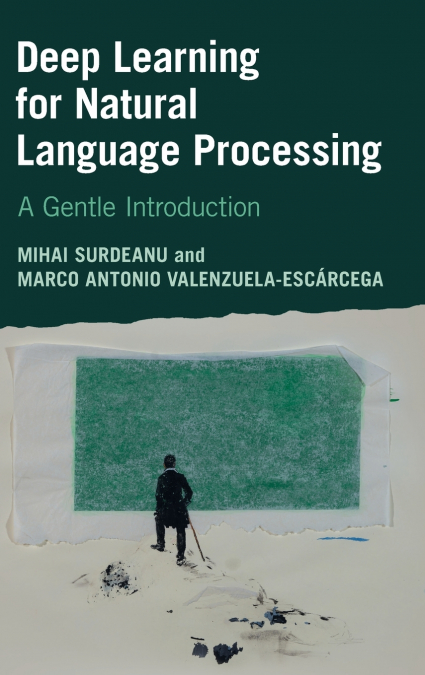
  • Deep Learning for Natural Language Processing
    Marco Antonio Valenzuela-Escárcega / Mihai Surdeanu
    ...
    Disponible

    47,60 €

  • Deep Learning for Natural Language Processing
    Marco Antonio Valenzuela-Escárcega / Mihai Surdeanu
    ...
    Disponible

    144,63 €

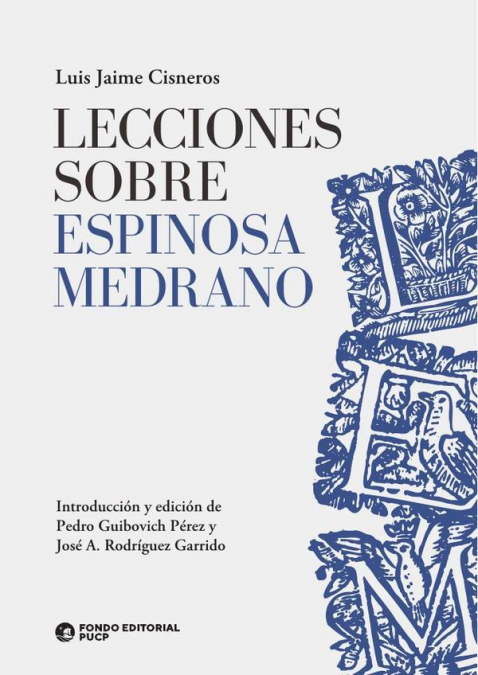
  • Lecciones sobre espinosa medrano
    Luis Jaime Cisneros Vizquerra
    La obra de Juan de Espinosa Medrano, apodado en su tiempo «El Lunarejo» (c. 1629-1688), fue uno de los mayores focos de interés académico de Luis Jaime Cisneros (1921-2011). En 1980 aparecieron sus primeros trabajos dedicados a estudiar los textos capitales de Espinosa Medrano (el Apologético en favor de don Luis de Góngora, la Panegírica declamación por la protección de las ci...
    Disponible

    17,63 €

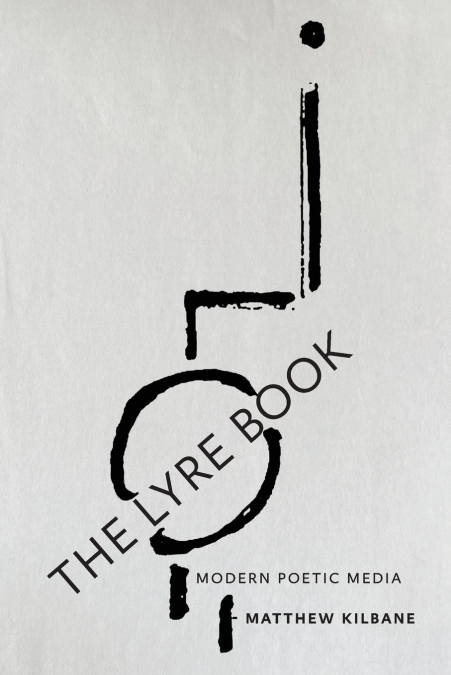
  • Lyre Book
    Matthew Kilbane
    Redefines modern lyric poetry at the intersection of literary and media studies.In The Lyre Book, Matthew Kilbane urges literary scholars to consider lyric not as a genre or a reading practice but as a media condition: the generative tension between writing and sound. In addition to clarifying issues central to the study of modern poetry--including its proximity to popular song...
    Disponible

    50,84 €

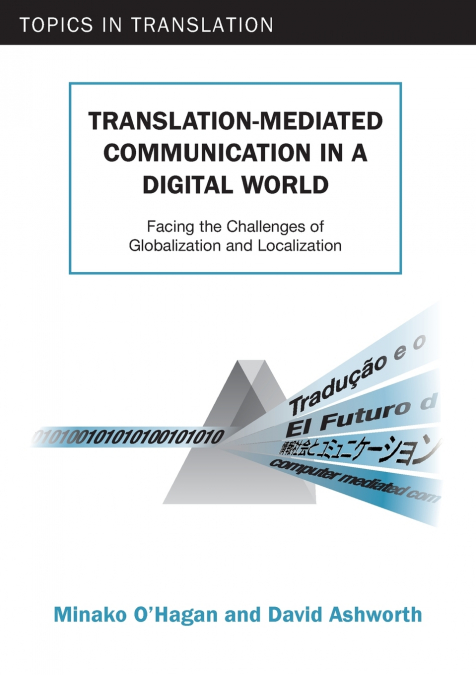
  • Translation-mediated Communication in a Digital World
    David Ashworth / Minako O’Hagan
    The Internet is accelerating globalization by exposing organizations and individuals to global audiences. This in turn is driving teletranslation and teleinterpretation, new types of multilingual support, which are functional in digital communications environments. The book describes teletranslation and teleinterpretation by exploring a number of key emerging contexts for langu...
    Disponible

    45,19 €