

 Librería Samer Atenea
 Librería Aciertas (Toledo)
 Kálamo Books
 Librería Perelló (Valencia)
 Librería Elías (Asturias)
 Donde los libros
 Librería Kolima (Madrid)
 Librería Proteo (Málaga)
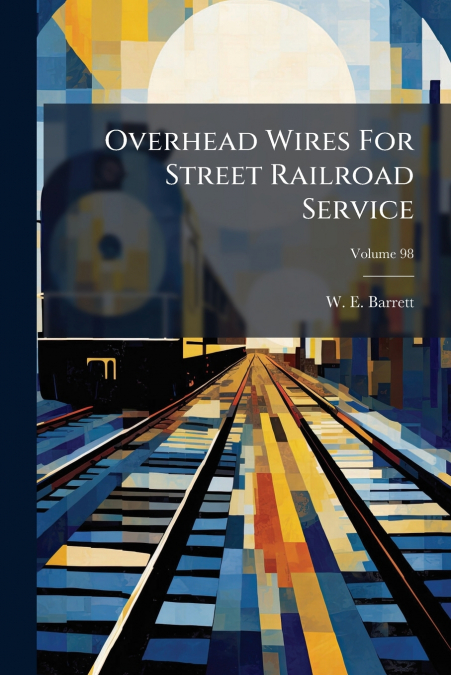
Overhead Wires For Street Railroad Service: Views Expressed By The Mayors Of Cities, Where They Are In Operation, meticulously compiled by W. E. Barrett, offers a fascinating glimpse into the early 20th-century perspectives on urban transportation. This volume, number 98 in its series, captures the opinions and insights of mayors from various cities concerning the implementation and impact of overhead wire systems for street railroads. It provides a unique historical record of the challenges and considerations involved in developing urban infrastructure during a period of rapid technological advancement. Barrett’s work preserves valuable viewpoints on the practical and political aspects of integrating street railroads into cityscapes. It highlights the considerations for urban planning, public opinion, and technological implementation. This work remains relevant for historians, urban planners, and anyone interested in the evolution of modern urban transportation systems. The careful documentation of mayoral perspectives makes it a valuable primary source for understanding the debates and decisions that shaped early urban transit.This work has been selected by scholars as being culturally important, and is part of the knowledge base of civilization as we know it. This work was reproduced from the original artifact, and remains as true to the original work as possible. Therefore, you will see the original copyright references, library stamps (as most of these works have been housed in our most important libraries around the world), and other notations in the work.This work is in the public domain in the United States of America, and possibly other nations. Within the United States, you may freely copy and distribute this work, as no entity (individual or corporate) has a copyright on the body of the work.As a reproduction of a historical artifact, this work may contain missing or blurred pages, poor pictures, errant marks, etc. Scholars believe, and we concur, that this work is important enough to be preserved, reproduced, and made generally available to the public. We appreciate your support of the preservation process, and thank you for being an important part of keeping this knowledge alive and relevant.





