
Inicio > Economía, finanzas, empresa y gestión > Economía > Economía del desarrollo y economías emergentes > Out of Poverty. Comparative Poverty Reduction Strategies in Eastern and Southern Africa
Out of Poverty. Comparative Poverty Reduction Strategies in Eastern and Southern Africa

Out of Poverty. Comparative Poverty Reduction Strategies in Eastern and Southern Africa


64,06 €
IVA incluido
Disponible
Editorial:
African Books Collective
Año de edición:
2008
Materia
Economía del desarrollo y economías emergentes
ISBN:
9789987080069
64,06 €
IVA incluido
Disponible

Selecciona una librería:

  • Librería Samer Atenea
  • Librería Aciertas (Toledo)
  • Kálamo Books
  • Librería Perelló (Valencia)
  • Librería Elías (Asturias)
  • Donde los libros
  • Librería Kolima (Madrid)
  • Librería Proteo (Málaga)

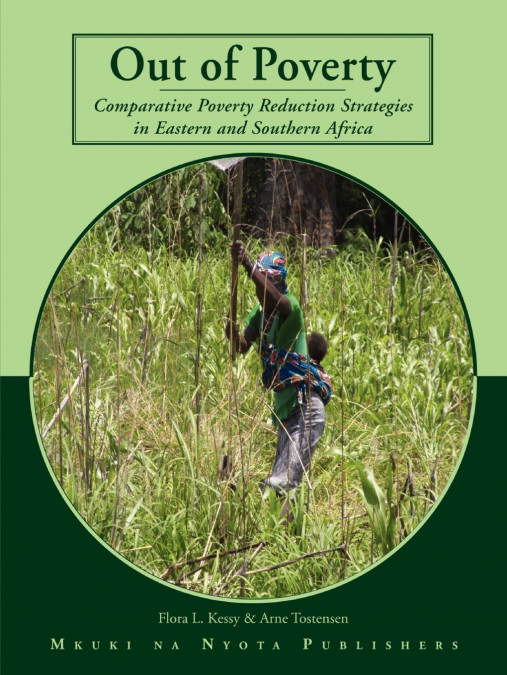
Poverty reduction has been a long-standing concern of all African countries since independence. This focus is also reflected in the policies of the international donor community, including the twin International Financial Institutions (IFIs) – the World Bank and the International Monetary Fund.This study examines, traces and maps the poverty reduction policies adopted by six countries in Eastern and Southern Africa since the mid-1990s with a view to highlighting differences and similarities. The first group of three countries – Tanzania, Uganda and Zambia – is made up of so-called Heavily Indebted Poor Countries (HIPCs), while the other three are non-HIPCs, comprising Botswana, Kenya and Namibia. Whereas the former are required to formulate Poverty Reduction Strategy Papers (PRSPs) under terms of reference set by the IFIs, the latter are at liberty to chart home-grown strategies. The study compares these two categories of countries in order to ascertain whether their poverty reduction strategies differ substantially or largely converge. It is found that despite differences of nuance there is a strong tendency towards convergence of approach and design. Since it is recognised that poverty is complex and multi-faceted, it follows that strategies pointing the way out of poverty must be comprehensive and multi-pronged, as reflected in the World Bank’s three-pronged strategy: promoting opportunity; facilitating empowerment; and enhancing security. An epistemic community seems to have emerged, at least among the political and economic elites of Eastern and Southern Africa, by and large embracing the precepts of the IFIs. Specifically, the study reviews through six country-specific chapters the different anti-poverty strategies adopted by the selected HIPCs and non-HIPCs to assess implementation arrangements in terms of priority; linkages to budgets; and monitoring and evaluation systems. It also attempts in some measure to document the main economic, social and political factors influencing poverty generation and/or reduction since the mid-1990s, and, finally, to review poverty indicators and changes in the state of poverty over the same period. The concluding chapter undertakes a comparative analysis of the six country-based strategies.

Artículos relacionados

  • Business Innovation, Development, and Advancement in the Digital Economy
    Oncioiu
    Digital technologies maintain an important tool in today’s business economy. As the economy continues to change, businesses seek out solutions in order to enhance and develop their organization. Business Innovation, Development, and Advancement in the Digital Economy highlights the competitive advantages on the emerging digital economy. Bringing together the classic economy the...
  • Green Technology Applications for Enterprise and Academic Innovation
    Ezendu Ariwa
    In the age of corporate responsibility, green technology and sustainability continue to grip the consciousness of business and academic institutions. However, development of appropriate business-driven green applications requires an awareness of best practices of the green agenda. Green Technology Applications for Enterprise and Academic Innovation addresses the importance of g...
  • Bridging the Gap Between Growth Theory and Policy in Asia
    Rup Singh / Tatla Dar Singh
    Although economic growth is amongst the oldest of debates in Economics, there has been little advancement in growth theory since the classic works of Solow. As such, clear-cut answers to the context-specific determinants of growth, especially for developing countries, are rare. Bridging the Gap Between Growth Theory and Policy in Asia: An Extension of the Solow Growth Model add...
  • Comparative Economics and Regional Development in Turkey
    Bryan Christiansen / MMustafa Erdoğdu
    The rise of globalization has affected the ways in which nations maintain sustainable development and economic prosperity. Certain countries, such as Turkey, have evolved into a place of particular importance in the changing global economy. As such, it has become more important than ever to better understand the crucial role of such nations on an international scale. Comparativ...
  • Global Perspectives on Trade Integration and Economies in Transition
    Vasily Erokhin
    In the era of globalization, foreign trade has an immense impact upon modern economies. To succeed in the global marketplace, sustainable development in trade practices is an imperative goal for countries to reach. Global Perspectives on Trade Integration and Economies in Transition is an authoritative reference source for the latest research on the dynamics of transitional eco...
  • The African Union and New Strategies for Development in Africa
    The early twenty-first century witnessed remarkable attempts by Africa’s political leadership to promote regional integration as a means of fast-tracking economic progress, facilitating peace and security, consolidating democratic gains, and promoting the general welfare of the African people. The transition of the Organization of Unity (OAU) to the African Union (AU), as well ...