

 Librería Samer Atenea
 Kálamo Books
 Librería Elías (Asturias)
 Librería Kolima (Madrid)
 Librería Proteo (Málaga)
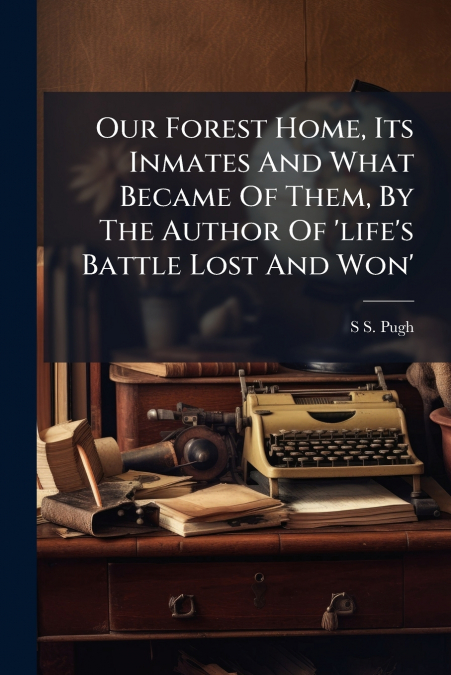
In 'Our Forest Home, Its Inmates And What Became Of Them,' S.S. Pugh, the author of 'Life’s Battle Lost and Won,' invites readers into a detailed portrait of rural life and natural history. This charming 19th-century work blends personal anecdotes with keen observations of the natural world, offering a glimpse into the author’s experiences in a forest home. Pugh shares stories of the local flora and fauna, reflecting on their behaviors and interactions within the broader ecosystem. The book captures the essence of a bygone era, presenting a vivid picture of domestic life intertwined with the rhythms of nature. With a gentle and reflective tone, Pugh explores themes of home, community, and the importance of understanding and appreciating the world around us. Readers interested in historical accounts of nature, domestic life, and the personal reflections of a perceptive observer will find this book a delightful journey into a simpler time.This work has been selected by scholars as being culturally important, and is part of the knowledge base of civilization as we know it. This work was reproduced from the original artifact, and remains as true to the original work as possible. Therefore, you will see the original copyright references, library stamps (as most of these works have been housed in our most important libraries around the world), and other notations in the work.This work is in the public domain in the United States of America, and possibly other nations. Within the United States, you may freely copy and distribute this work, as no entity (individual or corporate) has a copyright on the body of the work.As a reproduction of a historical artifact, this work may contain missing or blurred pages, poor pictures, errant marks, etc. Scholars believe, and we concur, that this work is important enough to be preserved, reproduced, and made generally available to the public. We appreciate your support of the preservation process, and thank you for being an important part of keeping this knowledge alive and relevant.







