 Librería Samer Atenea
 Kálamo Books
 Librería Elías (Asturias)
 Librería Kolima (Madrid)
 Librería Proteo (Málaga)
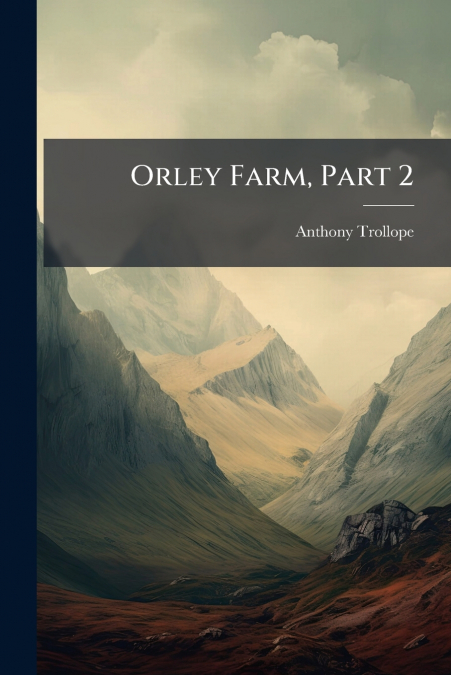
'Orley Farm' is a classic Victorian novel by Anthony Trollope, renowned for its intricate plot and vivid portrayal of English society. This second part delves deeper into the lives of its characters as they navigate complex social hierarchies and moral dilemmas. The story centers around Lady Mason, whose possession of Orley Farm is challenged, leading to a protracted and dramatic legal battle. Trollope masterfully explores themes of justice, reputation, and the far-reaching consequences of past actions. As the trial unfolds, the novel provides a fascinating glimpse into the Victorian legal system and the social pressures of the time. Through its engaging narrative and well-developed characters, 'Orley Farm' remains a compelling exploration of human nature and the enduring conflicts between right and wrong, ambition and integrity. Trollope’s keen observations and skillful storytelling make this a timeless read for anyone interested in Victorian literature and the complexities of human relationships.This work has been selected by scholars as being culturally important, and is part of the knowledge base of civilization as we know it. This work was reproduced from the original artifact, and remains as true to the original work as possible. Therefore, you will see the original copyright references, library stamps (as most of these works have been housed in our most important libraries around the world), and other notations in the work.This work is in the public domain in the United States of America, and possibly other nations. Within the United States, you may freely copy and distribute this work, as no entity (individual or corporate) has a copyright on the body of the work.As a reproduction of a historical artifact, this work may contain missing or blurred pages, poor pictures, errant marks, etc. Scholars believe, and we concur, that this work is important enough to be preserved, reproduced, and made generally available to the public. We appreciate your support of the preservation process, and thank you for being an important part of keeping this knowledge alive and relevant.