 Librería Samer Atenea
 Kálamo Books
 Librería Elías (Asturias)
 Librería Kolima (Madrid)
 Librería Proteo (Málaga)
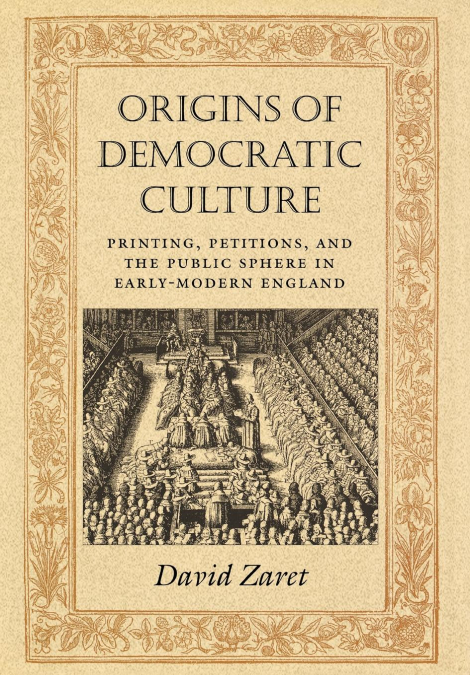
This innovative work of historical sociology locates the origins of modern democratic discourse in the emergent culture of printing in early modern England. For David Zaret, the key to the rise of a democratic public sphere was the impact of this culture of printing on the secrecy and privilege that shrouded political decisions in seventeenth-century England. Zaret explores the unanticipated liberating effects of printing and printed communication in transforming the world of political secrecy into a culture of open discourse and eventually a politics of public opinion. Contrary to those who locate the origins of the public sphere in the philosophical tracts of the French Enlightenment, Zaret claims that it originated as a practical accomplishment, propelled by economic and technical aspects of printing--in particular heightened commercialism and increased capacity to produce texts. Zaret writes that this accomplishment gained impetus when competing elites--Royalists and Parliamentarians, Presbyterians and Independents--used printed material to reach the masses, whose leaders in turn invoked the authority of public opinion to lobby those elites. Zaret further shows how the earlier traditions of communication in England, from ballads and broadsides to inn and alehouse conversation, merged with the new culture of print to upset prevailing norms of secrecy and privilege. He points as well to the paradox for today’s critics, who attribute the impoverishment of the public sphere to the very technological and economic forces that brought about the means of democratic discourse in the first place.