Organizing America

Organizing America

Charles Perrow

67,92 €
IVA incluido
Disponible
Editorial:
Princeton University Press
Año de edición:
2005
Materia
Historia de la economía
ISBN:
9780691123158
67,92 €
IVA incluido
Disponible

Selecciona una librería:

  • Librería Samer Atenea
  • Librería Aciertas (Toledo)
  • Kálamo Books
  • Librería Perelló (Valencia)
  • Librería Elías (Asturias)
  • Donde los libros
  • Librería Kolima (Madrid)
  • Librería Proteo (Málaga)

American society today is shaped not nearly as much by vast open spaces as it is by vast, bureaucratic organizations. Over half the working population toils away at enterprises with 500 or more employees--up from zero percent in 1800. Is this institutional immensity the logical outcome of technological forces in an all-efficient market, as some have argued? In this book, the first organizational history of nineteenth-century America, Yale sociologist Charles Perrow says no. He shows that there was nothing inevitable about the surge in corporate size and power by century’s end. Critics railed against the nationalizing of the economy, against corporations’ monopoly powers, political subversion, environmental destruction, and 'wage slavery.' How did a nation committed to individual freedom, family firms, public goods, and decentralized power become transformed in one century? Bountiful resources, a mass market, and the industrial revolution gave entrepreneurs broad scope. In Europe, the state and the church kept private organizations small and required consideration of the public good. In America, the courts and business-steeped legislators removed regulatory constraints over the century, centralizing industry and privatizing the railroads. Despite resistance, the corporate form became the model for the next century. Bureaucratic structure spread to government and the nonprofits. Writing in the tradition of Max Weber, Perrow concludes that the driving force of our history is not technology, politics, or culture, but large, bureaucratic organizations. Perrow, the author of award-winning books on organizations, employs his witty, trenchant, and graceful style here to maximum effect. Colorful vignettes abound: today’s headlines echo past battles for unchecked organizational freedom; socially responsible alternatives that were tried are explored along with the historical contingencies that sent us down one road rather than another. No other book takes the role of organizations in America’s development as seriously. The resultant insights presage a new historical genre.
Artículos relacionados

  • Foreign Banks and Global Finance in Modern China
    Ghassan Moazzin
    ...
    Disponible

    41,39 €

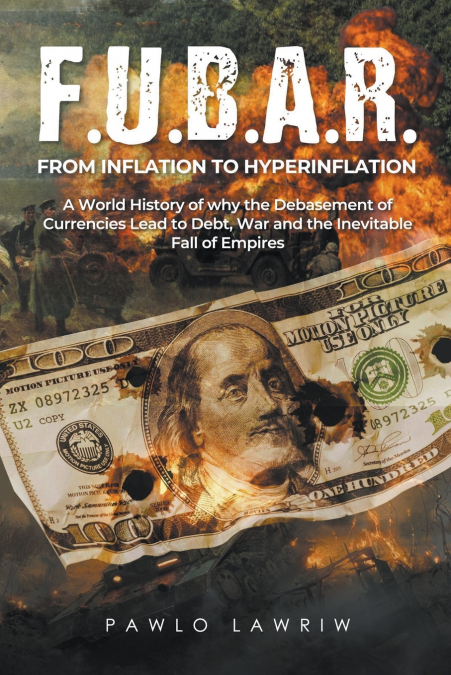
  • F.U.B.A.R. From Inflation to Hyperinflation
    Pawlo Lawriw
    Inflation and hyperinflation results in F.U.B.A.R on an epic scale. It can cause social and economic collapse and war and in short, change history- for the worse. If you are worried about inflation, who is not, then F.U.B.A.R. (F****d Up Beyond All Recognition) FROM INFLATION TO HYPERINFLATION is a work that you need to read.Some observers now wonder as society suffers from hig...
    Disponible

    18,47 €

  • Scarce and Valuable Economical Tracts
    John Ramsay McCulloch
    This volume, Scarce and Valuable Economical Tracts, was edited by John Ramsay McCulloch and originally published in 1859. It contains essays on political economy written by: Nicholas Barbon, Daniel Defoe, Henry Elking, Thomas Wise, Benjamin Franklin, Anne Robert Jacques Turgot, James Anderson, Alexander Schomberg, Joseph Townsend, Edmund Burke, and Archibald Bell.In her entry o...
    Disponible

    17,77 €

  • The Winding Road to the Welfare State
    George R. Boyer
    How did Britain transform itself from a nation of workhouses to one that became a model for the modern welfare state? The Winding Road to the Welfare State investigates the evolution of living standards and welfare policies in Britain from the 1830s to 1950 and provides insights into how British working-class households coped with economic insecurity. George Boyer examines the ...
    Disponible

    46,98 €

  • Joseph Alois Schumpeter
    Wolfgang F. Stolper
    In this major scholarly study of the life of Joseph A. Schumpeter, one of the great intellectual figures of the twentieth century, the distinguished economist Wolfgang Stolper delves into the mind of his former teacher, exploring the development of his ideas and, especially, their influence on politics and public policy. After reflecting briefly on Schumpeter the man, Stolper e...
    Disponible

    110,15 €

  • An Economic History of the Iberian Peninsula, 700-2000
    ...

Otros libros del autor

  • Complex Organizations
    Charles Perrow
    A classic text in sociology, Complex Organizations provides a succinct overview of the principal schools of thought of organizational theories, placing each into critical, historical, and cultural context. Vividly written, with many specific, student-oriented examples, Complex Organizations offers a critical perspective on organizations, analyzing their impact on individuals, g...
  • Complex Organizations
    Charles Perrow
    A classic text in sociology, Complex Organizations provides a succinct overview of the principal schools of thought of organizational theories, placing each into critical, historical, and cultural context. Vividly written, with many specific, student-oriented examples, Complex Organizations offers a critical perspective on organizations, analyzing their impact on individuals, g...
    Disponible

    33,75 €

  • The Next Catastrophe
    Charles Perrow
    Charles Perrow is famous worldwide for his ideas about normal accidents, the notion that multiple and unexpected failures--catastrophes waiting to happen--are built into our society’s complex systems. In The Next Catastrophe, he offers crucial insights into how to make us safer, proposing a bold new way of thinking about disaster preparedness. Perrow argues that rather than lay...
    Disponible

    30,06 €