 Librería Samer Atenea
 Kálamo Books
 Librería Elías (Asturias)
 Librería Kolima (Madrid)
 Librería Proteo (Málaga)
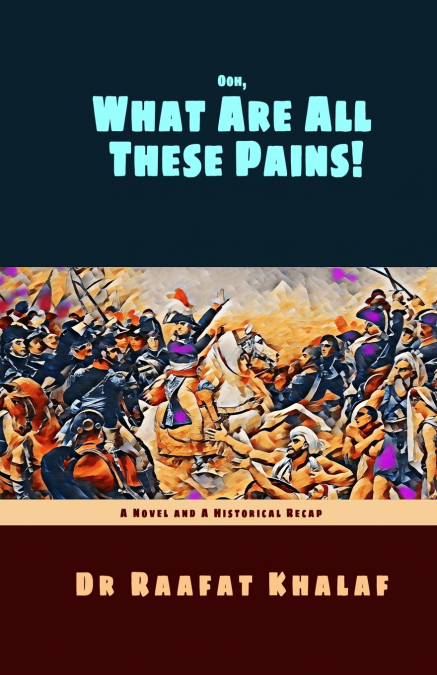
The title of this novel is taken from a phrase in the great 18th‑century historian al‑Jabarti’s book, 'The Wonders of Antiquities in Biographies and News'. During the Cairenes’ revolt against the French army, al‑Jabarti recorded the people crying out, 'Ya Salaam of these alaam'-'O, what are all these pains?'-as Napoleon Bonaparte’s bombs rained down upon them. They have never seen bombs before. Their astonishment and anguish capture the emotional heart of this story. Although the French campaign in Egypt and the Levant has been extensively chronicled in French, English, and Arabic-and Napoleon remains one of the most written‑about figures in world history-the human experience behind these events is inexhaustible. Motives, fears, hopes, and the intimate lives of ordinary people still hold untold stories.This novel blends historical fiction with a concise retelling of the first year of the French campaign at the dawn of the nineteenth century. It follows Egyptians, French, and English individuals whose daily lives were upended by the clash of empires, and it weaves an unexpected love story into the turmoil of a region caught between the era’s two great powers, France and England. While the major events and historical figures are drawn directly from primary sources, the experiences of ordinary people are imagined-crafted to illuminate the emotional truths behind the documented facts. The narrative draws on the writings of al‑Jabarti and Nicola Turc, Napoleon’s memoirs, official French campaign records, letters from French soldiers and officers to their families, documents from the British National Archives, and accounts by European travellers who visited Egypt around the time of the invasion. At its core, the novel explores how cultural difference, ambition, misunderstanding, and fear can ignite conflict and suffering-patterns that echo across history and remain painfully relevant today. It offers readers, particularly in the Middle East, Turkey, England, and France, a vivid window into a pivotal moment in the region’s past. For Western readers, it also provides insight into the deeply rooted religious and cultural landscape of the Middle East, helping to contextualise the long‑standing tensions that continue to shape global relations.