
Inicio > Humanidades > Filosofía > On The Significance Of Science And Art
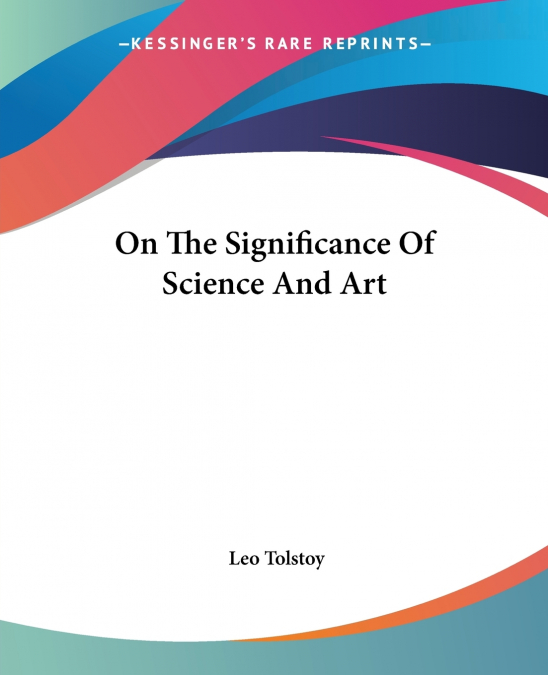
On The Significance Of Science And Art

On The Significance Of Science And Art

On The Significance Of Science And Art

Leo Tolstoy

13,02 €
IVA incluido
Disponible
Editorial:
Kessinger Publishing
Año de edición:
2004
Materia
Filosofía
ISBN:
9781419138836
13,02 €
IVA incluido
Disponible

Selecciona una librería:

  • Librería Samer Atenea
  • Librería Aciertas (Toledo)
  • Kálamo Books
  • Librería Perelló (Valencia)
  • Librería Elías (Asturias)
  • Donde los libros
  • Librería Kolima (Madrid)
  • Librería Proteo (Málaga)

This scarce antiquarian book is a facsimile reprint of the original. Due to its age, it may contain imperfections such as marks, notations, marginalia and flawed pages. Because we believe this work is culturally important, we have made it available as part of our commitment for protecting, preserving, and promoting the world’s literature in affordable, high quality, modern editions that are true to the original work.
Artículos relacionados

  • Introduction to a Future Way of Thought
    Kostas Axelos / Kenneth Mills
    'Technologists only change the world in various ways in generalized indifference; the point is to think the world and interpret the changes in its unfathomability, to perceive and experience the difference binding being to the nothing.'Anticipating the age of planetary technology Kostas Axelos, a Greek-French philosopher, approaches the technological question in this book, firs...
    Disponible

    18,58 €

  • Capsule
    John Kenneth Press
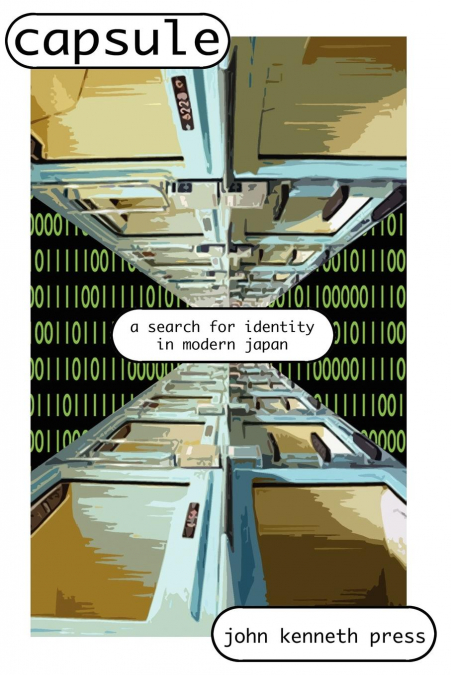
    Join John and Adam as they wander the mean streets of Japan on a psychedelic fueled search for identity. While fun for the average reader, this book could also serve as a philosphy textbook because of its ordered exploration of sources of identity. Ultimately this trip through nationalist attacks, sex, and drugs, will take you to a better understanding of yourself and your pl...
    Disponible

    11,51 €

  • If you look at it long enough...
    Paul Hallam
    Originally written for an academic journal, If you look at it long enough... is primarily a personal account of Paul Hallam’s recollections of “self-abuse” through the consumption of porn over several decades. Challenging the familiar form of an “academic essay,” this autobiographical narrative raises several questions in relation to our contemporary morals related to sex in ge...
    Disponible

    11,30 €

  • The Teachers of Gurdjieff
    Rafael Lafort / Rafael Lefort
    When The Teachers of Gurdjieff was first published more than 50 years ago, it made a considerable stir. George Ivanovich Gurdjieff had been one of the most famous mystics in the West in the first half of the 20th century - a teaching master who had many fashionable and influential pupils. He had a striking appearance and manner of teaching, and his teaching proved to be very in...
    Disponible

    20,45 €

  • Manifesto of the Communist Party
    Karl Marx
    The Communist Manifesto was first published on February 21, and it is one of the world’s most influential political tracts. Commissioned by the Communist League and written by communist theorists Karl Marx and Friedrich Engels, it laid out the League’s purposes and program. The Manifesto suggested a course of action for a proletarian (working class) revolution to overthrow the ...
  • The Art of Literature
    Arthur Schopenhauer
    Collected here are eight short essays, On Authorship, On Style, On the Study of Latin, On Men of Learning, On Thinking for Ones Self, On Criticism, On Reputation, On Genius, by the world renowned philosopher Arthur Achopenhauer. ...

Otros libros del autor

  • What Men Live By and Other Tales (Esprios Classics)
    Leo Tolstoy
    Count Lev Nikolayevich Tolstoy (1828-1910) commonly referred to in English as Leo Tolstoy, was a Russian writer - novelist, essayist, dramatist and philosopher - as well as pacifist Christian anarchist and educational reformer. He was the most influential member of the aristocratic Tolstoy family. His first publications were three autobiographical novels, Childhood, Boyhood, an...
  • The Kreutzer Sonata and Other Stories (Esprios Classics)
    Leo Tolstoy
    Count Lev Nikolayevich Tolstoy (1828-1910) commonly referred to in English as Leo Tolstoy, was a Russian writer - novelist, essayist, dramatist and philosopher - as well as pacifist Christian anarchist and educational reformer. He was the most influential member of the aristocratic Tolstoy family. His first publications were three autobiographical novels, Childhood, Boyhood, an...
  • The Kingdom of God is Within You (Esprios Classics)
    Leo Tolstoy
    Count Lev Nikolayevich Tolstoy (1828-1910) commonly referred to in English as Leo Tolstoy, was a Russian writer - novelist, essayist, dramatist and philosopher - as well as pacifist Christian anarchist and educational reformer. He was the most influential member of the aristocratic Tolstoy family. His first publications were three autobiographical novels, Childhood, Boyhood, an...
  • The Forged Coupon and Other Stories (Esprios Classics)
    Leo Tolstoy
    Count Lev Nikolayevich Tolstoy (1828-1910) commonly referred to in English as Leo Tolstoy, was a Russian writer - novelist, essayist, dramatist and philosopher - as well as pacifist Christian anarchist and educational reformer. He was the most influential member of the aristocratic Tolstoy family. His first publications were three autobiographical novels, Childhood, Boyhood, an...
  • What Is Art?
    Leo Tolstoy
    What Is Art? (1897) by Leo Tolstoy is a philosophical critique of traditional aesthetics and a moral redefinition of art.Tolstoy argues that true art is not about beauty or technical skill, but about the sincere expression and transmission of human feeling from artist to audience. Art is good when it communicates emotions that unite people, especially feelings that promote love...
    Disponible

    20,80 €

  • What Is Art?
    Leo Tolstoy
    What Is Art? (1897) by Leo Tolstoy is a philosophical critique of traditional aesthetics and a moral redefinition of art.Tolstoy argues that true art is not about beauty or technical skill, but about the sincere expression and transmission of human feeling from artist to audience. Art is good when it communicates emotions that unite people, especially feelings that promote love...