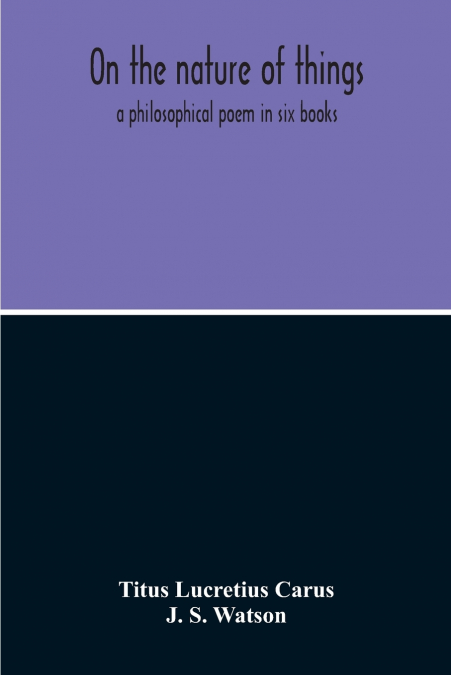
J. S. Watson / JSWatson / Titus Lucretius Carus
 Librería Samer Atenea
 Kálamo Books
 Librería Elías (Asturias)
 Librería Kolima (Madrid)
 Librería Proteo (Málaga)
Lucretius lays the cosmos bare.Read it slowly, then think.On the Nature of Things, Lucretius’ philosophical poem in six books from the first century BCE, delivers a rational, poetical account of the world that remains startlingly modern. Literally translated into English prose by John Selby Watson, with John Mason Good’s poetical version adjoined, this philosophical poetry collection marries argument and image: atomistic explanations of matter, reflections on mortality, and a sustained critique of superstition and fear. As a work of ancient Roman philosophy and one of the principal Latin philosophical works to survive, it unfolds epicurean philosophy themes, the nature of the universe, the mechanics of life, and the grounding of ethics in observable reality. At once explanatory and elegiac, Lucretius probes sensation, mind, and the human tendency to seek meaning - small, hard questions about day-to-day existence that widen into profound human existence questions. The prose rendering brings clarity to dense argumentation without flattening the poem’s lyric reach, making this a philosophy students resource for primary-text study and an accessible read for anyone curious about classical literature prose or the history of thought and ideas. Clear yet rich, it belongs on the shelf and in any serious great books curriculum.Republished by Alpha Editions in a careful modern edition, this volume preserves the spirit of the original while making it effortless to enjoy today - a heritage title prepared for readers and collectors alike. Scholars and collectors will value the fidelity to the Latin and the historical context; newcomers will find an engaging guide to the works of Epicurus refracted through Roman poetics. Compact but expansive in insight, this edition sits equally well beside scholarly companions and among treasured classics in private collections, a bridge from the earliest expressions of Epicurean thought to readers now. Ideal for casual readers hunting intelligent company and for collectors assembling a curated classics library, it honours Lucretius’ place in the canon of ancient Roman philosophy.