

 Librería Samer Atenea
 Kálamo Books
 Librería Elías (Asturias)
 Librería Kolima (Madrid)
 Librería Proteo (Málaga)
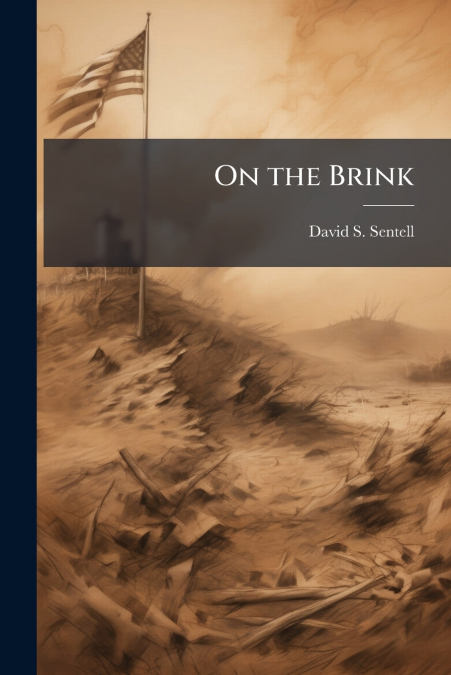
The ongoing military operations in Afghanistan underscore the importance of regional stability in Central and South Asia. While much of our attention remains focused on Afghanistan, the unstable nature of Pakistan creates a problematic scenario for the United States. Although the media and policy makers are showing a growing interest in the state, Pakistan’s problems are not new. Instead, they represent a history of domestic, regional, and international troubles that leave the state in an unpredictable posture. Most importantly, these historical events, coupled with current political, economic, and security related issues, have created a fragile state with the propensity to fail. Therefore, this monograph highlights and explains many of Pakistan’s problems under the framework of assessing the likelihood of state failure. Existing research provides the fundamental characteristics of fragile and failed states and serves as a benchmark for comparison to determine whether Pakistan is merely weak, in transition, or on the brink of failure. Pakistan’s potential collapse would have severe consequences for many regional and international actors. However, the U.S. military, operating in Afghanistan, would face immediate and significant challenges in a failed state scenario. As a result, U.S. officials continue to reiterate the importance of Pakistan’s stability. Yet, it may take years of continuous external support to ensure Pakistan’s worst-case scenario does not occurThis work has been selected by scholars as being culturally important, and is part of the knowledge base of civilization as we know it. This work was reproduced from the original artifact, and remains as true to the original work as possible. Therefore, you will see the original copyright references, library stamps (as most of these works have been housed in our most important libraries around the world), and other notations in the work.This work is in the public domain in the United States of America, and possibly other nations. Within the United States, you may freely copy and distribute this work, as no entity (individual or corporate) has a copyright on the body of the work.As a reproduction of a historical artifact, this work may contain missing or blurred pages, poor pictures, errant marks, etc. Scholars believe, and we concur, that this work is important enough to be preserved, reproduced, and made generally available to the public. We appreciate your support of the preservation process, and thank you for being an important part of keeping this knowledge alive and relevant.





