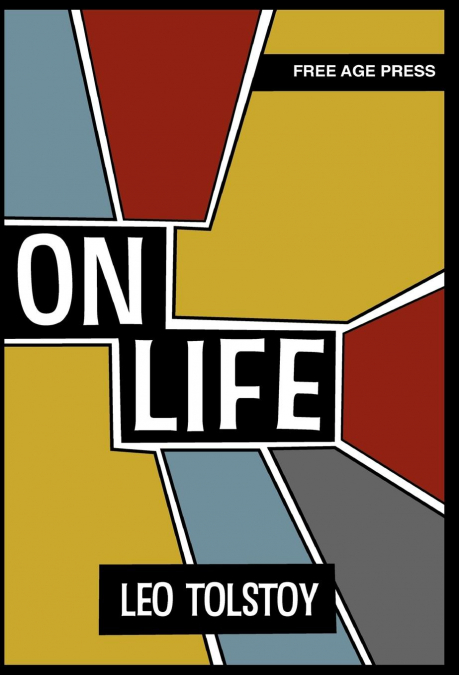

On Life

On Life

Leo Nikolayevich Tolstoy

19,54 €
IVA incluido
Consulta disponibilidad
Editorial:
White Crow Productions Ltd
Año de edición:
2010
Materia
Ética y filosofía moral
ISBN:
9781907661242

Selecciona una librería:

  • Librería Samer Atenea
  • Librería Aciertas (Toledo)
  • Kálamo Books
  • Librería Perelló (Valencia)
  • Librería Elías (Asturias)
  • Donde los libros
  • Librería Kolima (Madrid)
  • Librería Proteo (Málaga)

’On Life’ and ’What is religion?’ were published by the Fee Age Press in England; a publishing house set up to side-step the censorship of Tolstoy in Russia, and to give him an international voice.So what is life? ’Life is the sum of functions which resist death,’ says the scientist. But is it more than that, asks Tolstoy in ’On Life’ - a philosophical and religious search for an understanding of life beyond scientific formulae. For Tolstoy, the basic contradiction for humanity is this: people aim solely for their own well being, but discover along the way that their own well being depends also on the well being of others. A further discovery by such people is that decay, old age and death attend their every step. Such basic human truths are the context for Tolstoy’s search for happiness, in which Buddhist, Jewish, Stoic and Christian views are considered, as well as those of science. Tolstoy believes that fear of death is merely the consciousness of the unsolved contradiction of life; a sign of a carnal or animal mentality, which mistakenly takes part of life to be the whole. Tolstoy believes that individual well-being must be renounced and replaced by our ’reasonable consciousness’, which points the way to true happiness, and brings human re-birth.’What is religion?’ is a collection of articles and letters written by the mature Tolstoy of 1901 and 1902. Here is a variety of subject matter, including a book review of a German novel; Tolstoy’s response to his excommunication by the church; an attack on army recruitment and training and reflections on a recent political assassination. The title piece - ’What is religion?’ is the most substantial, in which Tolstoy provides the following definition: ’True religion is the establishment by man of a relation to the infinite life around him; as long as connecting his life with this infinitude and directing his conduct, is also in agreement with his reason and human knowledge.’
Artículos relacionados

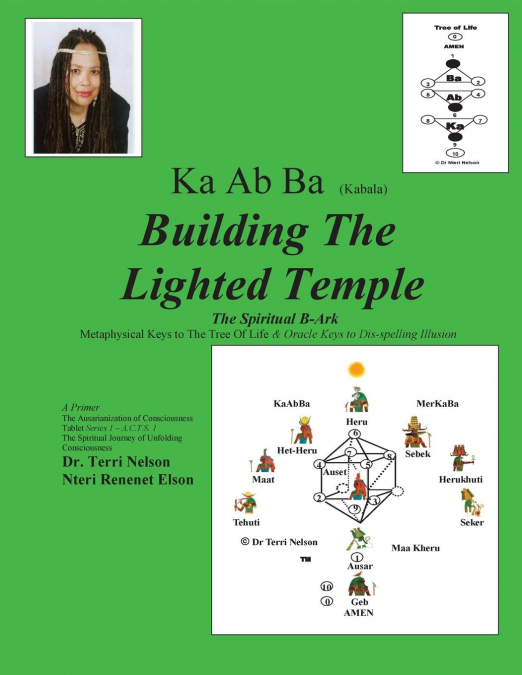
  • Ka Ab Ba Building The Lighted Temple
    Dr Terri R. Nelson / Dr Terri RNelson
    The book KaAbBa Building The Lighted Temple/Metaphysical Keys to the Tree of Life draws a circle that is inclusive of the Afrikan origin of the Ancient Kemetic/Egyptian wisdom. It reveals the undeniable root and link of Ancient Africa to all the religious systems that would develop worldwide. This book is explosive in its power to convey the meaning of KaAbBa, the Medu Neter  (...
    Disponible

    37,41 €

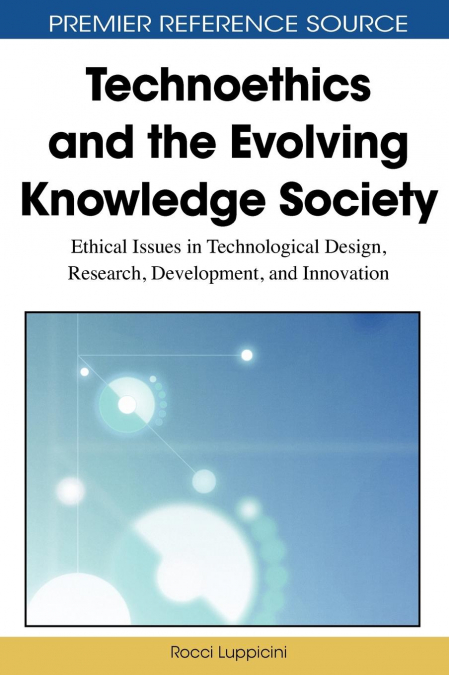
  • Technoethics and the Evolving Knowledge Society
    Rocci Luppicini
    Recently, there has been a major push to rediscover the ethical dimension of technology across the sciences, social sciences, and humanities. Technoethics and the Evolving Knowledge Society: Ethical Issues in Technological Design, Research, Development, and Innovation examines human processes and practices connected to technology embedded within social, political, and moral sph...
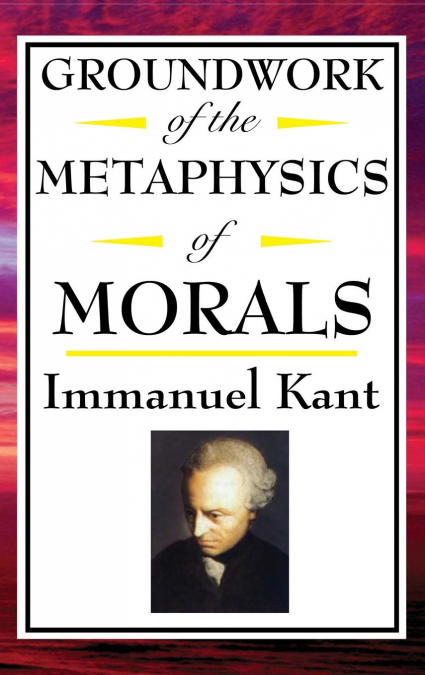
  • Kant
    Immanuel Kant
    Kant’s Groundwork of the Metaphysics of Morals is one of the most important works in modern moral philosophy. It belongs beside Plato, Aristotle, Machiavelli, and Hobbes. Here Kant sets out to articulate and defend the Categorical Imperative - the fundamental principle that underlies moral reasoning - and to lay the foundation for a comprehensive account of justice and human vi...
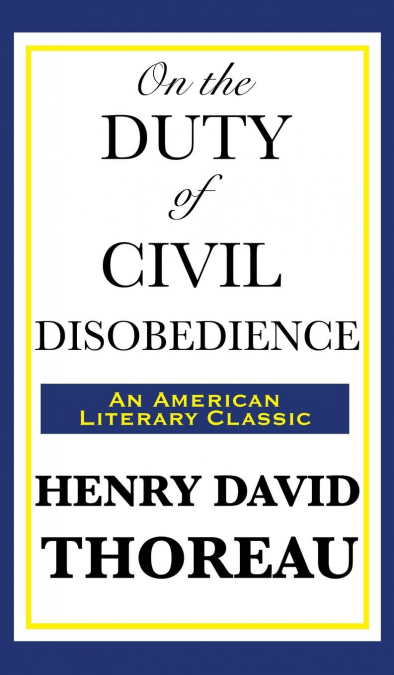
  • On the Duty of Civil Disobedience
    HENRY DAVID THOREAU
    Civil Disobedience argues that citizens should not permit their governments to overrule their consciences, and that they have a duty to avoid allowing their acquiescence to enable the government to make them the agents of injustice. Thoreau was motivated in part by his disgust with slavery and the Mexican-American War, but the sentiments he expresses here are just as pertinent ...
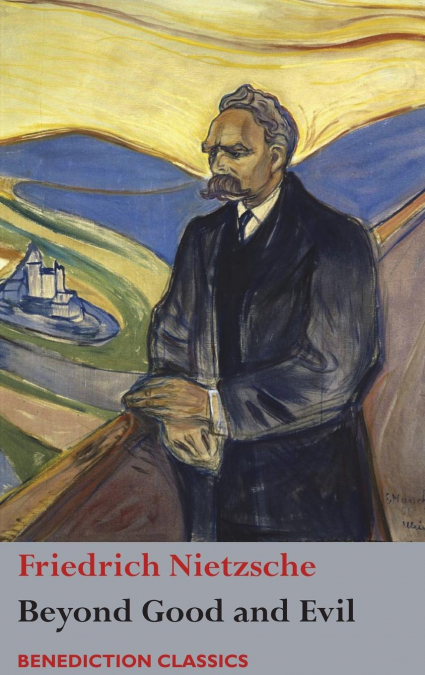
  • Beyond Good and Evil
    Friedrich Nietzsche
    Nietzsche, though primarily a philosopher, wrote widely on art, philology, history, religion, tragedy, culture, and science.  In 1886, at the height of his powers, he published Beyond Good and Evil.  Here he examines much of the best of human thought--dogmatic philosophy, Judeo-Christian morality, science and democracy – and finds it lacking.  Rejecting “slave-morality” he pres...
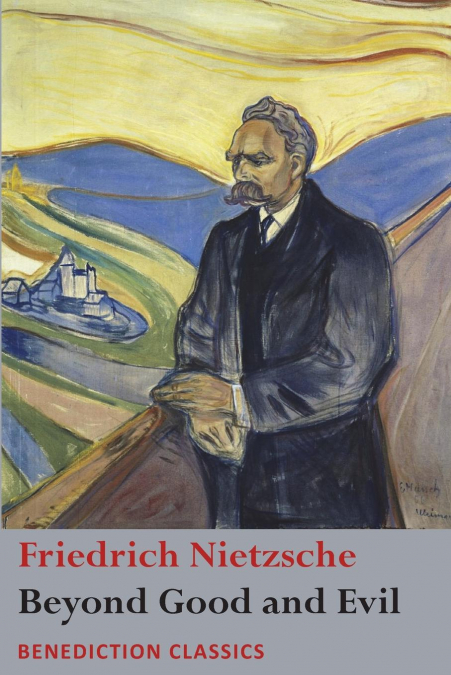
  • Beyond Good and Evil
    Friedrich Nietzsche
    Nietzsche, though primarily a philosopher, wrote widely on art, philology, history, religion, tragedy, culture, and science.  In 1886, at the height of his powers, he published Beyond Good and Evil.  Here he examines much of the best of human thought--dogmatic philosophy, Judeo-Christian morality, science and democracy – and finds it lacking.  Rejecting “slave-morality” he pres...
    Disponible

    9,99 €

Otros libros del autor

  • Childhood, Boyhood, and Youth
    Leo Nikolayevich Tolstoy
    This semi-autobiographical trilogy traces the emotional and intellectual growth of a young boy as he navigates through the early stages of life, from childhood innocence to the confusion of adolescence and early adulthood. Tolstoy masterfully captures the complexities of family life, social expectations, and the inner turmoil of a young mind confronting the challenges of maturi...
  • Hadji Murad
    Leo Nikolayevich Tolstoy
    He is considered one of the greatest novelists in any language in all of human history, but many of Leo Tolstoy's works remain obscure today. This short novel, published posthumously and recommended by Harold Bloom in his Western Canon, is the writer's fictionalized account of his service in the Russian army in Chechen in the 1850s and of a Chechen soldier, Hadji Murád,...
  • Anna Karenina
    Leo Nikolayevich Tolstoy
    Anna Karenina is one of the grand tragedies of the 19th century. A Russian aristocrat leaves her husband to marry a dashing officer Count Vronsky. But their scandalous love affair and marriage is beset on all sides. By outrage and scorn from without and mistrust and possessiveness from within. William Falkner called it the greatest novel ever written. ...
  • The Kingdom of God Is Within You
    Leo Nikolayevich Tolstoy
    The Kingdom of God Is Within You is the non-fiction magnum opus of Leo Tolstoy and was initially banned in his home country of Russia. It is the culmination of thirty years of Tolstoy’s Christian thinking, and lays out a new organization for society based on a literal Christian interpretation of the Bible. Here Tolstoy introduces the world to the concept of Christian non-violen...
  • Sevastopol
    Leo Nikolayevich Tolstoy
    ...
    Disponible

    52,89 €

  • Leo Tolstoy’s 5 Greatest Novellas Annotated
    Leo Nikolayevich Tolstoy
    After reading War & Peace, Fyodor Dostoevsky put the book down and said, 'The fool hath said in heart there is no God.' Yet, Tolstoy’s shorter novels (i.e., novellas) are filled with all the war, adventure, comedy, religion, tragedy, and Russian tradition that inhabit the longer novels of the Russian bear of literature. Andrew Barger, editor of the best selling anthology, 'Leo ...
    Disponible

    15,89 €