 Librería Samer Atenea
 Kálamo Books
 Librería Elías (Asturias)
 Librería Kolima (Madrid)
 Librería Proteo (Málaga)
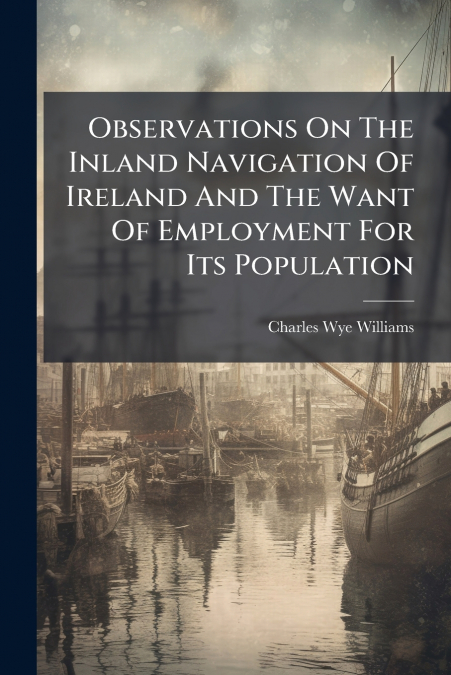
In 'Observations On The Inland Navigation Of Ireland And The Want Of Employment For Its Population,' Charles Wye Williams offers a detailed analysis of Ireland’s economic challenges in the 19th century, focusing particularly on the potential of inland waterways to stimulate growth and create jobs. This insightful work includes a specific description of the River Shannon and how improving its navigability could benefit the country. Williams’s observations provide a historical perspective on the importance of infrastructure development in addressing unemployment and fostering economic prosperity. The book presents a compelling case for investing in Ireland’s waterways as a means of improving trade, transportation, and overall quality of life. This book is a valuable resource for understanding the economic history of Ireland and the role of transportation in shaping its development.This work has been selected by scholars as being culturally important, and is part of the knowledge base of civilization as we know it. This work was reproduced from the original artifact, and remains as true to the original work as possible. Therefore, you will see the original copyright references, library stamps (as most of these works have been housed in our most important libraries around the world), and other notations in the work.This work is in the public domain in the United States of America, and possibly other nations. Within the United States, you may freely copy and distribute this work, as no entity (individual or corporate) has a copyright on the body of the work.As a reproduction of a historical artifact, this work may contain missing or blurred pages, poor pictures, errant marks, etc. Scholars believe, and we concur, that this work is important enough to be preserved, reproduced, and made generally available to the public. We appreciate your support of the preservation process, and thank you for being an important part of keeping this knowledge alive and relevant.