
Inicio > Sociedad y ciencias sociales > Guerra y defensa > Nutrient Composition of Rations for Short-Term, High-Intensity Combat Operations
Nutrient Composition of Rations for Short-Term, High-Intensity Combat Operations

Nutrient Composition of Rations for Short-Term, High-Intensity Combat Operations

AA.VV

68,12 €
IVA incluido
Disponible
Editorial:
National Academies Press
Año de edición:
2005
Materia
Guerra y defensa
ISBN:
9780309096416
68,12 €
IVA incluido
Disponible

Selecciona una librería:

  • Librería Samer Atenea
  • Librería Aciertas (Toledo)
  • Kálamo Books
  • Librería Perelló (Valencia)
  • Librería Elías (Asturias)
  • Donde los libros
  • Librería Kolima (Madrid)
  • Librería Proteo (Málaga)

Recognizing the importance of good nutrition for physical and mental status, the Department of Defense asked the Institute of Medicine to guide the design of the nutritional composition of a ration for soldiers on short-term, high-stress missions. Nutrient Composition of Rations for Short-Term, High-Intensity Combat Operations considers military performance, health concerns, food intake, energy expenditure, physical exercise, and food technology issues. The success of military operations depends to a large extent on the physical and mental status of the individuals involved. Appropriate nutrition during assault missions is a continuous challenge mainly due to diminished appetites of individuals under stress. Many less controllable and unpredictable factors, such as individual preferences and climate, come into play to reduce appetite. In fact, soldiers usually consume about half of the calories needed, leaving them in a state called ’negative energy balance.’ The consequences of being in negative energy balance while under these circumstances range from weight loss to fatigue to mental impairments. An individual’s physiological and nutritional status can markedly affect one’s ability to maximize performance during missions and may compromise effectiveness. With the number of these missions increasing, the optimization of rations has become a high priority.
Artículos relacionados

  • Bioactive Compounds Of Jaboticaba (Plinia Sp.)
    Flávio Alves Da Silva / Nara Rúbia Rodrigues Do Nascimento-Silva / Rodrigo Barbosa Monteiro Cavalcante
    The Whole Jaboticaba Fruit Stood Out For Its High Levels Of Total Polyphenols, Mainly Anthocyanins (Cyanidin And Delphinidin), Ellagic Acid, Methylellagic Acid, Gallic Acid, Myricetin, Quercetin, Castalagin, Pedunculagin And Vescalagin. When Evaluating The Behavior Of These Compounds After In Vitro Digestion, It Is Observed That Anthocyanins Did Not Suffer As Much In The Saliva...
    Disponible

    11,96 €

  • Obesidad, genética y entorno. El papel de la flexibilidad metabólica
    Fundación alimentación saludable
    Afortunadamente, gracias a la investigación, somos más conscientes de que la obesidad no es una patología que se deba en exclusiva a la desidia ola falta de voluntad del sujeto y que los mensajes de culpabilidad o estigmatización hacia los pacientes no sólo no ayudan a poner freno al sobrepeso, sino que pueden perjudicar seriamente su salud mental. También sabemos, y esto es mu...
    Disponible

    20,00 €

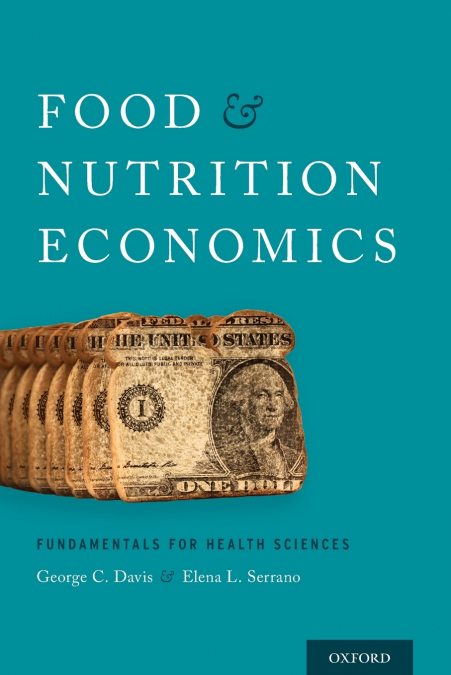
  • FOOD AND NUTRITION ECONOMICS P
    GEORGE C DAVIS
    ...
    Disponible

    118,89 €

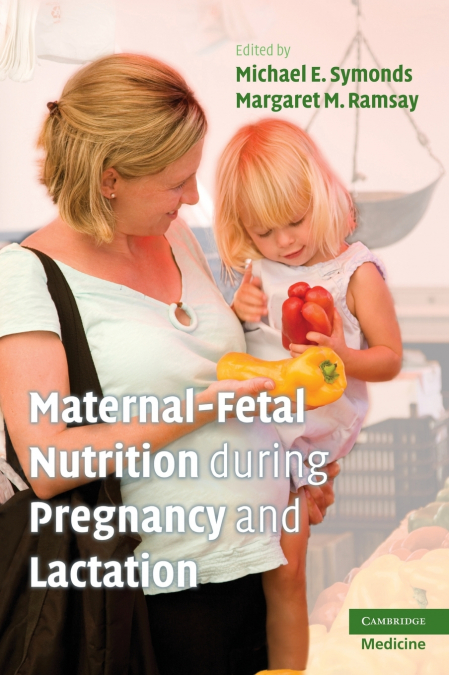
  • Maternal-Fetal Nutrition During Pregnancy and Lactation
    ...
  • The Myths About Nutrition Science
    David Lightsey
    The Myths About Nutrition Science provides an authoritative, yet readily understandable, overview of the common misunderstandings that are commonplace within consumer or athletic communities regarding the food production process and nutrition science, which may affect their physical development, performance, and long-term health ...
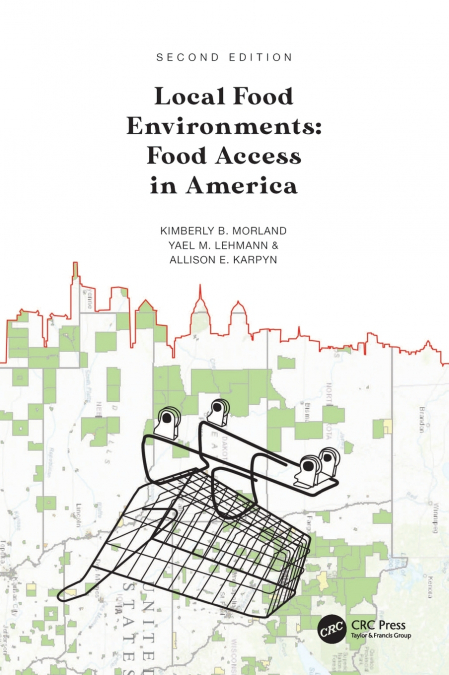
  • Local Food Environments
    Allison E. Karpyn / Kimberly B. Morland / Yael M. Lehmann
    This second edition contains four sections including (1) disparities between local food environments in the United States; (2) effect of restricted local food environments on dietary intake; (3) interventions to local food environment and their impact on communities; and (d) macro-level influence on the development of local food environments. ...