

 Librería Samer Atenea
 Kálamo Books
 Librería Elías (Asturias)
 Librería Kolima (Madrid)
 Librería Proteo (Málaga)
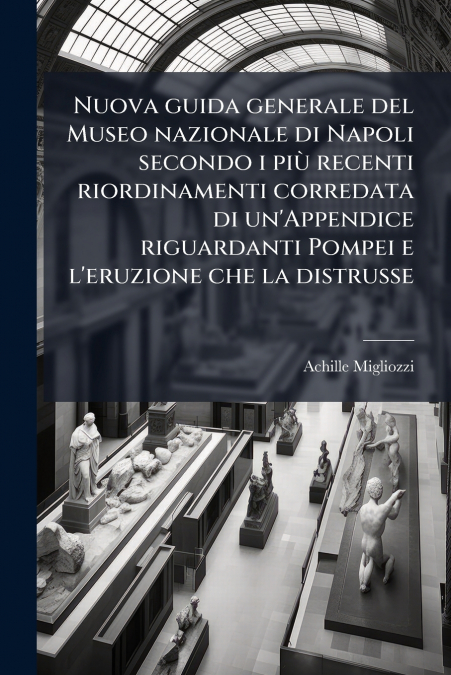
Nuova guida generale del Museo nazionale di Napoli secondo i più recenti riordinamenti offers a comprehensive guide to the National Museum of Naples as it stood in 1878. Authored by Achille Migliozzi, this historical guide provides a detailed overview of the museum’s collections and organization. In addition to the museum guide, the book includes an appendix focusing on Pompeii and the eruption that led to its destruction. This section offers insights into the archaeological findings and historical significance of Pompeii, complementing the museum’s collection of artifacts from the site.This guide provides a valuable snapshot into the historical arrangement and collections of one of Italy’s most important museums, making it essential for historians, art enthusiasts, and anyone interested in the cultural heritage of Naples and Pompeii. The book allows readers to explore the historical context of the museum’s artifacts and the legacy of Pompeii.This work has been selected by scholars as being culturally important, and is part of the knowledge base of civilization as we know it. This work was reproduced from the original artifact, and remains as true to the original work as possible. Therefore, you will see the original copyright references, library stamps (as most of these works have been housed in our most important libraries around the world), and other notations in the work.This work is in the public domain in the United States of America, and possibly other nations. Within the United States, you may freely copy and distribute this work, as no entity (individual or corporate) has a copyright on the body of the work.As a reproduction of a historical artifact, this work may contain missing or blurred pages, poor pictures, errant marks, etc. Scholars believe, and we concur, that this work is important enough to be preserved, reproduced, and made generally available to the public. We appreciate your support of the preservation process, and thank you for being an important part of keeping this knowledge alive and relevant.





