

 Librería Samer Atenea
 Kálamo Books
 Librería Elías (Asturias)
 Librería Kolima (Madrid)
 Librería Proteo (Málaga)
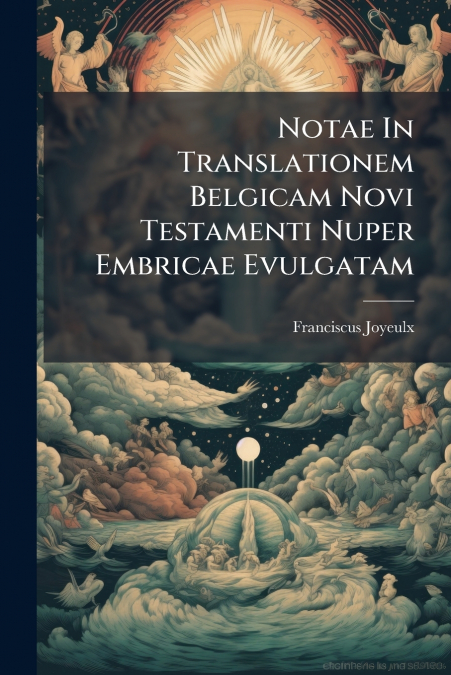
'Notae In Translationem Belgicam Novi Testamenti Nuper Embricae Evulgatam' is a scholarly work by Franciscus Joyeulx offering notes and commentary on a Belgian translation of the New Testament published in Embrica. This volume provides valuable insights into the nuances of biblical interpretation and translation during the period in which it was written. Offering a detailed examination of specific passages and linguistic choices, Joyeulx’s notes shed light on the theological and cultural contexts relevant to both the original Greek text and its Dutch interpretation. This work will appeal to scholars of biblical studies, historical linguistics, and Reformation history, as well as those interested in the transmission of religious texts across linguistic and cultural boundaries. Its enduring value lies in its meticulous analysis and its contribution to our understanding of the complexities inherent in translating sacred scripture.This work has been selected by scholars as being culturally important, and is part of the knowledge base of civilization as we know it. This work was reproduced from the original artifact, and remains as true to the original work as possible. Therefore, you will see the original copyright references, library stamps (as most of these works have been housed in our most important libraries around the world), and other notations in the work.This work is in the public domain in the United States of America, and possibly other nations. Within the United States, you may freely copy and distribute this work, as no entity (individual or corporate) has a copyright on the body of the work.As a reproduction of a historical artifact, this work may contain missing or blurred pages, poor pictures, errant marks, etc. Scholars believe, and we concur, that this work is important enough to be preserved, reproduced, and made generally available to the public. We appreciate your support of the preservation process, and thank you for being an important part of keeping this knowledge alive and relevant.





