Inicio > Humanidades > Historia > Historia: primitiva hasta la actualidad > Historia antigua: hasta c. 500 e. c. > North Sea and Channel Connectivity during the Late Iron Age and Roman Period (175/150 BC-AD 409)
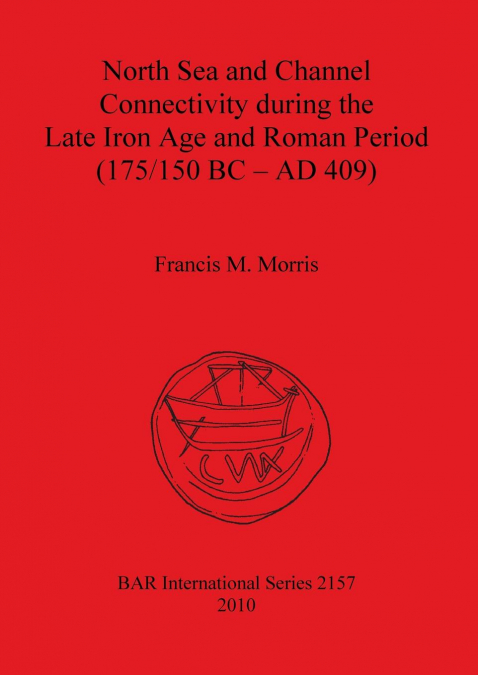
North Sea and Channel Connectivity during the Late Iron Age and Roman Period (175/150 BC-AD 409)

North Sea and Channel Connectivity during the Late Iron Age and Roman Period (175/150 BC-AD 409)

UN LLIBRE PISSARRA!

Francis M. Morris / Francis MMorris

123,08 €
IVA incluido
Disponible
Editorial:
British Archaeological Reports (Oxford) Ltd
Año de edición:
2010
Materia
Historia antigua: hasta c. 500 e. c.
ISBN:
9781407306995
Páginas:
14
Encuadernación:
Otros
123,08 €
IVA incluido
Disponible

Selecciona una librería:

  • Librería Samer Atenea
  • Librería Aciertas (Toledo)
  • Kálamo Books
  • Librería Perelló (Valencia)
  • Librería Elías (Asturias)
  • Donde los libros
  • Librería Kolima (Madrid)
  • Librería Proteo (Málaga)

This is a major study of trade, exchange and economy in the maritime regions of northwest Europe during the Late Iron Age and Roman period (175/150 BC-AD 409). The study encompasses the regions of northwest Europe that were integrated into the Roman Empire, as well as those that lay in the Barbaricum, beyond the Empire’s Rhine frontier. The author looks in detail at long-distance exchange goods, including: wine, olive oil and fish sauce amphorae; terra sigillata and pottery; coins; metals and metalwork; lava querns; building stone; glass; amber and agricultural products. Over 90 beautiful distribution maps and other figures are included. It is argued that three maritime exchange systems can be identified in the North Sea and Channel region: the Atlantic system; the Southern North Sea and Eastern Channel system and the Eastern North Sea system. These three systems can be distinguished from one another, though the first two in particular display considerable overlap. Geography is held to have played an important role in determining these systems and it is argued that they may endure across the longue durée. The author examines change through time and splits the study into five periods: 175/150-50 BC; 50 BC-AD 43; AD 43-165; AD 165-260 and AD 260-409. It is argued that changes in the nature and scale of connectivity are due to wider political and economic factors. For example, Caesar’s Gallic Wars are held to have had a major transformative effect upon relations between Britain and the near continent. It issuggested that the eastern North Sea played an important role in the Augustan invasion of Germany, but in the aftermath of Varus’s defeat there was a long phase of minimal contacts between Rome and the peoples of northwest Germany. The invasion of Britain in AD 43 led to a massive expansion in trade and exchange between Britain and the continent; however, in the late second century AD the impact of the Antonine plague and the Marcomannic Wars, and the consequent problems with the Roman money supply, began to lead to declining connectivity. In contrast, the problems experienced by the Empire in the late second century encouraged the Roman state to make political payments to, and form treaties with, tribes beyond its frontiers in the Barbaricum, which encouraged contact and trade in the eastern North Sea. From the second half of the third century AD the nature of North Sea and Channel connectivity changed dramatically as a result of the deepening internal and external crises of the Empire. Northern Gaul began to depend heavily upon Britain for its agricultural supplies, whilst Germanic peoples used the eastern North Sea to raid and settle in parts of the Empire. Britain’s secession from the Empire in AD 409 caused the virtual collapse of state-contracted and private overseas trade. Finally, the author notes that the vulnerable and changeable nature of connectivity in the North Sea and Channel presents a very different picture to that of the Mediterranean, where connectivity remained at a high level continuously across the longue durée.
Artículos relacionados

  • Iron Age Societies in the Severn-Cotswolds
    Tom Moore
    The central theme of this study is an examination of the processes of change in Iron Age social organisation and identity on a regional scale using the Severn-Cotswolds area in England as a case study. It aims to provide a coherent narrative of the period in the region based on the wealth of current data now available, providing a basic storyboard against which future studies c...
    Disponible

    144,57 €

  • Somewhere Beyond The Sea Les îles bretonnes (France)
    The Seminar on the Archaeology of Western France, which focused on the islands of Brittany, was held on 1 April 2014 at the University of Rennes 1. The desire to organize this seminar arose spontaneously from the dynamism which currently animates archaeological research on island spaces of the western seaboard of France. Indeed, the seminar took place during a pivotal period of...
    Disponible

    86,11 €

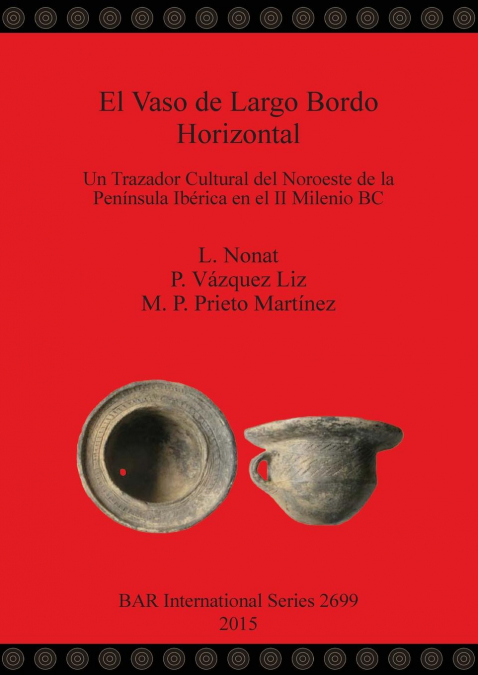
  • El Vaso de Largo Bordo Horizontal
    L. Nonat / LNonat / M. P. Prieto Martínez / MPPrieto Martínez / P. Vázquez Liz / PVázquez Liz
    In this paper the authors study a specific type of pottery from the northwest Iberian Peninsula, known as the Wide Horizontal Rim (WHR) vessel. One of its distinctive aspects is precisely the fact that it is exclusively found in this region, which now comprises the Spanish region of Galicia and northern Portugal, as far south as the River Duero. This type of pottery, of which t...
    Disponible

    115,71 €

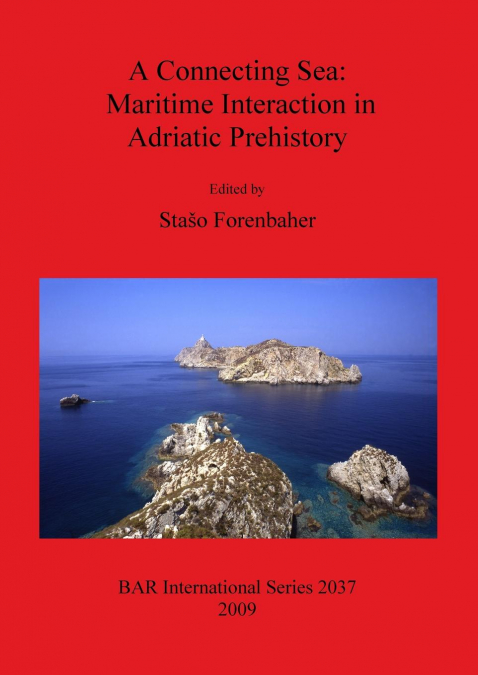
  • A Connecting Sea
    Stašo Forenbaher
    This book includes papers stemming from a session at the EAA conference held in Zadar in September 2007.                          ...
    Disponible

    79,97 €

  • The Roman Pottery Production Site at Wickham Barn, Chiltington, East Sussex
    Chris Butler / Malcolm Lyne
    The excavations undertaken at Chiltington in East Sussex revealed two Roman pottery kilns, as well as remains from prehistory and from medieval period.The kilns are well documented, and all the finds were examined and catalogued. Three phases were identified. The pottery produced on the site indicate a strong New Forest influence. ...
    Disponible

    55,62 €

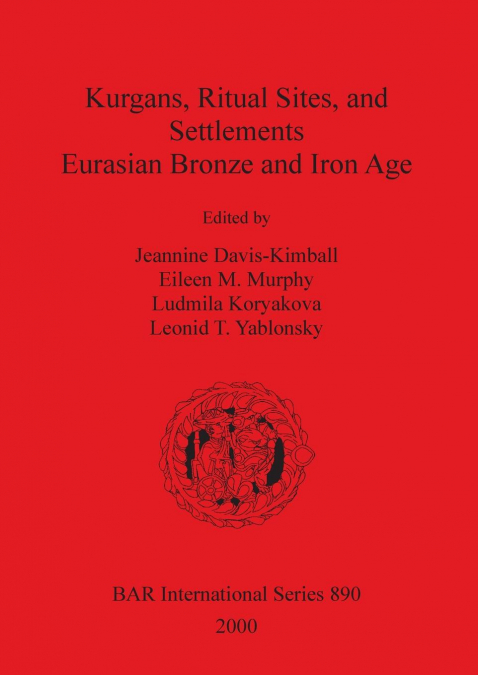
  • Kurgans, Ritual Sites, and Settlements
    Edited by: Jeannine Davis-Kimball, Eileen M. Murphy, Ludmila Koryakova and Leonid T. YablonskyThis richly illustrated volume adds immensely to the small but growing corpus of Eurasian Archaeology published in the English language. Comprised of thirty articles, the authors have focused on the Bronze Age, continuing to include the first millennium BC Early Iron Age, with a termin...
    Disponible

    158,26 €