Nonexistent Objects in Buddhist Philosophy

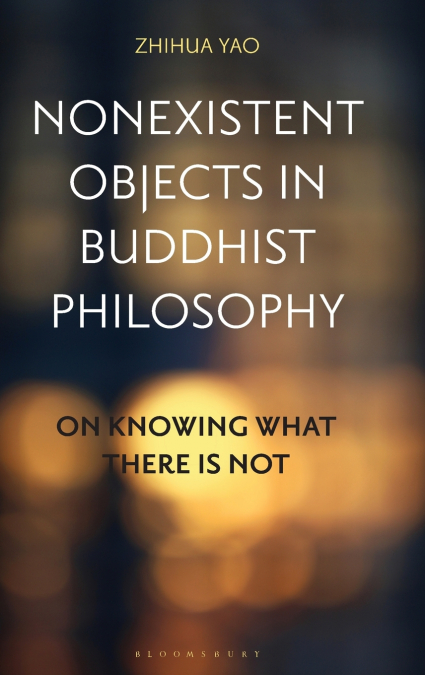
Nonexistent Objects in Buddhist Philosophy

Zhihua Yao

55,23 €
IVA incluido
Disponible
Editorial:
Bloomsbury Publishing plc
Año de edición:
2021
Materia
Filosofía oriental y de la India
ISBN:
9781350273108
55,23 €
IVA incluido
Disponible

Selecciona una librería:

  • Librería Samer Atenea
  • Librería Aciertas (Toledo)
  • Kálamo Books
  • Librería Perelló (Valencia)
  • Librería Elías (Asturias)
  • Donde los libros
  • Librería Kolima (Madrid)
  • Librería Proteo (Málaga)

Can we know what there is not? This book examines the historical development of the concept of the cognition of nonexistent objects in several major Buddhist philosophical schools. Beginning with a study of the historical development of the concept in Mahasamghika, Darstantika, Yogacara and Sautrantika, it evaluates how successfully they have argued against the extreme view of their main opponent the Sarvastivadins and established their view that one can know what there is not. It also includes thematic studies on the epistemological issues of nonexistence, discussing making sense of empty terms, controversies over negative judgments, and a proper classification of the conceptions of nothing or nonexistence. Taking a comparative approach to these topics, this book considers contemporary Western philosophers such as Husserl, Heidegger, Meinong and Russell alongside representative figures of the Buddhist Pramana School. Based on first-hand study of primary sources in Sanskrit, Chinese and Tibetan, Nonexistent Objects in Buddhist Philosophymakes available the rich discussions and debates on the epistemological issues of nonexistence in Buddhist philosophy to students and researchers in Asian and comparative philosophy.


Artículos relacionados

  • Bhagavad Gītā
    Swami Lakshmanjoo
    This treasure of knowledge was one of the last works by Swami Lakshmanjoo. He said, "It was a new revelation of the supreme secrets, hidden in the Kashmiri recension of the Bhagavad Gita." Based on Abhinavagupta's commentary of the Gitarthasamgraha, "The Essence of the Gita", Swamiji declared that, "this revelation was initiated by his direct experience of the state of Univ...
  • Fiery World III
    Agni Yoga Society
    Fiery World III is the eleventh book from the Agni Yoga Series which is composed of fourteen books. In them is found a synthesis of ancient Eastern beliefs and modern Western thought and a bridge between the spiritual and the scientific. Unlike previous yogas, Agni Yoga is a path not of physical disciplines, meditation, or asceticism—but of practice in daily life. It is the yog...
    Disponible

    14,47 €

  • Bhagavad Gī̄tā
    Swami Lakshmanjoo
    This treasure of knowledge was one of the last works by Swami Lakshmanjoo. He said, "It was a new revelation of the supreme secrets, hidden in the Kashmiri recension of the Bhagavad Gita." Based on Abhinavagupta's commentary of the Gitarthasamgraha, "The Essence of the Gita", Swamiji declared that, "this revelation was initiated by his direct experience of the state of Univ...
    Disponible

    26,24 €

  • The Quantum Screen
    Samuel Avery
    What is the connection between physics and consciousness? In this groundbreaking new book, Samuel Avery presents the quantum screen, a paradigm-shifting model of perceptual consciousness and of the world. This model looks to the enigmas of modern physics to demonstrate the primacy of consciousness—the essential oneness of spirit and matter.Our intellectual culture is divided be...
    Disponible

    13,80 €

  • Confucian Analects
    Confucius
    The superior man bends his attention to what is radical. That being established, all practical courses naturally grow up. Filial piety and fraternal submission,-are they not the root of all benevolent actions?To rule a country of a thousand chariots, there must be reverent attention to business, and sincerity; economy in expenditure, and love for men; and the employment of the ...
  • Leaves of Morya’s Garden II
    Agni Yoga Society
    Leaves of Morya's Garden II (Illumination) is the second book from the Agni Yoga Series which is composed of fourteen books. In them is found a synthesis of ancient Eastern beliefs and modern Western thought and a bridge between the spiritual and the scientific. Unlike previous yogas, Agni Yoga is a path not of physical disciplines, meditation, or asceticism—but of practice...
    Disponible

    12,10 €

Otros libros del autor

  • Nonexistent Objects in Buddhist Philosophy
    Zhihua Yao
    Can we know what there is not? This book examines the historical development of the concept of the cognition of nonexistent objects in several major Buddhist philosophical schools. Beginning with a study of the historical development of the concept in Mahasamghika, Darstantika, Yogacara and Sautrantika, it evaluates how successfully they have argued against the extreme view of ...
  • The Buddhist Theory of Self-Cognition
    Zhihua Yao
    This highly original work explores the concept of self-awareness or self-consciousness in Buddhist thought. Its central thesis is that the Buddhist theory of self-cognition originated in a soteriological discussion of omniscience among the Mahasamghikas, and then evolved into a topic of epistemological inquiry among the Yogacarins. To illustrate this central theme, this book ex...
    Disponible

    104,53 €

  • The Buddhist Theory of Self-Cognition
    Zhihua Yao
    This highly original work explores the concept of self-awareness or self-consciousness in Buddhist thought, and makes available important resources for the study of the Buddhist philosophy of mind. ...