

 Librería Samer Atenea
 Kálamo Books
 Librería Elías (Asturias)
 Librería Kolima (Madrid)
 Librería Proteo (Málaga)
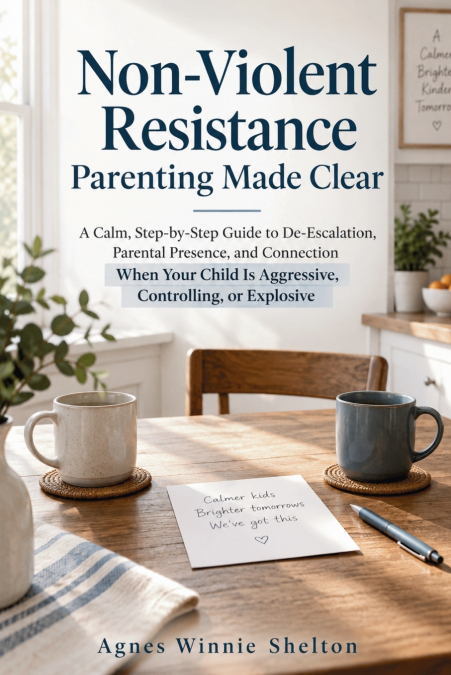
When ordinary consequences make conflict worse When a child or teenager becomes aggressive, controlling, threatening, or explosive, everyday parenting advice can stop being useful. Repeated arguments, punishments, pleading, and attempts to force cooperation may leave the whole family more tense while the parent feels increasingly unsure what to do next. Non-Violent Resistance, or NVR, offers a different starting point: change the adult response, reduce escalation, and build a steadier form of parental presence. A practical way to respond without giving in Non-Violent Resistance Parenting Made Clear explains the core principles of NVR in plain language and shows how to apply them at home. You will learn how to recognize escalation patterns, decide which behaviors need active resistance, use delayed responses without becoming permissive, build a support network, prepare an NVR announcement, approach sit-ins carefully, and use reconciliation gestures to protect connection while maintaining boundaries. The book also addresses common flashpoints such as screens, school refusal, money, curfews, property damage, and sibling safety. A dedicated chapter considers how NVR may need to be adapted when a child is autistic, has ADHD, has experienced trauma, or is living in an adoptive or foster family. What makes this guide different This is not a theory-heavy account of NVR and it does not depend on your child agreeing to participate. The emphasis is on what parents and carers can notice, say, plan, and change themselves. Clear scripts, realistic examples, safety boundaries, checklists, and practical exercises turn the method into a structured home plan. The research is presented carefully, with no promise that one approach will produce the same result in every family. Who this book is for This book is for readers who are parenting a child or teenager whose aggression or coercive behavior is dominating family life; parents who feel that consequences repeatedly trigger bigger confrontations; carers whose child refuses therapy or collaborative problem solving; foster, adoptive, and kinship carers dealing with high-conflict behavior; and parents of neurodivergent children who need an approach that can be adapted thoughtfully rather than applied rigidly. A calmer place to begin NVR does not ask parents to win every confrontation or control every reaction. It offers a way to become more deliberate, more supported, and less pulled into the same escalating patterns. If you want a clear, practical guide to de-escalation, parental presence, resistance, and connection, this book provides a structured place to begin.





