Non-Renewable Resource Issues

Non-Renewable Resource Issues


145,55 €
IVA incluido
Consulta disponibilidad
Editorial:
Springer Nature B.V.
Año de edición:
2012
Materia
Geología y la litosfera
ISBN:
9789048186785

Selecciona una librería:

  • Librería Samer Atenea
  • Librería Aciertas (Toledo)
  • Kálamo Books
  • Librería Perelló (Valencia)
  • Librería Elías (Asturias)
  • Donde los libros
  • Librería Kolima (Madrid)
  • Librería Proteo (Málaga)

All the solid fuels fossil energy and mineral commodities we use come out of the Earth. Modern society is increasingly dependent on mineral and fossil energy sources. They differ in availability, cost of production, and geographical distribution. Even if solid fuels, fossil energy resources and mineral commodities are non-renewable, the extracted metals can to a large extent be recycled and used again and again. Although the stock of these secondary resources and their use increases, the world still needs and will continue to need primary mineral resources for the foreseeable future.  Growing demands have begun to restrict availability of these resources. The Earth is not running out of critical mineral resources - at least for the near future - but the ability to explore and extract these resources is being restricted in many regions by competing land use, as well as political and environmental issues.  Extraction of natural resources requires a clear focus on sustainable development, involving economic, environmental and socio-cultural aspects. Although we do not know what the most important resources will be in 100 years from now, we can be quite certain that society will still need energy and a wide range of raw materials. These resources will include oil and gas, coal, uranium, thorium, geothermal, metallic minerals, industrial and specialty minerals, including cement, raw materials, rare-earth elements. A global approach for assessing the magnitude and future availability of these resources is called for - an approach that, with appropriate international collaboration, was started  within the triennium of the International Year of Planet Earth. Some global mineral resource assessments, involving inter-governmental collaboration, have already been initiated. The International Year of Planet Earth helped to focus attention on how the geosciences can generate prosperity locally and globally, as well as sustainability issues in both developed and developing countries.
Artículos relacionados

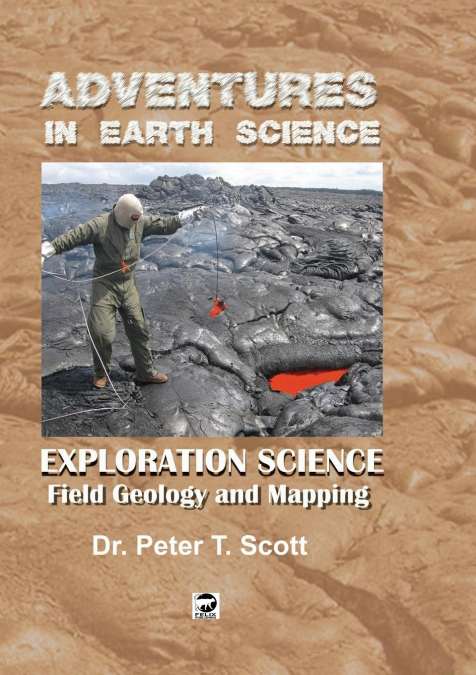
  • Exploration Science
    Dr Peter T Scott
    About Exploration ScienceHave you wondered what the science of geology is all about?Together we will explore of the surface and sub-surface of the Earth, the sub-branches of geology, including mineralogy, petrology (rocks), palaeontology (fossils), geochemistry, seismology (earthquakes), engineering geology, and many more.The scientific method used by all scientists as well as ...
    Disponible

    30,12 €

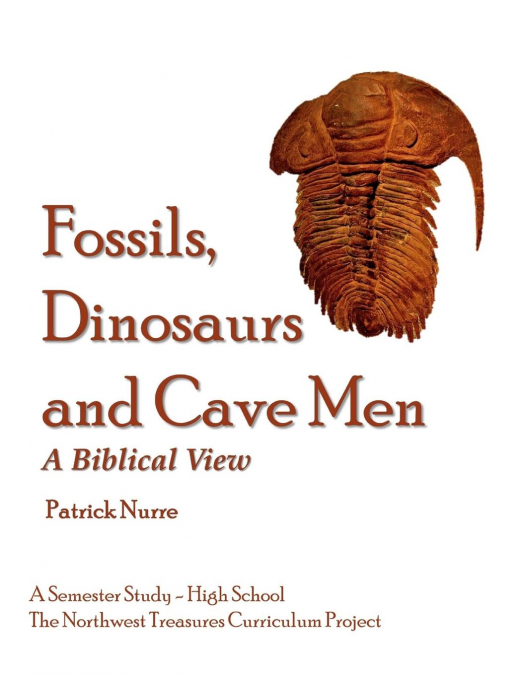
  • Fossils, Dinosaurs and Cave Men
    Patrick Nurre
    This textbook is a high school, semester study of the differences between the Biblcal and secular views of fossils, dinosaurs, and cave men.  Topics include the cause and mechanism for a global flood, the geologic time table, living fossils, the Tower of Babel, modern classification of dinosaurs, and more.  Students will also learn to interpret the geologic column from a Biblic...
    Disponible

    43,86 €

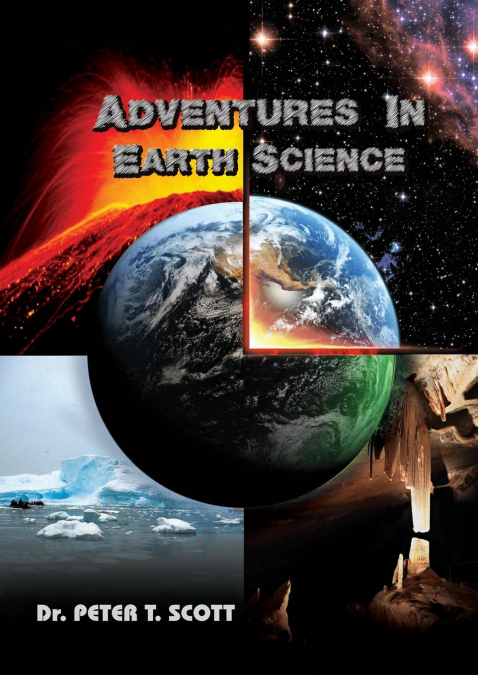
  • Adventures in Earth Science
    Dr Peter T Scott
    ADVENTURES in EARTH SCIENCE is not just an in-depth textbook but a series of adventures across seven continents and beyond in the sciences of astronomy, geology, meteorology and oceanography. It has been written with over forty years of experience in studying, researching and teaching earth science. Whilst it has been designed for senior high school and junior university or col...
    Disponible

    142,25 €

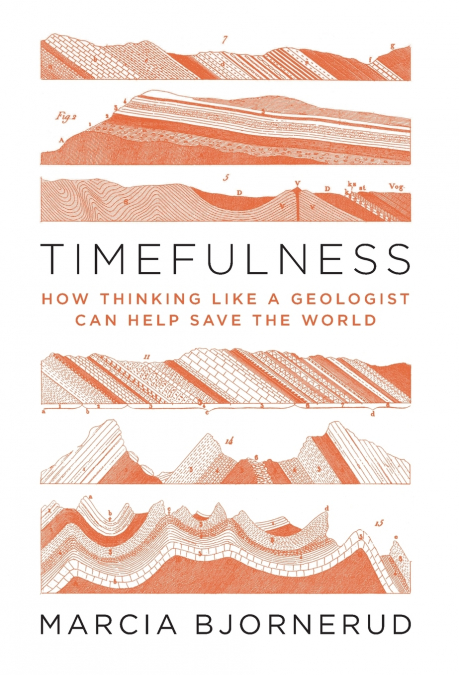
  • Timefulness
    Marcia Bjornerud
    Why an awareness of Earth’s temporal rhythms is critical to our planetary survivalFew of us have any conception of the enormous timescales in our planet’s long history, and this narrow perspective underlies many of the environmental problems we are creating for ourselves. The passage of nine days, which is how long a drop of water typically stays in Earth’s atmosphere, is somet...
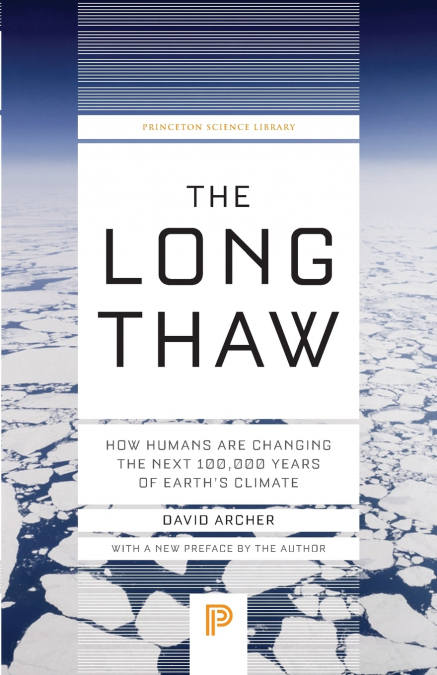
  • The Long Thaw
    David Archer
    Why a warmer climate may be humanity’s longest-lasting legacyThe human impact on Earth’s climate is often treated as a hundred-year issue lasting as far into the future as 2100, the year in which most climate projections cease. In The Long Thaw, David Archer, one of the world’s leading climatologists, reveals the hard truth that these changes in climate will be 'locked in,' ess...
    Disponible

    24,10 €

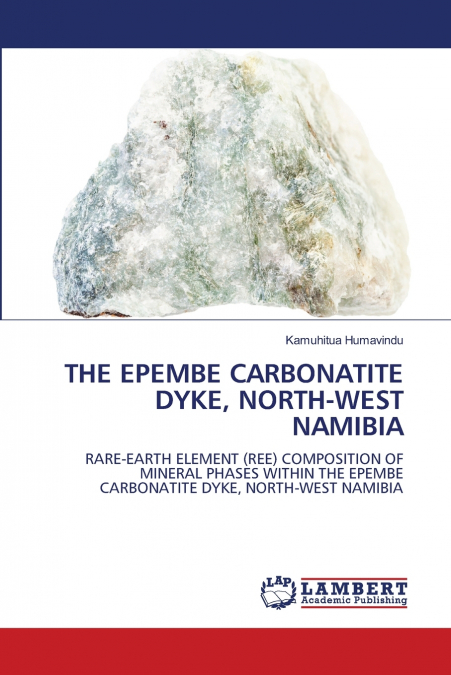
  • THE EPEMBE CARBONATITE DYKE, NORTH-WEST NAMIBIA
    Kamuhitua Humavindu
    This book gives a bright perspective on the nature of carbonatites along with different magmatic and hydrothermal processes that affect the distribution of these dykes. In the past there has been several debates on the enrichment mechanisms of rare-earth elements, making it a significant book especially now with the increase in technology. The research is filled with exciting f...
    Disponible

    75,64 €