 Librería Samer Atenea
 Kálamo Books
 Librería Elías (Asturias)
 Librería Kolima (Madrid)
 Librería Proteo (Málaga)
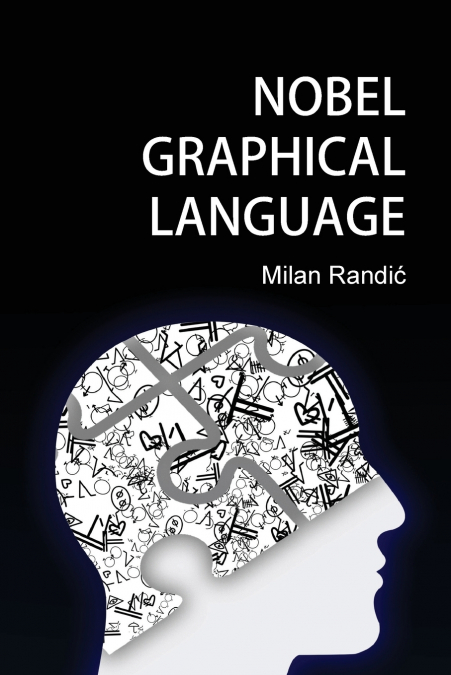
Nobel is a pictographic language based on some 120 basic signs and many arrows of different shape that are mutually combined. It is named after Alfred Nobel (1833–1896), Swedish chemist and industrialist, inventor of dynamite, who left most of his fortune to a foundation that annually gives awards to individuals whose work is characterized as “greatest benefit to mankind,” known as Nobel Prizes. Besides the awards for sciences and literature significantly, Alfred Nobel included, among others, a prize for peace (that besides individuals, also organizations may obtain). Although it would be utopian to believe that human conflicts could be avoided if communication tools would improve, the emergence of universal languages certainly cannot make the situation worse! Universal languages are a communication tool, which makes it possible for people of no common language to communicate. They are graphic, but they should be distinguished from picture writings, which only passively offer information on some event or give messages. Universal languages have more similarity with the sign languages that are used for people who lost hearing or the sign language of American Plains Indians, who spoke different languages and could communicate by sign language that they developed. However, written language has some advantages over hand sign languages in that one can communicate at a great distance, particularly today in the age of fax and computer communications, and that one can leave messages for posterity. This is not the place to argue for or against the promise of written sign languages. Graphic (written) sign languages exist today, and the best known are Chinese characters used in China and Japan. The problem with Chinese characters is that there are too many characters and it is difficult to learn so many. It takes years for children in China and Japan to learn so many different characters, and the task would be even harder for grown people to learn if they have not done this when young. Nobel is designed to remove this difficulty and is based on the following requirements: 1. SMALL NUMBER OF BASIC SIGNS 2. SIGNS SHOULD BE EASY TO RECOGNIZE 3. SIGNS SHOULD BE EASY TO REPRODUCE 4. COMBINATIONS LIMITED TO THREE SIGNS 5. COMPLEMENTARY We have already mentioned that Nobel uses about 120 basic signs, which can be viewed as a small number, particularly in view of over 100 signs of Nobel that are so obvious that they can be easily absorbed. The other requirements are also very important. There are many signs that can be easily recognized, but in order to be acceptable for Nobel, they also need to be easily reproduced, because that will facilitate communication. Also, when making combinations of signs, one has to make some restriction in order to maintain clarity, so we decided to have no more than three signs combined into single word. Finally, the last requirement, that of complementarities, needs some explanation. Besides having signs that one can easily recognize and easily draw, one needs some structure to be embedded into composition of signs that facilitates one to remember and learn signs easily. We refer to this structure as complementary or, broadly speaking, associational, and what it implies is that words and objects that are related should have related signs. Thus, for example, pairs of words like man-woman, cat-dog, coffee-tea, good-bad, love-hate, etc., should have signs that are in some opposition, while words like smoke-flame-fire, tree-wood-forest, water-sea-ocean, good-better-best should have signs that are in competition. With this in mind when one sees and learns the basic signs, the meaning of many combinations of signs can be in advance anticipated. This helps one to learn Nobel rather fast; not months, not weeks, perhaps not even days, but a couple of hours may suffice that one may learn hundreds and hundreds of words.