Inicio > Sociedad y ciencias sociales > Sociedad y cultura: general > Grupos sociales > Estudios de género, grupos de género > Предпочтения акушеров и родильниц при выборе позы при родах
Предпочтения акушеров и родильниц при выборе позы при родах

Предпочтения акушеров и родильниц при выборе позы при родах

Лидия Мванзия

33,56 €
IVA incluido
Consulta disponibilidad
Editorial:
KS OmniScriptum Publishing
Año de edición:
2023
Materia
Estudios de género, grupos de género
ISBN:
9786206549185

Selecciona una librería:

  • Librería Desdémona
  • Librería Samer Atenea
  • Librería Aciertas (Toledo)
  • Kálamo Books
  • Librería Perelló (Valencia)
  • Librería Elías (Asturias)
  • Donde los libros
  • Librería Kolima (Madrid)
  • Librería Proteo (Málaga)

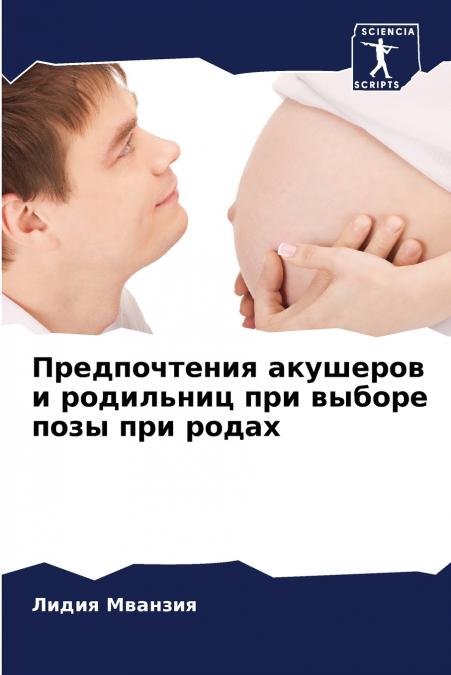
Рождение ребенка - одно из самых значимых событий в жизни женщины. Естественные роды рассматриваются как право женщины и все чаще становятся предметом интереса на дородовых занятиях. Поэтому положение, в котором находится роженица, является важным аспектом процесса родов, вызывающим многочисленные дискуссии. Позиции при рождении или на этапе потуг и связанные с ними результаты родов стали предметом серьезных дискуссий в последние два десятилетия. Во всем мире женщины во время родов используют как супинированные, так и несупинированные положения. Женщины свободно выбирают место родов и, в некоторой степени, акушера, однако их роль в осознанном выборе положения при родах четко не определена. Однако в африканских странах, в том числе в Восточной Африке, в акушерской практике как при домашних, так и при больничных родах по-прежнему преобладают позы без супинации, причем наиболее предпочтительными являются позы на коленях и на корточках.
Artículos relacionados

  • Contemporary Global Perspectives on Gender Economics
    Susanne Moore
    The rise of women in the workforce has led to many campaigns for wage equality and the impartial treatment of both sexes as they pursue careers previously designated as either a man’s or a woman’s job. The impact of these campaigns has been felt, but a sense of gender stereotyping still affects not only the social and cultural well-being of the modern organization, but the driv...
    Disponible

    256,04 €

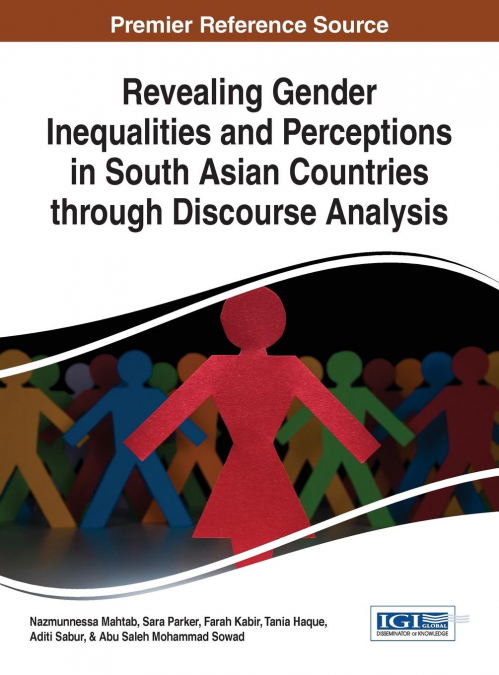
  • Revealing Gender Inequalities and Perceptions in South Asian Countries through Discourse Analysis
    Misconceptions regarding gender identity and issues of inequality that women around the world face have become a predominant concern for not only the citizens impacted, but global political leaders, administrators, and human rights activists. Revealing Gender Inequalities and Perceptions in South Asian Countries through Discourse Analysis explores how an analysis of language us...
    Disponible

    242,72 €

  • Handen som gungar vaggan
    Jonas Nilsson
    'Den feministiska rörelsen lärde kvinnor att se sig själva som offer för förtryckande patriarkat... En självpåtagen offerroll är inte ett recept för lycka', menar den konservativa aktivisten och författaren Phyllis Schalfy och denna tes är genomgående även i denna debattbok. Författaren beskriver här hur kvinnor biologiskt, socialt och evolutionärt fungerar - något som den agen...
  • Language and Gender in the Military
    Edith A. Disler
    In the thirty-year history of the study of language and gender, theory and application have branched incrementally like the reaches of a family tree. The study of language and gender has progressed from an eye-opening review of differences between the 'language' of women and men to observations that language served to preserve 'domination' of one sex over another and on to a cr...
  • Online Intersex Communities
    Brian Still
    Once referred to as hermaphrodites, intersex persons are born with a sexual anatomy or physiology inconsistent with social expectations of what constitutes a normal male or female. Of course, this definition of intersexuality, like all definitions, is rhetorically charged. In other words, intersexuality does not have meaning in and of itself that can be separated from the cultu...
  • Reconstruire la Féminité et la Masculinité
    François Tshionyi Kazadi
    Qui aurait raison d’imaginer une humanité exclusivement masculine ou exclusivement féminine ? Pareille tendance serait contre-nature et contredirait à coup sûr l’optimisme originaire selon lequel le Créateur, après la création de la femme, aux côtés de l’homme, vit que tout était très bon. Le débat contemporain sur l’identité humaine ou l’identité sexuelle est tellement provoca...