
Inicio > Humanidades > Filosofía > Nietzsche, Godfather of Fascism?
Nietzsche, Godfather of Fascism?

Nietzsche, Godfather of Fascism?


56,69 €
IVA incluido
Disponible
Editorial:
Princeton University Press
Año de edición:
2002
Materia
Filosofía
ISBN:
9780691007106
56,69 €
IVA incluido
Disponible

Selecciona una librería:

  • Librería Samer Atenea
  • Librería Aciertas (Toledo)
  • Kálamo Books
  • Librería Perelló (Valencia)
  • Librería Elías (Asturias)
  • Donde los libros
  • Librería Kolima (Madrid)
  • Librería Proteo (Málaga)

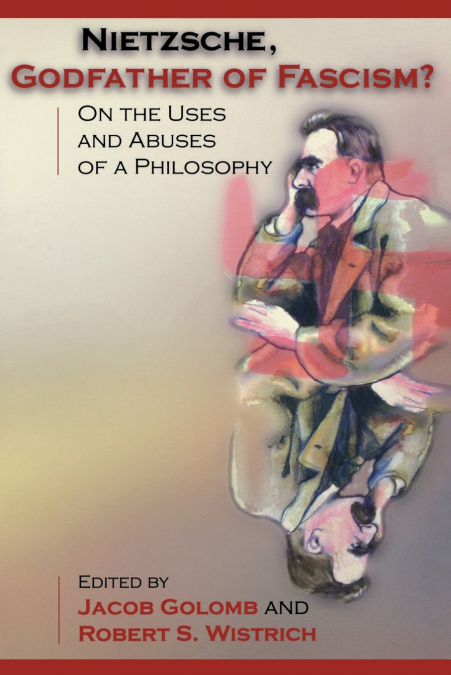
Nietzsche, the Godfather of Fascism? What can Nietzsche have in common with this murderous ideology? Frequently described as the 'radical aristocrat' of the spirit, Nietzsche abhorred mass culture and strove to cultivate an Übermensch endowed with exceptional mental qualities. What can such a thinker have in common with the fascistic manipulation of the masses for chauvinistic goals that crushed the autonomy of the individual? The question that lies at the heart of this collection is how Nietzsche came to acquire the deadly 'honor' of being considered the philosopher of the Third Reich and whether such claims had any justification. Does it make any sense to hold him in some way responsible for the horrors of Auschwitz? The editors present a range of views that attempt to do justice to the ambiguity and richness of Nietzsche’s thought. First-rate contributions by a variety of distinguished philosophers and historians explore in depth Nietzsche’s attitudes toward Jews, Judaism, Christianity, anti-Semitism, and National Socialism. They interrogate Nietzsche’s writings for fascist and anti-Semitic proclivities and consider how they were read by fascists who claimed Nietzsche as their intellectual godfather. There is much that is disturbingly antiegalitarian and antidemocratic in Nietzsche, and his writings on Jews are open to differing interpretations. Yet his emphasis on individualism and contempt for German nationalism and anti-Semitism put him at stark odds with Nazi ideology. The Nietzsche that emerges here is a tragic prophet of the spiritual vacuum that produced the twentieth century’s totalitarian movements, the thinker who best diagnosed the pathologies of fin-de-siècle European culture. Nietzsche dared to look into the abyss of modern nihilism. This book tells us what he found. The contributors are Menahem Brinker, Daniel W. Conway, Stanley Corngold, Kurt Rudolf Fischer, Jacob Golomb, Robert C. Holub, Berel Lang, Wolfgang Müller-Lauter, Alexander Nehamas, David Ohana, Roderick Stackelberg, Mario Sznajder, Geoffrey Waite, Robert S. Wistrich, and Yirmiyahu Yovel.

Artículos relacionados

  • Introduction to a Future Way of Thought
    Kostas Axelos / Kenneth Mills
    'Technologists only change the world in various ways in generalized indifference; the point is to think the world and interpret the changes in its unfathomability, to perceive and experience the difference binding being to the nothing.'Anticipating the age of planetary technology Kostas Axelos, a Greek-French philosopher, approaches the technological question in this book, firs...
    Disponible

    18,58 €

  • Capsule
    John Kenneth Press
    Join John and Adam as they wander the mean streets of Japan on a psychedelic fueled search for identity. While fun for the average reader, this book could also serve as a philosphy textbook because of its ordered exploration of sources of identity. Ultimately this trip through nationalist attacks, sex, and drugs, will take you to a better understanding of yourself and your pl...
    Disponible

    11,51 €

  • If you look at it long enough...
    Paul Hallam
    Originally written for an academic journal, If you look at it long enough... is primarily a personal account of Paul Hallam’s recollections of “self-abuse” through the consumption of porn over several decades. Challenging the familiar form of an “academic essay,” this autobiographical narrative raises several questions in relation to our contemporary morals related to sex in ge...
    Disponible

    11,30 €

  • The Teachers of Gurdjieff
    Rafael Lafort / Rafael Lefort
    When The Teachers of Gurdjieff was first published more than 50 years ago, it made a considerable stir. George Ivanovich Gurdjieff had been one of the most famous mystics in the West in the first half of the 20th century - a teaching master who had many fashionable and influential pupils. He had a striking appearance and manner of teaching, and his teaching proved to be very in...
    Disponible

    20,45 €

  • Manifesto of the Communist Party
    Karl Marx
    The Communist Manifesto was first published on February 21, and it is one of the world’s most influential political tracts. Commissioned by the Communist League and written by communist theorists Karl Marx and Friedrich Engels, it laid out the League’s purposes and program. The Manifesto suggested a course of action for a proletarian (working class) revolution to overthrow the ...
  • The Art of Literature
    Arthur Schopenhauer
    Collected here are eight short essays, On Authorship, On Style, On the Study of Latin, On Men of Learning, On Thinking for Ones Self, On Criticism, On Reputation, On Genius, by the world renowned philosopher Arthur Achopenhauer. ...