Christopher Witko / William Franko
 Librería Samer Atenea
 Kálamo Books
 Librería Elías (Asturias)
 Librería Kolima (Madrid)
 Librería Proteo (Málaga)
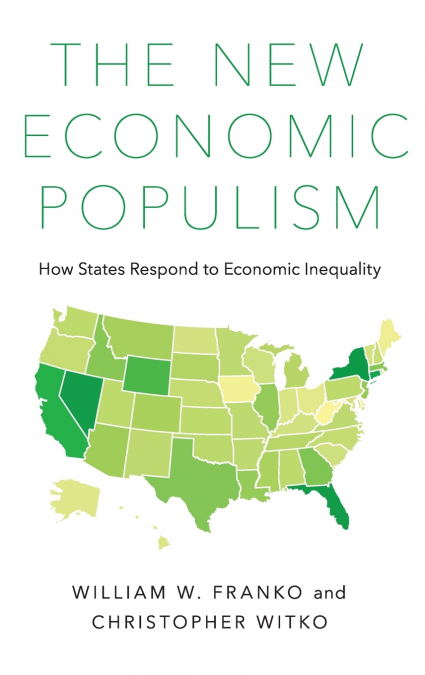
Donald Trump’s 2016 victory shocked the world, but his appeals to the economic discontent of the white working class should not be so surprising, as stagnant wages for the many have been matched with skyrocketing incomes for the few. Though Trump received high levels of support from the white working class, once in office, the newly elected billionaire president appointed a cabinet with a net worth greater than one-third of American households combined. Furthermore, he pursued traditionally conservative tax, welfare state and regulatory policies, which are likely to make economic disparities worse. Nevertheless, income inequality has grown over the last few decades almost regardless of who is elected to the presidency and congress. There is a growing consensus among scholars that one of the biggest drivers of income inequality in the United States is government activity (or inactivity). Just as the New Deal and Great Society programs played a key role in leveling income distribution from the 1930s through the 1970s, federal policy since then has contributed to expanding inequality. Growing inequality bolsters the resources of the wealthy leading to greater influence over policy, and it contributes to partisan polarization. Both prevent the passage of policy to address inequality, creating a continuous feedback loop of growing inequality. The authors of this book argue that it is therefore misguided to look to the federal government, as citizens have tended to do since the New Deal, to lead on economic policy to 'fix' inequality. In fact, they argue that throughout American history, during periods of rapid economic change the federal government has been stymied by the federal institutional design created by the Constitution. The winners of economic change have taken advantage of veto points to prevent change that would address the problems experienced by the losers of major economic change. Even the New Deal, in many ways the model of federal policy activism, was largely borrowed from policies created in the state 'laboratories of democracy' in the preceding years and decades. The authors argue that in the current crisis of growing inequality we are seeing a similar dynamic and demonstrate that many states are actively addressing economic inequality. William Franko and Christopher Witko argue that the states that will address inequality are not necessarily those with the greatest objective inequality, but those where citizens are aware of growing inequality, where left-leaning politicians hold power, where unions are strong, and where the presence of direct democracy allow for more majoritarian public policy outcomes. In the empirical chapters Franko and Witko examine how these factors have shaped policies that boosted incomes at the bottom (the minimum wage and the Earned Income Tax Credit) and reduce incomes at the top (with top marginal tax rates) between 1987 and 2010. The authors argue that, if history is a guide, increasingly egalitarian policies at the state level will spread to other states and, eventually, to the federal level, setting the stage for a more equitable future.