 Librería Samer Atenea
 Kálamo Books
 Librería Elías (Asturias)
 Librería Kolima (Madrid)
 Librería Proteo (Málaga)
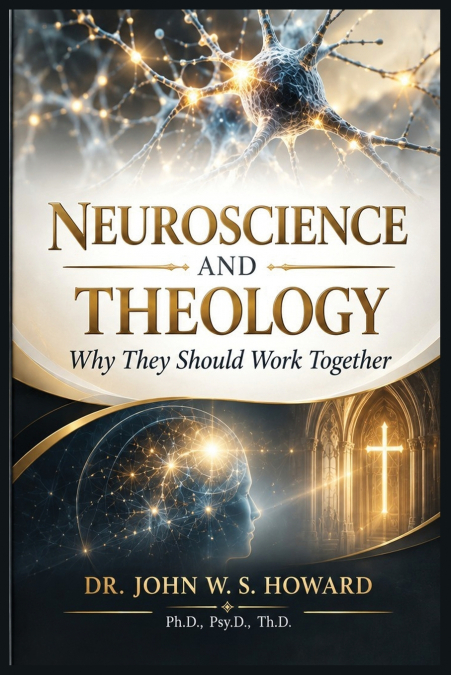
Neuroscience and Theology: 'Why They Should Work Together'What does the brain tell us about being human-and what questions remain beyond biology?In Neuroscience and Theology: 'Why They Should Work Together,' Dr. John W. S. Howard explores the relationship between two disciplines that are often treated as fundamentally separate: neuroscience and theology. Neuroscience investigates the brain, nervous system, behavior, consciousness, memory, emotion, learning, and decision-making, while theology explores questions of God, meaning, morality, spirituality, purpose, suffering, and human existence.Rather than presenting science and theology as opposing forces, this book examines how they can enter into thoughtful and respectful dialogue.Beginning with the foundations of neuroscience, the book introduces readers to neurons, neural networks, neuroplasticity, emotion, memory, consciousness, human behavior, and the biological pathways through which people experience the world. It also considers the limits of neuroscience, emphasizing the distinction between explaining how something happens and understanding what that experience ultimately means.The discussion then turns toward theology, including an Eastern world understanding that emphasizes interconnectedness, community, embodied spirituality, relationships, and the integration of spiritual life with ordinary human experience. Prayer, worship, compassion, forgiveness, suffering, moral responsibility, and spiritual formation are considered not simply as abstract ideas but as experiences lived through human bodies, brains, emotions, relationships, and communities.The book also examines the pathways of the brain and the way neural systems participate in perception, emotion, memory, attention, decision-making, learning, and behavior. It explores how neuroplasticity and repeated practices can contribute to human formation while maintaining that biological explanations do not automatically settle questions of spiritual meaning or theological significance.Further chapters consider the work of Benjamin James Sadock and the relationship between neuroscience, psychiatry, human behavior, and theology. The book asks how neuroscience may contribute to the theological process while maintaining appropriate boundaries between scientific evidence and theological interpretation.At the heart of the discussion is the human person. Neuroscience can investigate the biological mechanisms through which human experiences occur, while theology can explore questions of meaning, value, dignity, purpose, morality, God, suffering, hope, and transcendence. The two disciplines do not need to answer identical questions to contribute to the same conversation.The final discussion turns toward illness and healing, examining how neuroscience and theology can contribute to a more holistic understanding of human suffering. The book emphasizes that medical treatment and scientific understanding should not be replaced by faith, while also recognizing that illness can raise questions of meaning, hope, identity, dignity, community, and spiritual life that biology alone may not resolve.Written for readers interested in neuroscience, theology, psychology, spirituality, philosophy, and the nature of human existence, this book invites a broader understanding of humanity-one that recognizes the measurable realities of the brain while continuing to engage the profound questions of meaning that have shaped human life for centuries.Neuroscience can ask how. Theology can ask why. This book explores what becomes possible when we are willing to ask both.