 Librería Samer Atenea
 Kálamo Books
 Librería Elías (Asturias)
 Librería Kolima (Madrid)
 Librería Proteo (Málaga)
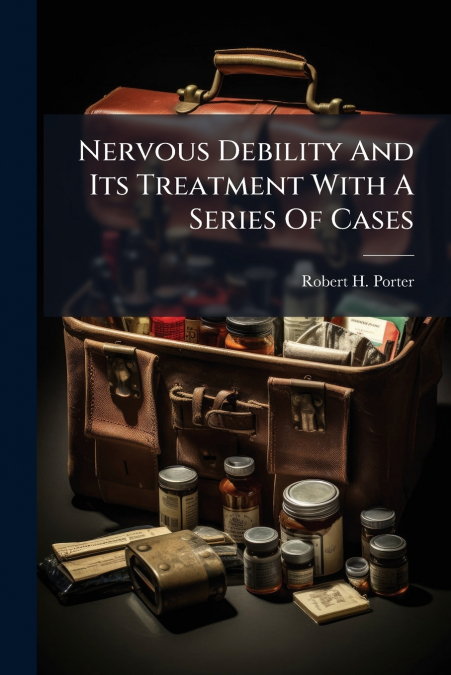
'Nervous Debility And Its Treatment With A Series Of Cases' by Robert H. Porter delves into the historical understanding and treatment of nervous debility, also known as neurasthenia, a prevalent ailment in the 19th century. This book offers a detailed look at the symptoms, causes, and various therapeutic approaches used during that era. Through a series of carefully documented case studies, Porter illustrates the challenges faced by both patients and physicians in addressing this complex condition. Readers gain insights into the diagnostic methods and treatment modalities of the time, including rest cures, dietary adjustments, and psychological interventions. This work provides a valuable resource for those interested in the history of medicine, the evolution of mental health treatments, and the social context surrounding nervous disorders in the late 1800s. Porter’s meticulous documentation offers a unique window into the past, shedding light on the enduring quest to understand and alleviate human suffering.This work has been selected by scholars as being culturally important, and is part of the knowledge base of civilization as we know it. This work was reproduced from the original artifact, and remains as true to the original work as possible. Therefore, you will see the original copyright references, library stamps (as most of these works have been housed in our most important libraries around the world), and other notations in the work.This work is in the public domain in the United States of America, and possibly other nations. Within the United States, you may freely copy and distribute this work, as no entity (individual or corporate) has a copyright on the body of the work.As a reproduction of a historical artifact, this work may contain missing or blurred pages, poor pictures, errant marks, etc. Scholars believe, and we concur, that this work is important enough to be preserved, reproduced, and made generally available to the public. We appreciate your support of the preservation process, and thank you for being an important part of keeping this knowledge alive and relevant.