
Inicio > Sociedad y ciencias sociales > Política y gobierno > Relaciones internacionales > Neorealismus - eine Denkschule in den Internationalen Beziehungen
Neorealismus - eine Denkschule in den Internationalen Beziehungen

Neorealismus - eine Denkschule in den Internationalen Beziehungen

Slavjan Vujacic

22,64 €
IVA incluido
Disponible
Editorial:
GRIN Verlag
Año de edición:
2007
Materia
Relaciones internacionales
ISBN:
9783638792417
22,64 €
IVA incluido
Disponible

Selecciona una librería:

  • Librería Samer Atenea
  • Librería Aciertas (Toledo)
  • Kálamo Books
  • Librería Perelló (Valencia)
  • Librería Elías (Asturias)
  • Donde los libros
  • Librería Kolima (Madrid)
  • Librería Proteo (Málaga)

Studienarbeit aus dem Jahr 2006 im Fachbereich Politik - Internationale Politik - Allgemeines und Theorien, Note: 2,0, Eberhard-Karls-Universität Tübingen (Poitikwissenschaften/Friedens und Konfliktforschung), Veranstaltung: Seminar: Einführung in die Internationalen Beziehunge, Sprache: Deutsch, Abstract: Der durch Kenneth Waltz begründete moderne Neorealismus ist eine Fortentwicklung der Realismustheorie von Hans Morgenthau, welcher diese 1948 erstmalig in Politics Among Nations formulierte. 1 Weder Realismus noch Neorealismus beanspruchen einen umfassenden Modellcharakter für sich, der die Internationalen Beziehungen vollständig erklären könnte. Insbesondere Waltz erklärt, dass es der einzige Anspruch seiner Theorie ist, „[to explain] a small number of big and important things.' 2 Tatsächlich lässt sich behaupten, dass es sich sowohl beim Realismus als auch Neorealismus um Akteurstheorien handelt, die das interstaatliche Verhalten, seine Gründe und Dynamik durch die Strukturen von Anarchie und Polarität im internationalen Staatengefüge zu erklären versuchen. Der Neorealismus steht somit in der Tradition des Realismus, übertrifft ihn aber theoretisch: erklärte der Realismus Kriege durch die Natur des Menschen, hält der Neorealismus diese Erklärung nicht für ausreichend. Kenneth Waltz als Hauptvertreter ging daher, anders als die Realisten, szientistisch vor: er wandte ein deduktives Verfahren und ging an die Erarbeitung von generellen Mustern in der internationalen Politik.3 Dies bedingte natürlich, dass der Neorealismus eine andere Analysekategorie verwendete, wollte er doch die Ursachen für spezielle Ereignisse mit allgemeinen Gegebenheiten begründen: diese Analysekategorie ist das internationale Staatensystem.4Der Anspruch des Neorealismus, respektive von Waltz als herausragendem Vertreter, war somit die Begründung einer systemischen Theorie. Dem Realismus hingegen ging es um eine reine Außenpolitiktheorie.5Dies ist vielleicht auch aus der Entstehungsgesc

Artículos relacionados

  • Realism in Practice
    The purpose of this book is to appraise the current relevance and validity of realism as an interpretative tool in contemporary International Relations. All chapters of the book are animated by a theoretical effort to define the conceptual aspects of realism and attempt to establish whether the tradition still provides the necessary conceptual tools to scholars.The chapters add...
    Disponible

    20,36 €

  • Predicting gender violence in India
    Shritha K Vasudevan
    In this provocative new book, Shritha Vasudevan argues that feminist international relations (IR) theory has inadvertently resulted in a biased worldview, the very opposite of what feminist IR set out to try to rectify. This book contests theoretical presumptions of Western feminist IR and attempts to reformulate it in contexts of non-Western cultures. Vasudevan deftly utilizes...
  • Contemporary security issues in Africa
    Isiaka Alani Badmus / Lere Amusan
    In volume, an emerging generation of African scholars examines specific states in Africa where instability is the order of the day. Considerations of African instability are highly relevant in today’s world, where one examines the types of regimes that were put in place after the Cold War and their effects on Africa. Multiparty systems introduced in Africa, rather than bringing...
  • Chronicles of the first and second chechen wars
    Ilya Milyukov
    Presented by Russian author and attorney Ilya Milyukov, Chronicles of the First and Second Chechen War presents the main events of the First (1994-1996) and Second (1999-2009) Wars in Chechnya, Russia’s deadliest conflicts since World War II. The First War began in December 1994 and lasted for one year and nine months, ending in August 1996. There were two major urban battles -...
  • Political instability in Africa
    Isiaka Alani Badmus / Lere Amusan
    This book offers broad-gauged analyses of the causes, nature, and changing patterns of armed conflict in Africa as well as the reasons for these patterns. It also situates conflicts that have been haunting the African continent since the time of decolonization within the various theoretical schools such as 'new war,' 'economic war,' 'neo-patrimonial,' and 'globalization.' It be...
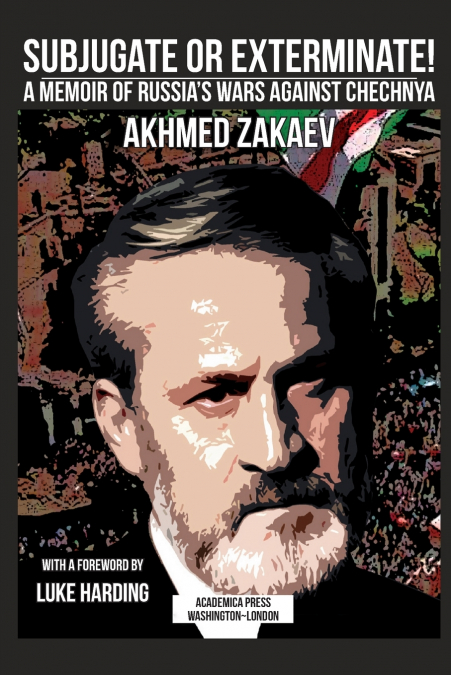
  • Subjugate or exterminate!
    Akhmed Zakaev / Arch Tait
    Foreword by Luke HardingAkhmed Zakaev is a symbol of the indomitable will of the Chechen nation. In this important memoir, he tells the story of the Chechen struggle as he experienced it, describing the conflict in human terms and providing a detailed documentary record of little known or badly understood events that will be of benefit to historians for generations to come.- Da...
    Disponible

    41,63 €